Sign In to View Organizational & Contract Pricing.
Select a Size
About This Item
Linear Formula:
(CH3)2C(OH)CH2COCH3
CAS Number:
Molecular Weight:
116.16
UNSPSC Code:
12352100
NACRES:
NA.22
PubChem Substance ID:
EC Number:
204-626-7
Beilstein/REAXYS Number:
1740440
MDL number:
Assay:
99%
Form:
liquid
InChI
1S/C6H12O2/c1-5(7)4-6(2,3)8/h8H,4H2,1-3H3
InChI key
SWXVUIWOUIDPGS-UHFFFAOYSA-N
SMILES string
CC(=O)CC(C)(C)O
vapor density
4 (vs air)
vapor pressure
<1 mmHg ( 20 °C)
assay
99%
form
liquid
expl. lim.
6.9 %
refractive index
n20/D 1.423 (lit.)
bp
166 °C (lit.)
density
0.931 g/mL at 25 °C (lit.)
Quality Level
Looking for similar products? Visit Product Comparison Guide
Related Categories
General description
4-Hydroxy-4-methyl-2-pentanone is commonly used as a solvent in various industries, including paints, coatings, adhesives, and printing inks.
Application
4-Hydroxy-4-methyl-2-pentanone can be used to synthesize:
It can also be used as a complexing agent to synthesize double-metal cyanide (DMC) catalysts by reacting with metal salt (MX) and cyanometalate compounds.
- Diolmonoesters by reacting with aldehydes via tandem aldol-transfer–Tischtschenko reaction catalyzed by trimethylaluminum.
- Aldol-transfer products such as β-hydroxy ketones by reacting with various aldehydes in the presence of L-proline as a catalyst.
- Mono-α-arylated ketones and esters via Pd catalyzed reaction with aryl halides and aryl triflates, respectively.
It can also be used as a complexing agent to synthesize double-metal cyanide (DMC) catalysts by reacting with metal salt (MX) and cyanometalate compounds.
signalword
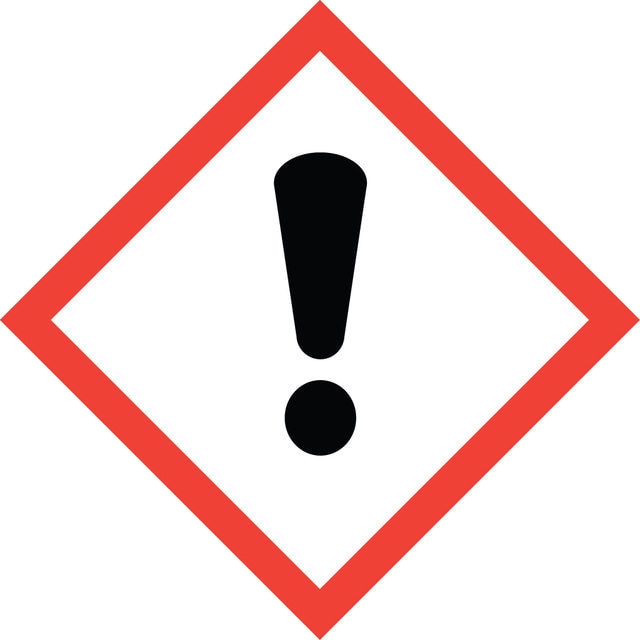
Warning
hcodes
Hazard Classifications
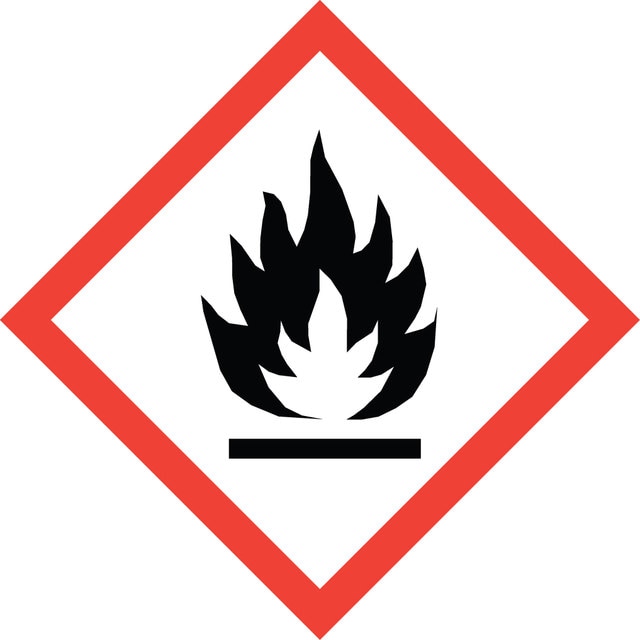
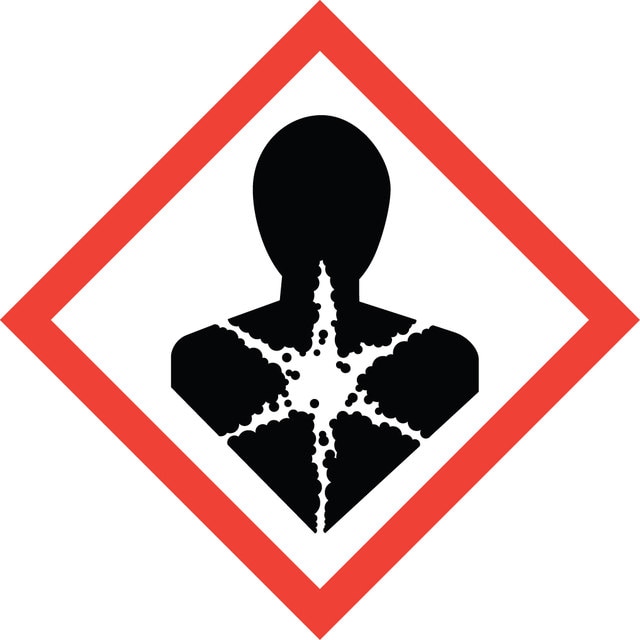
Eye Irrit. 2 - Flam. Liq. 3 - Repr. 2 - STOT SE 3
target_organs
Respiratory system
Storage Class
3 - Flammable liquids
wgk
WGK 1
flash_point_f
136.4 °F - closed cup
flash_point_c
58 °C - closed cup
ppe
Eyeshields, Gloves, type ABEK (EN14387) respirator filter
Choose from one of the most recent versions:
Already Own This Product?
Find documentation for the products that you have recently purchased in the Document Library.
I Magneron et al.
Environmental science & technology, 37(18), 4170-4181 (2003-10-04)
The OH-initiated oxidation of two VOCs directly emitted to the atmosphere through their use as industrial solvents, hexylene glycol (HG, (CH3)2C(OH)CH2CH(OH)CH3) and diacetone alcohol (DA, (CH3)2C(OH)CH2C(O)CH3), has been studied in two photoreactors: a 140 L Teflon bag irradiated by lamps
Molecular probes of the mechanism of cytochrome P450. Oxygen traps a substrate radical intermediate.
Harriet L R Cooper et al.
Archives of biochemistry and biophysics, 507(1), 111-118 (2010-11-16)
The diagnostic substrate tetramethylcyclopropane (TMCP) has been reexamined as a substrate with three drug- and xenobiotic-metabolizing cytochrome P450 enzymes, human CYP2E1, CYP3A4 and rat CYP2B1. The major hydroxylation product in all cases was the unrearranged primary alcohol along with smaller
Tandem aldol-transfer-Tischtschenko reaction of aldehydes and ?-hydroxyketones catalyzed by trimethylaluminum
Simpura I and Nevalainen V
Tetrahedron Letters, 42(23), 3905-3907 (2001)
Synthesis of Polycarbonate Polyols by Double-Metal Cyanide Catalyzed Copolymerization of Epoxide with Carbon Dioxide
Lim J, et al.
Journal of Nanoscience and Nanotechnology, 17(10), 7507-7514 (2017)
S Chandrasekhar et al.
Chemical communications (Cambridge, England), (21)(21), 2450-2451 (2004-10-30)
We demonstrate for the first time, L-proline as a chiral catalyst for transfer aldol reaction between aldehydes and diacetone alcohol.
Our team of scientists has experience in all areas of research including Life Science, Material Science, Chemical Synthesis, Chromatography, Analytical and many others.
Contact Technical Service