Skip to Content
Merck

I19551

Isoprene

99%, contains <1000 ppm p-tert-butylcatechol as inhibitor

Synonym(s):

2-Methyl-1,3-butadiene

Sign In to View Organizational & Contract Pricing.

Select a Size


About This Item

Linear Formula:
CH2=CHC(CH3)=CH2
CAS Number:
Molecular Weight:
68.12
UNSPSC Code:
12352100
NACRES:
NA.22
PubChem Substance ID:
MDL number:
Beilstein/REAXYS Number:
969158
Assay:
99%
Form:
liquid
Technical Service
Need help? Our team of experienced scientists is here for you.
Let Us Assist
Technical Service
Need help? Our team of experienced scientists is here for you.
Let Us Assist

InChI key

RRHGJUQNOFWUDK-UHFFFAOYSA-N

SMILES string

CC(=C)C=C

InChI

1S/C5H8/c1-4-5(2)3/h4H,1-2H2,3H3

vapor density

2.35 (vs air)

vapor pressure

8.82 psi ( 20 °C)

assay

99%

form

liquid

autoignition temp.

428 °F

contains

<1000 ppm p-tert-butylcatechol as inhibitor

expl. lim.

10 %

refractive index

n20/D 1.422 (lit.)

bp

34 °C (lit.)

mp

−146 °C (lit.)

density

0.681 g/mL at 25 °C (lit.)

storage temp.

2-8°C

Quality Level

Looking for similar products? Visit Product Comparison Guide

Related Categories

Application

Isoprene in the presence of sec-butyllithium as an initiator can undergo sequential anionic polymerization with styrene and methyl methacrylate to form polystyrene-block-polyisoprene-block-poly(methylmethacrylate) (SIM) and polyisoprene-block-polystyrene-block-poly(methyl methacrylate) (ISM), two asymmetric triblock terpolymers. It is also used in the asymmetric synthesis of polystyrene-block-polyisoprene (PS-b-PI) diblock copolymers.

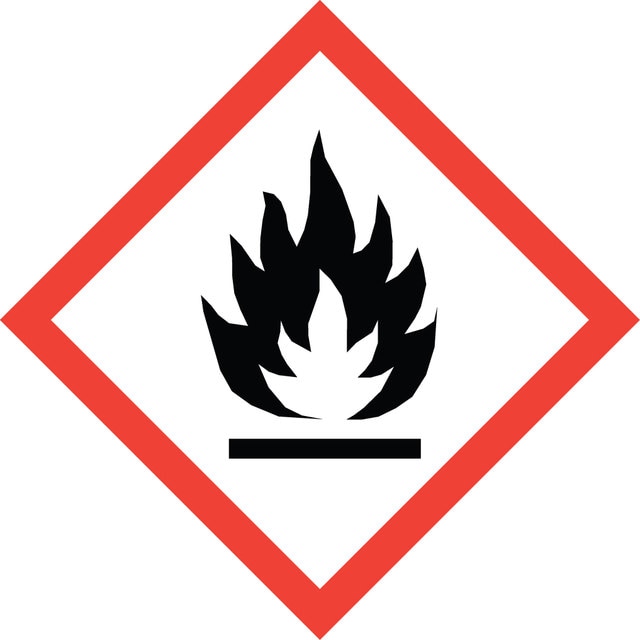
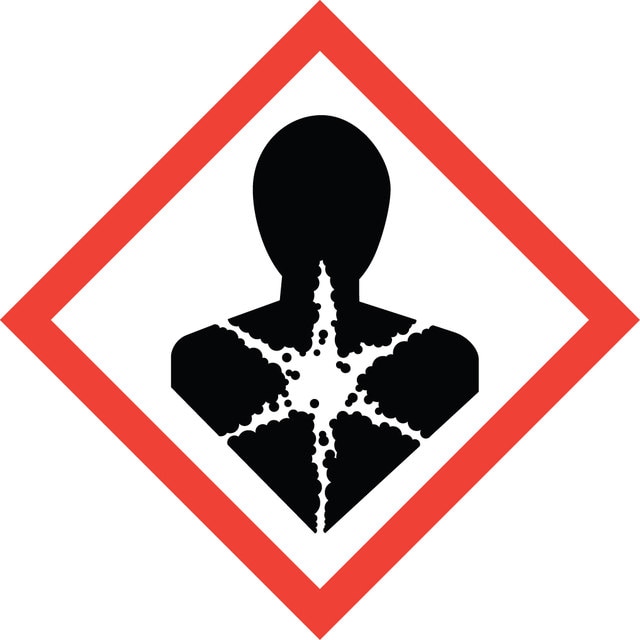
pictograms

FlameHealth hazard

signalword

Danger

Hazard Classifications

Aquatic Chronic 3 - Carc. 1B - Flam. Liq. 1 - Muta. 2

Storage Class

3 - Flammable liquids

wgk

WGK 3

flash_point_f

-65.2 °F - closed cup

flash_point_c

-54 °C - closed cup

ppe

Eyeshields, Faceshields, Gloves


Regulatory Listings

Regulatory Listings are mainly provided for chemical products. Only limited information can be provided here for non-chemical products. No entry means none of the components are listed. It is the user’s obligation to ensure the safe and legal use of the product.

78-79-5

CAS No.

Choose from one of the most recent versions:

Certificates of Analysis (COA)

Lot/Batch Number

Don't see the Right Version?

If you require a particular version, you can look up a specific certificate by the Lot or Batch number.

Already Own This Product?

Find documentation for the products that you have recently purchased in the Document Library.

Visit the Document Library

Morphology and elasticity of polystyrene-block-polyisoprene diblock copolymers in the melt.
Haenelt TG, et al.
Korea-Australia Rheology Journal, 26(3), 263-275 (2014)
Four-Phase Morphologies in Blends of ABC and BAC Triblock Terpolymers
Haenelt TG, et al.
Macromolecular Chemistry and Physics, 219(1), 1700241-1700241 (2018)
H Koc et al.
Journal of breath research, 5(3), 037102-037102 (2011-06-10)
Isoprene is one of the most abundant endogenous volatile organic compounds (VOCs) contained in human breath and is considered to be a potentially useful biomarker for diagnostic and monitoring purposes. However, neither the exact biochemical origin of isoprene nor its
Russell K Monson et al.
The New phytologist, 195(3), 541-559 (2012-06-29)
The leaves of many plants emit isoprene (2-methyl-1,3-butadiene) to the atmosphere, a process which has important ramifications for global and regional atmospheric chemistry. Quantitation of leaf isoprene emission and its response to environmental variation are described by empirically derived equations
Michaela Stieglmeier et al.
International journal of systematic and evolutionary microbiology, 64(Pt 8), 2738-2752 (2014-06-08)
A mesophilic, neutrophilic and aerobic, ammonia-oxidizing archaeon, strain EN76(T), was isolated from garden soil in Vienna (Austria). Cells were irregular cocci with a diameter of 0.6-0.9 µm and possessed archaella and archaeal pili as cell appendages. Electron microscopy also indicated

Our team of scientists has experience in all areas of research including Life Science, Material Science, Chemical Synthesis, Chromatography, Analytical and many others.

Contact Technical Service