Skip to Content
Merck

M55909

Methyl methacrylate

contains ≤30 ppm MEHQ as inhibitor, 99%

Synonym(s):

Methacrylic acid methyl ester, Methyl 2-methylprop-2-enoate, Methyl 2-methylpropenoate

Sign In to View Organizational & Contract Pricing.

Select a Size


About This Item

Linear Formula:
CH2=C(CH3)COOCH3
CAS Number:
Molecular Weight:
100.12
UNSPSC Code:
12162002
NACRES:
NA.23
PubChem Substance ID:
EC Number:
201-297-1
Beilstein/REAXYS Number:
605459
MDL number:
Technical Service
Need help? Our team of experienced scientists is here for you.
Let Us Assist
Technical Service
Need help? Our team of experienced scientists is here for you.
Let Us Assist

Product Name

Methyl methacrylate, contains ≤30 ppm MEHQ as inhibitor, 99%

InChI key

VVQNEPGJFQJSBK-UHFFFAOYSA-N

InChI

1S/C5H8O2/c1-4(2)5(6)7-3/h1H2,2-3H3

SMILES string

COC(=O)C(C)=C

vapor density

3.5 (vs air)

vapor pressure

29 mmHg ( 20 °C)

assay

99%

autoignition temp.

815 °F

contains

≤30 ppm MEHQ as inhibitor

expl. lim.

12.5 %

refractive index

n20/D 1.414 (lit.)

bp

100 °C (lit.)

mp

−48 °C (lit.)

density

0.936 g/mL at 25 °C (lit.)

storage temp.

2-8°C

Quality Level

Looking for similar products? Visit Product Comparison Guide

Related Categories

Application

Methyl methacrylate can be used as a monomer to prepare:
  • Lanthanide-complex grafted poly(methyl methacrylate-co-maleic anhydride) copolymer. These luminescent polymers exhibit high thermal stability and can be used as luminous layers for optoelectronic devices.
  • Poly (methyl methacrylate) (PMMA), is a common material used in the production of lenses for concentrating photovoltaic (CPV) modules.
  • Polymethyl methacrylate, methyl methacrylate crosspolymer, and methyl methacrylate/glycol dimethacrylate crosspolymers. These polymers are used in cosmetic surgery, dentistry, and joint replacement.
  • Poly (methyl methacrylate) (PMMA)-based personalized medical devices.
Methyl methacrylate can be used as a monomer to prepare:
  • Interpenetrating methyl methacrylate-based polymeric networks with enhanced thermal and mechanical properties.
  • Poly(methyl methacrylate-co-hydroxyethyl methacrylate) (PMMA-co-PHEMA) copolymers by emulsion copolymerization. These copolymers form thermooxidatively stable and ductile films.
  • Poly(methyl methacrylate) nanoparticles through differential microemulsion polymerization.

General description

Methyl methacrylate is an organic compound derived from methacrylic acid, which belongs to the class of acrylic acids. It is a highly reactive monomer and is commonly used in the production of polymers, specifically poly(methyl methacrylate) (PMMA). It is also used to synthesize various poly(methyl methacrylate) (PMMA) materials, which are transparent, hard, and durable. These materials have a wide range of applications, including optical lenses, optoelectronic devices, automotive parts, and medical devices. It is also a good solvent for several polymers and provides high adhesive strength.

pictograms

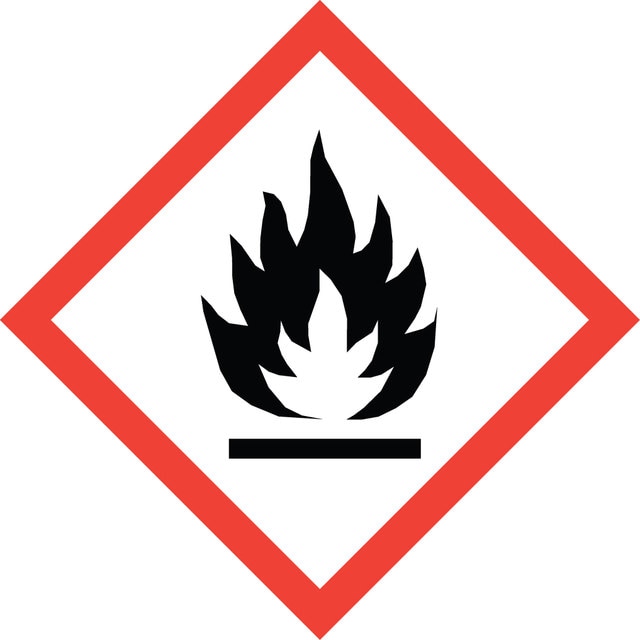
FlameExclamation mark

signalword

Danger

Hazard Classifications

Flam. Liq. 2 - Skin Irrit. 2 - Skin Sens. 1B - STOT SE 3

target_organs

Respiratory system

Storage Class

3 - Flammable liquids

wgk

WGK 1

flash_point_f

50.0 °F - closed cup

flash_point_c

10 °C - closed cup

ppe

Eyeshields, Faceshields, Gloves, type ABEK (EN14387) respirator filter


Choose from one of the most recent versions:

Certificates of Analysis (COA)

Lot/Batch Number

Don't see the Right Version?

If you require a particular version, you can look up a specific certificate by the Lot or Batch number.

Already Own This Product?

Find documentation for the products that you have recently purchased in the Document Library.

Visit the Document Library

Daniel S Thoma et al.
Journal of periodontal & implant science, 49(3), 171-184 (2019-07-10)
To evaluate the effects of intra-alveolar socket grafting, subepithelial connective tissue grafts, and individualized abutments on peri-implant hard and soft tissue outcomes following immediate implant placement. This randomized experimental study employed 5 mongrel dogs, with 4 sites per dog (total
J Ratliff et al.
Spine, 26(13), E300-E302 (2001-07-18)
Case report and literature review. Clinicians use methylmethacrylate vertebroplasty to treat vertebral hemangiomas, metastases, and osteoporotic fractures. Cement may leak out of the vertebral body and compress the adjacent spinal cord and nerve roots. We review a case of nerve-root
Michael M Bornstein et al.
Journal of endodontics, 41(6), 804-811 (2015-04-13)
The aim of this study was to evaluate the concordance of 2- and 3-dimensional radiography and histopathology in the diagnosis of periapical lesions. Patients were consecutively enrolled in this study provided that preoperative periapical radiography (PR) and cone-beam computed tomographic
Kevin N Johnson et al.
The Annals of thoracic surgery, 99(6), 1936-1943 (2015-04-30)
Successful repair of recurrent pectus excavatum (PE) after failed open procedure has been reported using minimally invasive repair (MIRPE) and open approaches. Neither approach alone may be adequate for some patients. A hybrid technique for repair is presented for revision
Fabrice Audouin et al.
Biomacromolecules, 13(11), 3787-3794 (2012-10-20)
Amino-functional macroporous monoliths from polymerized high internal phase emulsion (polyHIPE) were surface modified with initiators for atom transfer radical polymerization (ATRP). The ATRP initiator groups on the polyHIPE surface were successfully used to initiate activator regeneration by electron transfer (ARGET)

Our team of scientists has experience in all areas of research including Life Science, Material Science, Chemical Synthesis, Chromatography, Analytical and many others.

Contact Technical Service