
M85301

Methyltrichlorosilane
99%
Synonym(s):
MTS, Trichloro(methyl)silane
Sign In to View Organizational & Contract Pricing.
Select a Size
Change View
About This Item
Linear Formula:
CH3SiCl3
CAS Number:
Molecular Weight:
149.48
UNSPSC Code:
12352300
NACRES:
NA.22
PubChem Substance ID:
EC Number:
200-902-6
Beilstein/REAXYS Number:
1361381
MDL number:
Assay:
99%
Form:
liquid
vapor density
5.2 (vs air)
Quality Level
vapor pressure
150 mmHg ( 25 °C)
assay
99%
form
liquid
autoignition temp.
>760 °F
expl. lim.
11.9 %
refractive index
n20/D 1.411 (lit.)
bp
66 °C (lit.)
density
1.273 g/mL at 25 °C (lit.)
SMILES string
C[Si](Cl)(Cl)Cl
InChI
1S/CH3Cl3Si/c1-5(2,3)4/h1H3
InChI key
JLUFWMXJHAVVNN-UHFFFAOYSA-N
Application
Methyltrichlorosilane (MTS) can be used:
- As a reagent for the surface-functionalization of fabrics and mesoporous materials to increase their hydrophobicity.
- As a source of silicon to synthesize silica doped carbon nanotubes.
Still not finding the right product?
Explore all of our products under Methyltrichlorosilane
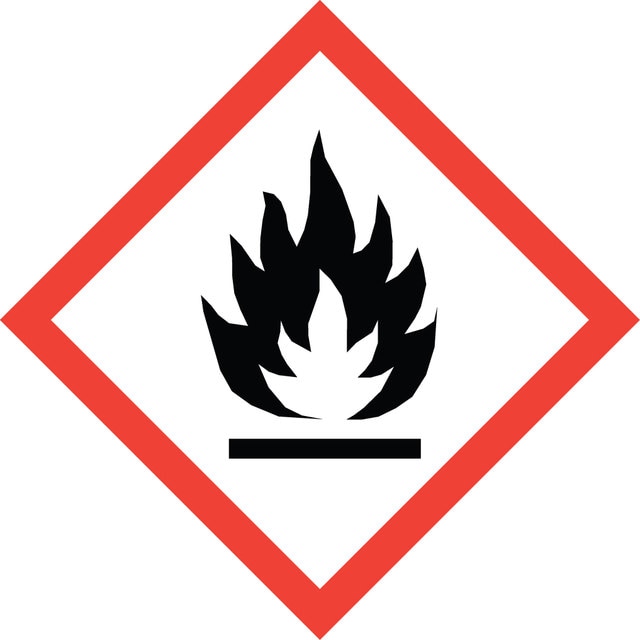
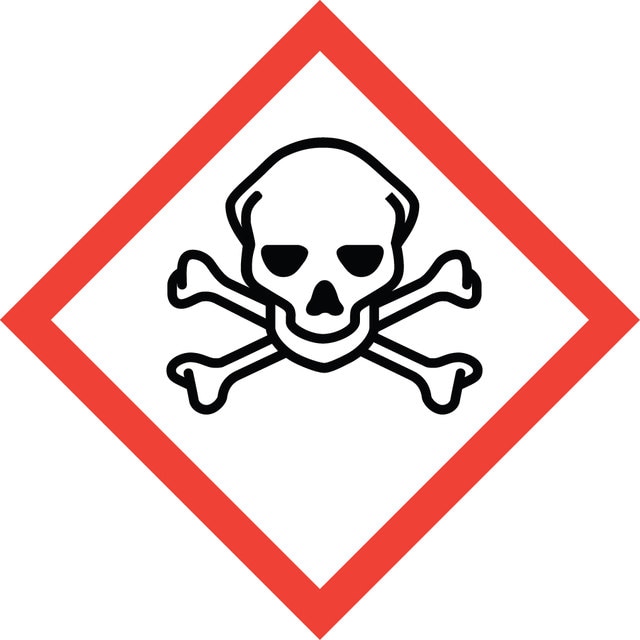
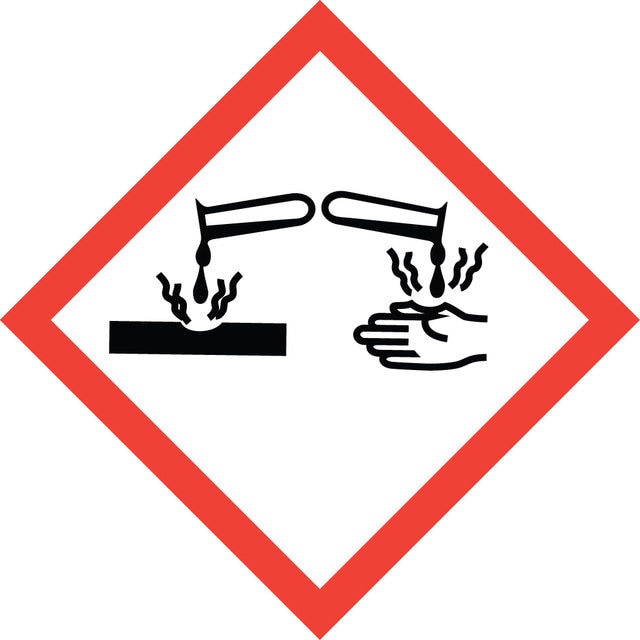
signalword
Danger
Hazard Classifications
Acute Tox. 3 Inhalation - Acute Tox. 4 Dermal - Acute Tox. 4 Oral - Eye Dam. 1 - Flam. Liq. 2 - Skin Corr. 1A - STOT SE 3
target_organs
Respiratory system
Storage Class
3 - Flammable liquids
wgk
WGK 1
flash_point_f
46.4 °F - closed cup
flash_point_c
8 °C - closed cup
ppe
Faceshields, Gloves, Goggles, type ABEK (EN14387) respirator filter
Choose from one of the most recent versions:
Already Own This Product?
Find documentation for the products that you have recently purchased in the Document Library.
Ville Liimatainen et al.
Nature communications, 8(1), 1798-1798 (2017-11-28)
Droplets slip and bounce on superhydrophobic surfaces, enabling remarkable functions in biology and technology. These surfaces often contain microscopic irregularities in surface texture and chemical composition, which may affect or even govern macroscopic wetting phenomena. However, effective ways to quantify
Mesoporous SiO2-TiO2 epoxidation catalysts: Tuning surface polarity to improve performance in the presence of water.
Smeets V, et al.
Molecular Catalysis, 452, 123-128 (2018)
Lishen Zhang et al.
ACS applied materials & interfaces, 9(45), 39728-39735 (2017-09-22)
Off-the-shelf laboratory filter paper of different pore sizes and thicknesses can be modified with fluorine-free organosilanes to be superhydrophobic, patternable, and ready for quantitative assay applications. In particular, we have demonstrated that the cellulose filter paper treated with a binary