
T62405

Silver trifluoroacetate
98%
Synonym(s):
Trifluoroacetic acid silver salt
Select a Size
About This Item
InChI key
KZJPVUDYAMEDRM-UHFFFAOYSA-M
InChI
1S/C2HF3O2.Ag/c3-2(4,5)1(6)7;/h(H,6,7);/q;+1/p-1
SMILES string
FC(F)(F)C(=O)O[Ag]
assay
98%
form
powder
reaction suitability
core: silver, reagent type: catalyst
mp
257-260 °C (dec.) (lit.)
Quality Level
Looking for similar products? Visit Product Comparison Guide
Application
- As a precursor to synthesize ultrasmall icosahedral silver nanoparticles with precise size control and high monodispersed, ideal for advanced applications in plasmonic sensing, nanoelectronics, and biomedical diagnostics.
- As a co-precursor to promote the formation of silver nanocluster nodes, enabling the controlled self-assembly of coordination polymers designed for advanced applications in optoelectronics and molecular sensing.
- As a silver source to coat gold ultrathin nanorods with a single atomic silver layer, fine-tuning their optical properties for use in plasmonic sensing and nanophotonic.
- As a bifunctional reagent and it serves as both a convenient in situ CO source and an oxidant in the reaction.
Features and Benefits
General description
signalword
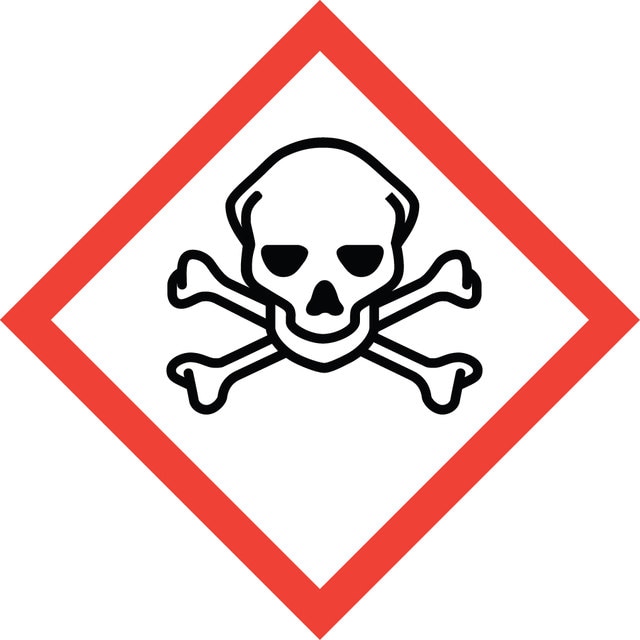
Danger
hcodes
Hazard Classifications
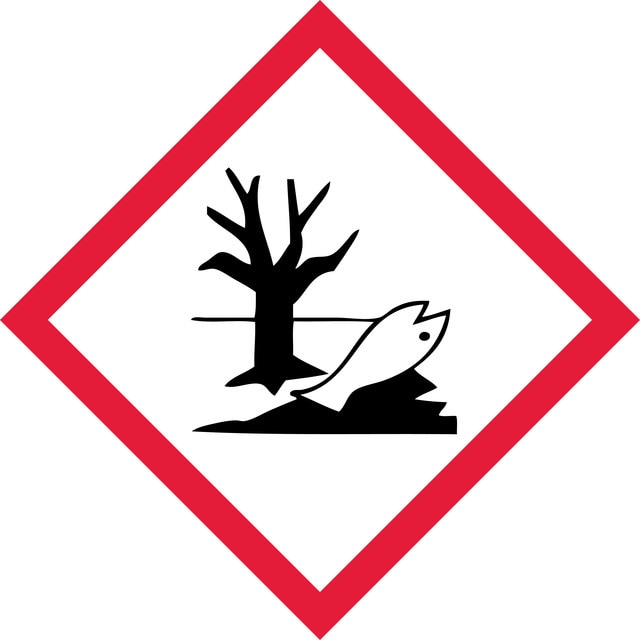
Acute Tox. 2 Oral - Aquatic Acute 1 - Aquatic Chronic 1
Storage Class
6.1A - Combustible acute toxic Cat. 1 and 2 / very toxic hazardous materials
wgk
WGK 3
flash_point_f
Not applicable
flash_point_c
Not applicable
ppe
dust mask type N95 (US), Eyeshields, Gloves
Choose from one of the most recent versions:
Already Own This Product?
Find documentation for the products that you have recently purchased in the Document Library.
Our team of scientists has experience in all areas of research including Life Science, Material Science, Chemical Synthesis, Chromatography, Analytical and many others.
Contact Technical Service