Skip to Content
Merck

I-902

Imipramine hydrochloride solution

1.0 mg/mL in methanol (as free base), ampule of 1 mL, certified reference material, Cerilliant®

Sign In to View Organizational & Contract Pricing.

Select a Size


About This Item

Empirical Formula (Hill Notation):
C19H24N2 · HCl
CAS Number:
Molecular Weight:
316.87
NACRES:
NA.24
UNSPSC Code:
41116107
EC Number:
200-659-6
Technical Service
Need help? Our team of experienced scientists is here for you.
Let Us Assist
Technical Service
Need help? Our team of experienced scientists is here for you.
Let Us Assist

Product Name

Imipramine hydrochloride solution, 1.0 mg/mL in methanol (as free base), ampule of 1 mL, certified reference material, Cerilliant®

InChI key

XZZXIYZZBJDEEP-UHFFFAOYSA-N

InChI

1S/C19H24N2.ClH/c1-20(2)14-7-15-21-18-10-5-3-8-16(18)12-13-17-9-4-6-11-19(17)21;/h3-6,8-11H,7,12-15H2,1-2H3;1H

SMILES string

Cl.CN(C)CCCN1c2ccccc2CCc3ccccc13

grade

certified reference material

form

liquid

feature

Snap-N-Spike®/Snap-N-Shoot®

packaging

ampule of 1 mL

manufacturer/tradename

Cerilliant®

concentration

1.0 mg/mL in methanol (as free base)

technique(s)

gas chromatography (GC): suitable
liquid chromatography (LC): suitable

application(s)

clinical testing

format

single component solution

storage temp.

2-8°C

Quality Level

Gene Information

General description

Imipramine, also known as melipramine, is a tricyclic antidepressant prescribed for the treatment of major depression, enuresis, and anxiety disorder. This certified solution standard is suitable for use in forensic analysis, clinical toxicology, or urine drug testing applications by LC-MS/MS or GC/MS. Imipramine is marketed under the trade name Tofranil.

Legal Information

CERILLIANT is a registered trademark of Merck KGaA, Darmstadt, Germany
Snap-N-Shoot is a registered trademark of Cerilliant Corporation
Snap-N-Spike is a registered trademark of Merck KGaA, Darmstadt, Germany

signalword

Danger

Hazard Classifications

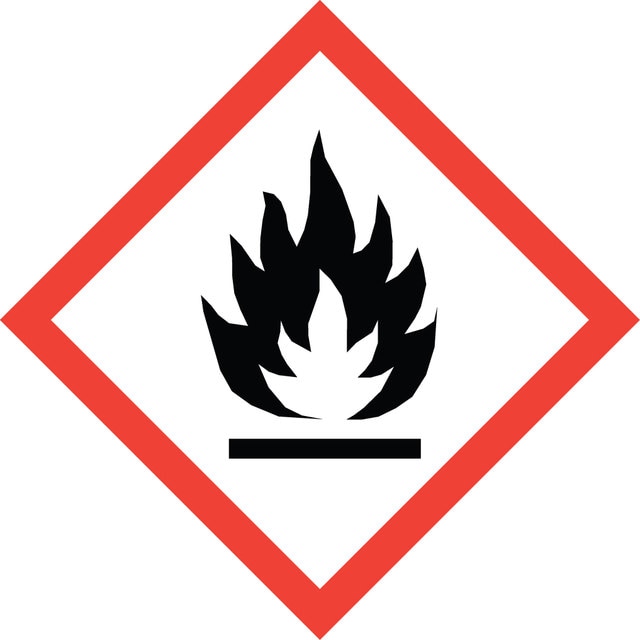
Acute Tox. 3 Dermal - Acute Tox. 3 Inhalation - Acute Tox. 3 Oral - Flam. Liq. 2 - STOT SE 1

target_organs

Eyes,Central nervous system

Storage Class

3 - Flammable liquids

wgk

WGK 2

flash_point_f

49.5 °F - closed cup

flash_point_c

9.7 °C - closed cup


Certificates of Analysis (COA)

Search for Certificates of Analysis (COA) by entering the products Lot/Batch Number. Lot and Batch Numbers can be found on a product’s label following the words ‘Lot’ or ‘Batch’.

Already Own This Product?

Find documentation for the products that you have recently purchased in the Document Library.

Visit the Document Library

Ute Krügel et al.
Journal of psychiatric research, 47(5), 611-616 (2013-02-12)
Pro-inflammatory cytokines such as tumour necrosis factor-alpha (TNF-α) have repeatedly been shown to play a pivotal role in the pathophysiology of depression. Therefore, we tested the possible antidepressant-like effect of the anti-TNF-α drug etanercept in an animal model of chronic
Katsura Takano et al.
Journal of pharmacological sciences, 120(3), 176-186 (2012-10-19)
Depression is one of the most prevalent and livelihood-threatening forms of mental illnesses and the neural circuitry underlying depression remains incompletely understood. Recent studies suggest that the neuronal plasticity involved with brain-derived neurotrophic factor (BDNF) plays an important role in
Bianca Topic et al.
Neurobiology of learning and memory, 98(4), 329-340 (2012-10-10)
Loss of reward is one of the etiological factors leading to affective disorders, such as major depression. We have proposed several variants of an animal model of depression based on extinction of reinforced behavior of rats. A number of behaviors
L Diniz et al.
Behavioural brain research, 238, 170-177 (2012-10-27)
In a previous study we showed that rats chronically treated with corticosterone (CORT) display anxiogenic behavior, evidenced by facilitation of avoidance responses in the elevated T-maze (ETM) model of anxiety. Treatment with the tricyclic antidepressant imipramine significantly reversed the anxiogenic
Indrek Saar et al.
Journal of neurochemistry, 127(1), 114-123 (2013-04-23)
Neuropeptide galanin and its three G-protein coupled receptors, galanin receptor type 1-galanin receptor type 3 (GalR1-GalR3), are involved in the regulation of numerous physiological and disease processes, and thus represent tremendous potential in neuroscience research and novel drug lead development.

Our team of scientists has experience in all areas of research including Life Science, Material Science, Chemical Synthesis, Chromatography, Analytical and many others.

Contact Technical Service