Skip to Content
Merck

424633

Azobenzene

98%

Synonym(s):

1,2-Diphenyldiazene; Diphenyldiazene

Sign In to View Organizational & Contract Pricing.

Select a Size


About This Item

Linear Formula:
C6H5N=NC6H5
CAS Number:
Molecular Weight:
182.22
UNSPSC Code:
12171500
NACRES:
NA.47
PubChem Substance ID:
EC Number:
203-102-5
Beilstein/REAXYS Number:
1819138
MDL number:
Technical Service
Need help? Our team of experienced scientists is here for you.
Let Us Assist
Technical Service
Need help? Our team of experienced scientists is here for you.
Let Us Assist

Product Name

Azobenzene, 98%

InChI key

DMLAVOWQYNRWNQ-BUHFOSPRSA-N

InChI

1S/C12H10N2/c1-3-7-11(8-4-1)13-14-12-9-5-2-6-10-12/h1-10H/b14-13+

SMILES string

c1ccc(cc1)\N=N\c2ccccc2

vapor pressure

1 mmHg ( 104 °C)

assay

98%

form

powder or crystals

autoignition temp.

890 °F

technique(s)

titration: suitable

bp

293 °C (lit.)

mp

65-68 °C (lit.)

density

1.09 g/mL at 25 °C (lit.)

application(s)

diagnostic assay manufacturing
hematology
histology

storage temp.

room temp

Quality Level

Looking for similar products? Visit Product Comparison Guide

Related Categories

Application

Azobenzene and its derivatives have multiple applications in the field of mechanical and optical materials, in photopharmacology, and molecular photo-switches including in biological probes.
As human tissue is translucent to red and near-infrared light but opaque to blue and UV light, Azobenzene is important in medicine and photopharmacology for applications that involve shifting the absorptions of both trans and cis isomers of azobenzene to longer wavelengths.

General description

Azobenzene is a chromogen and an azo compound that exhibits trans/cis isomerism yielding isomers that differ in color. It is a simple azoarene compound that shows cis-trans isomerization around the azo bond in response to light.

signalword

Danger

Hazard Classifications

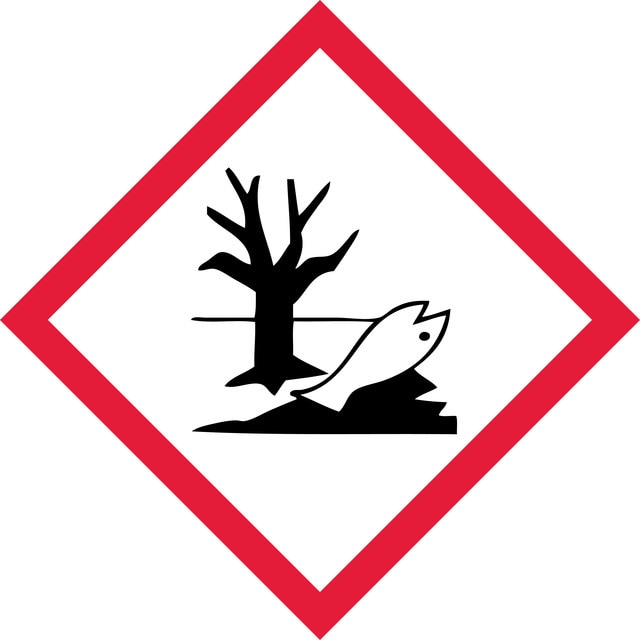
Acute Tox. 4 Inhalation - Acute Tox. 4 Oral - Aquatic Acute 1 - Aquatic Chronic 1 - Carc. 1B - Muta. 2 - STOT RE 2

Storage Class

6.1C - Combustible acute toxic Cat.3 / toxic compounds or compounds which causing chronic effects

wgk

WGK 3

flash_point_f

212.0 °F - closed cup

flash_point_c

100.0 °C - closed cup

ppe

Eyeshields, Gloves, type P3 (EN 143) respirator cartridges


Regulatory Listings

Regulatory Listings are mainly provided for chemical products. Only limited information can be provided here for non-chemical products. No entry means none of the components are listed. It is the user’s obligation to ensure the safe and legal use of the product.

103-33-3

CAS No.

Choose from one of the most recent versions:

Certificates of Analysis (COA)

Lot/Batch Number

Don't see the Right Version?

If you require a particular version, you can look up a specific certificate by the Lot or Batch number.

Already Own This Product?

Find documentation for the products that you have recently purchased in the Document Library.

Visit the Document Library

Michael S Scholz et al.
The journal of physical chemistry. A, 121(34), 6413-6419 (2017-08-05)
Because of their high photoisomerization efficiencies, azobenzenes and their functionalized derivatives are used in a broad range of molecular photoswitches. Here, the photochemical properties of the trans isomers of protonated azobenzene (ABH
Daisuke Ishikawa et al.
Langmuir : the ACS journal of surfaces and colloids, 29(14), 4622-4631 (2012-12-20)
The growth processes of self-assembled monolayers (SAMs) of two azobenzene disulfides formed on flat gold surfaces were studied to confirm the effect of the intermolecular interactions between azobenzene molecules on the light-triggered surface morphologies of the SAMs. Scanning tunneling microscopy
C Renner et al.
The journal of peptide research : official journal of the American Peptide Society, 65(1), 4-14 (2005-02-03)
Over the last decades azobenzene has been the most widely used optical trigger for the synthesis of photoresponsive systems ranging from poly-alpha-amino acids to innovative materials with light-controlled mechanical and optical properties. More recently, its use in form of appropriate
Laura Maggini et al.
Nanoscale, 5(2), 634-645 (2012-12-12)
Photothermally responsive supramolecular polymers containing azobenzene units have been synthesised and employed as dispersants for multi-walled carbon nanotubes (MWCNTs) in organic solvents. Upon triggering the trans-cis isomerisation of the supramolecular polymer intermolecular interactions between MWCNTs and the polymer are established
Shiki Yagai et al.
Journal of the American Chemical Society, 134(44), 18205-18208 (2012-10-23)
We report a precise control over the hierarchy levels in the outstanding self-organization process shown by chiral azobenzene dimer 1. This compound forms uniform toroidal nanostructures that can hierarchically organize into chiral nanotubes under the control by temperature, concentration, or

Our team of scientists has experience in all areas of research including Life Science, Material Science, Chemical Synthesis, Chromatography, Analytical and many others.

Contact Technical Service