Skip to Content
Merck

B8522

Brilliant Blue G solution

Concentrate

Sign In to View Organizational & Contract Pricing.

Select a Size


About This Item

CAS Number:
NACRES:
NA.47
PubChem Substance ID:
UNSPSC Code:
12171500
MDL number:
Technical Service
Need help? Our team of experienced scientists is here for you.
Let Us Assist
Technical Service
Need help? Our team of experienced scientists is here for you.
Let Us Assist

Product Name

Brilliant Blue G solution, Concentrate

InChI

1S/C47H49N3O7S2.Na/c1-6-49(31-35-11-9-13-43(29-35)58(51,52)53)40-21-25-45(33(4)27-40)47(37-15-17-38(18-16-37)48-39-19-23-42(24-20-39)57-8-3)46-26-22-41(28-34(46)5)50(7-2)32-36-12-10-14-44(30-36)59(54,55)56;/h9-30H,6-8,31-32H2,1-5H3,(H2,51,52,53,54,55,56);/q;+1/p-1

SMILES string

[Na+].CCOc1ccc(Nc2ccc(cc2)C(\c3ccc(cc3C)N(CC)Cc4cccc(c4)S([O-])(=O)=O)=C5\C=CC(\C=C5C)=[N+](\CC)Cc6cccc(c6)S([O-])(=O)=O)cc1

InChI key

RWVGQQGBQSJDQV-UHFFFAOYSA-M

form

liquid

technique(s)

microbe id | staining: suitable

color

dark blue

suitability

suitable for (Suitable for for staining protein in polyacrylamide and agarose gels)

application(s)

diagnostic assay manufacturing
hematology
histology

storage temp.

2-8°C

Looking for similar products? Visit Product Comparison Guide

Analysis Note

This product has been tested for suitability on SDS-PAGE.

Application

Brilliant Blue G solution has been used for protein band detection after SDS-PAGE (sodium dodecyl sulfate polyacrylamide gel electrophoresis). It is also used for the protein staining of cells on microscopic slide.

General description

Brilliant Blue G is a methanol based stain which is especially designed for staining protein in polyacrylamide gels, but will also stain protein in agarose gels (IEF). The stain contains methanol and acetic acid so gels do not require fixing prior to staining. Water is added directly to the bottle to produce 1 liter of ready-to-use staining solution.

Preparation Note

After dilution with deionized water to a final volume of one liter, solution will contain 0.1% (w/v) Brilliant Blue G, 25% (v/v) methanol and 5% (v/v) acetic acid.
One bottle equals one liter working solution. 300 ml of brilliant blue G solution concentrate is supplied in the bottle.

signalword

Danger

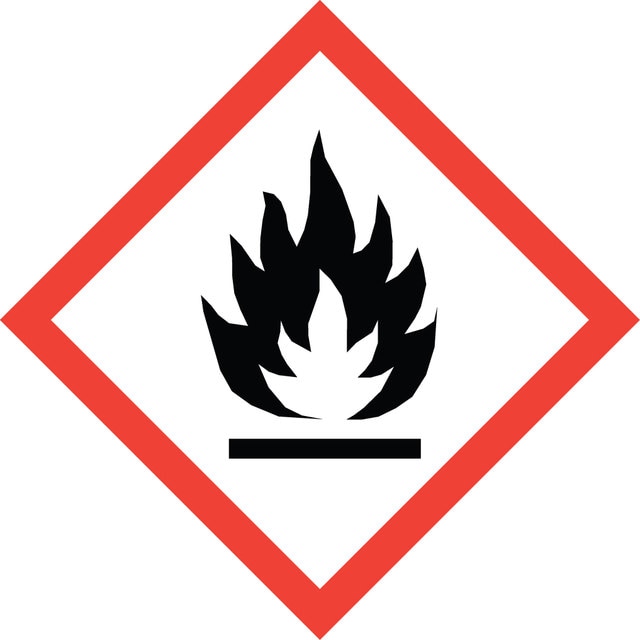
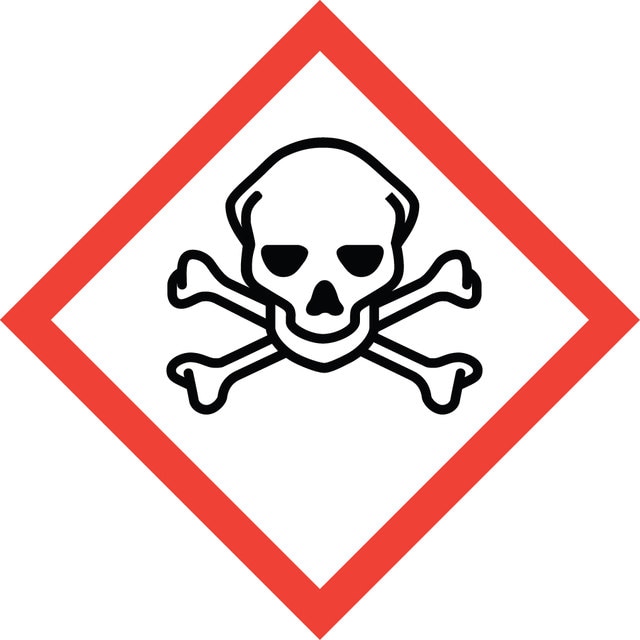
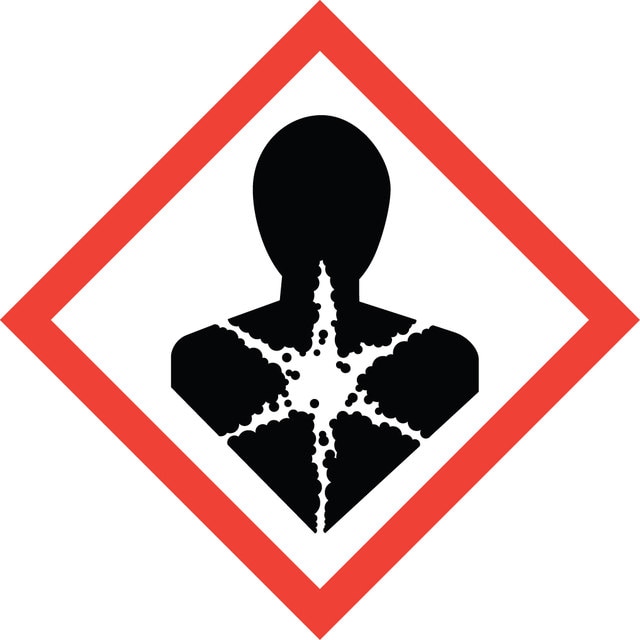
Hazard Classifications

Acute Tox. 3 Dermal - Acute Tox. 3 Inhalation - Acute Tox. 3 Oral - Eye Irrit. 2 - Flam. Liq. 2 - Skin Irrit. 2 - STOT SE 1

target_organs

Eyes,Central nervous system

Storage Class

3 - Flammable liquids

wgk

WGK 2

flash_point_f

49.5 °F - closed cup

flash_point_c

9.7 °C - closed cup

ppe

Faceshields, Gloves, Goggles, type ABEK (EN14387) respirator filter


Choose from one of the most recent versions:

Certificates of Analysis (COA)

Lot/Batch Number

Don't see the Right Version?

If you require a particular version, you can look up a specific certificate by the Lot or Batch number.

Already Own This Product?

Find documentation for the products that you have recently purchased in the Document Library.

Visit the Document Library

Effect of an experimental proteasome inhibitor on the cytoskeleton, cytosolic protein turnover, and induction in the neuronal cells in vitro.
Csizmadia V, et al.
Neurotoxicology, 29, 232-232 (2008)
Emerin suppresses Notch signaling by restricting the Notch intracellular domain to the nuclear membrane.
Biochimica et Biophysica Acta, 1864, 303-303 (2017)
Ahmed H
Principles and Reactions of Protein Extraction, Purification, and Characterization (2004)
Starlee Lively et al.
Frontiers in cellular neuroscience, 12, 433-433 (2018-12-14)
Addressing potential sex differences in pre-clinical studies is crucial for developing therapeutic interventions. Although sex differences have been reported in epidemiological studies and from clinical experience, most pre-clinical studies of neuroinflammation use male rodents; however, sexual dimorphisms in microglia might
Starlee Lively et al.
Frontiers in cellular neuroscience, 12, 115-115 (2018-05-22)
The cytokine, transforming growth factor β1 (TGFβ1), is up-regulated after central nervous system (CNS) injuries or diseases involving microglial activation, and it has been proposed as a therapeutic agent for treating neuroinflammation. Microglia can produce and respond to TGFβ1. While

Our team of scientists has experience in all areas of research including Life Science, Material Science, Chemical Synthesis, Chromatography, Analytical and many others.

Contact Technical Service