Skip to Content
Merck

320048

2-Methyl-1-propanol

ACS reagent, ≥99.0%

Synonym(s):

Isobutanol, Isobutyl alcohol

Sign In to View Organizational & Contract Pricing.

Select a Size


About This Item

Linear Formula:
(CH3)2CHCH2OH
CAS Number:
Molecular Weight:
74.12
UNSPSC Code:
12352001
NACRES:
NA.21
PubChem Substance ID:
EC Number:
201-148-0
Beilstein/REAXYS Number:
1730878
MDL number:
Assay:
≥99.0%
Grade:
ACS reagent
Vapor pressure:
8 mmHg ( 20 °C), 8.8 mmHg ( 0 °C)
Technical Service
Need help? Our team of experienced scientists is here for you.
Let Us Assist
Technical Service
Need help? Our team of experienced scientists is here for you.
Let Us Assist

InChI key

ZXEKIIBDNHEJCQ-UHFFFAOYSA-N

InChI

1S/C4H10O/c1-4(2)3-5/h4-5H,3H2,1-2H3

SMILES string

CC(C)CO

grade

ACS reagent

vapor density

2.55 (vs air)

vapor pressure

8 mmHg ( 20 °C), 8.8 mmHg ( 0 °C)

assay

≥99.0%

form

liquid

autoignition temp.

801 °F

expl. lim.

10.6 %

dilution

(for analytical testing)

impurities

≤0.0005 meq/g Titr. acid, ≤0.01% butyraldehyde, ≤0.02% 2-butanone, ≤0.1% water

evapn. residue

≤0.001%

color

APHA: ≤10

Quality Level

mp

−108 °C (lit.)

density

0.803 g/mL at 25 °C (lit.)

Looking for similar products? Visit Product Comparison Guide

General description

Our premium ACS solvents are ideal for routine chemical synthesis, drying, purification, and critical labware cleaning. They meet or exceed the rigorous standards of the American Chemical Society (ACS), ensuring high-quality results for your research needs.

Premium ACS Solvents: Our solvents meet or exceed the stringent standards set by the American Chemical Society, ensuring high quality and reliability for your laboratory applications.

Replicable and Publishable Results: Designed for consistency, our solvents deliver results that can be reliably reproduced, making them ideal for research that requires publication.

Versatile Applications: Suitable for routine chemical synthesis, drying, purification, and critical labware cleaning, our solvents cater to a wide range of research needs in the laboratory.
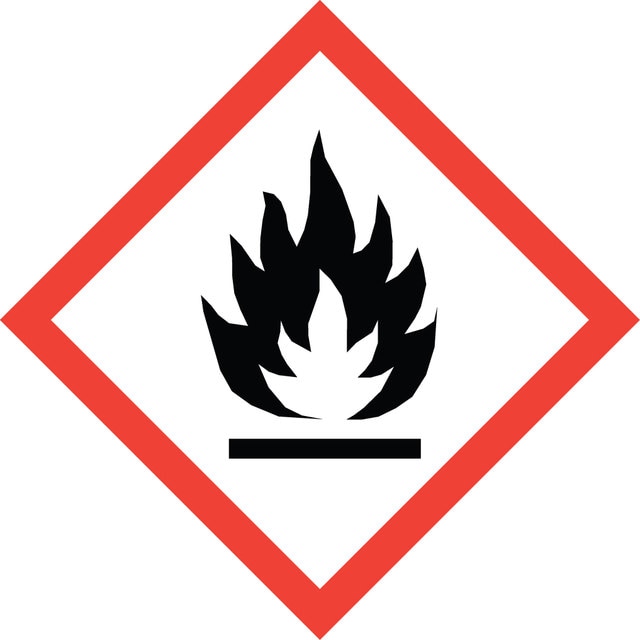
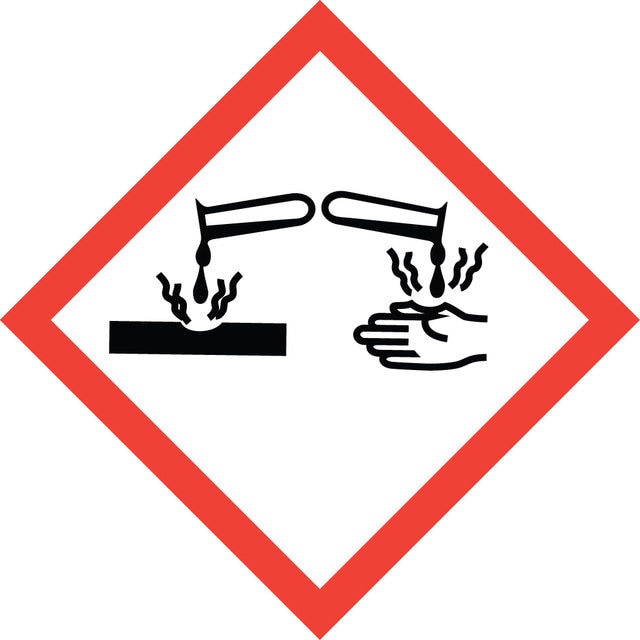
signalword

Danger

Hazard Classifications

Eye Dam. 1 - Flam. Liq. 3 - Skin Irrit. 2 - STOT SE 3

target_organs

Central nervous system, Respiratory system

Storage Class

3 - Flammable liquids

wgk

WGK 1

flash_point_f

82.4 °F - closed cup

flash_point_c

28 °C - closed cup


Choose from one of the most recent versions:

Certificates of Analysis (COA)

Lot/Batch Number

Don't see the Right Version?

If you require a particular version, you can look up a specific certificate by the Lot or Batch number.

Already Own This Product?

Find documentation for the products that you have recently purchased in the Document Library.

Visit the Document Library

Jeremy J Minty et al.
Proceedings of the National Academy of Sciences of the United States of America, 110(36), 14592-14597 (2013-08-21)
Synergistic microbial communities are ubiquitous in nature and exhibit appealing features, such as sophisticated metabolic capabilities and robustness. This has inspired fast-growing interest in engineering synthetic microbial consortia for biotechnology development. However, there are relatively few reports of their use
Han Li et al.
Science (New York, N.Y.), 335(6076), 1596-1596 (2012-03-31)
One of the major challenges in using electrical energy is the efficiency in its storage. Current methods, such as chemical batteries, hydraulic pumping, and water splitting, suffer from low energy density or incompatibility with current transportation infrastructure. Here, we report
D Norbäck et al.
Occupational and environmental medicine, 52(6), 388-395 (1995-06-01)
As a part of the worldwide European Community respiratory health survey, possible relations between symptoms of asthma, building characteristics, and indoor concentration of volatile organic compounds (VOCs) in dwellings were studied. The study comprised 88 subjects, aged 20-45 years, from
Jan-Karl Guterl et al.
ChemSusChem, 5(11), 2165-2172 (2012-10-23)
The limited supply of fossil resources demands the development of renewable alternatives to petroleum-based products. Here, biobased higher alcohols such as isobutanol are versatile platform molecules for the synthesis of chemical commodities and fuels. Currently, their fermentation-based production is limited
Pedram Fatehi
Biotechnology progress, 29(2), 297-310 (2013-01-09)
In this review, the recent advancements and technical challenges associated with the production of ethanol, butanol, and isobutanol via bioconversion routes from celluloses of woody materials are reviewed. Physicochemical processes, e.g. steam explosion, seem to be the most viable process

Our team of scientists has experience in all areas of research including Life Science, Material Science, Chemical Synthesis, Chromatography, Analytical and many others.

Contact Technical Service