
Skip to Content
Merck

C8912

Cocaine free base

Synonym(s):

Ecgonine methyl ester benzoate

Sign In to View Organizational & Contract Pricing.

Select a Size


About This Item

Empirical Formula (Hill Notation):
C17H21NO4
CAS Number:
Molecular Weight:
303.35
NACRES:
NA.77
PubChem Substance ID:
UNSPSC Code:
12352200
EC Number:
200-032-7
MDL number:
Form:
powder
Quality level:
Technical Service
Need help? Our team of experienced scientists is here for you.
Let Us Assist
Technical Service
Need help? Our team of experienced scientists is here for you.
Let Us Assist

InChI key

ZPUCINDJVBIVPJ-LJISPDSOSA-N

InChI

1S/C17H21NO4/c1-18-12-8-9-13(18)15(17(20)21-2)14(10-12)22-16(19)11-6-4-3-5-7-11/h3-7,12-15H,8-10H2,1-2H3/t12-,13+,14-,15+/m0/s1

SMILES string

[H][C@]12CC[C@]([H])([C@H]([C@H](C1)OC(=O)c3ccccc3)C(=O)OC)N2C

form

powder

drug control

USDEA Schedule II; Home Office Schedule 2; stupéfiant (France); kontrollierte Droge in Deutschland; regulated under CDSA - not available from Sigma-Aldrich Canada; estupefaciente (Spain); Decreto Lei 15/93: Tabela IB (Portugal); Kábítószer / Narcotic Drug (Hungary), 78/2022. (XII. 28.) BM rendelet
kontrollierte Droge in Deutschland

Quality Level

application(s)

forensics and toxicology

Biochem/physiol Actions

Inhibits catecholamine transporters with no effect on catecholamine release.
Inhibits the dopamine, norepinephrine, and serotonin transporters with Kis of about 300 nM, 900 nM, and 400 nM, respectively. Unlike amphetamines, it has no effect on catecholamine release.

Legal Information

German
Dieses Produkt fällt unter das Betäubungsmittelgesetz (BtMG). Für eine Bestellung dieses Produktes ist eine Erlaubnis nach § 3 BtMG zwingend erforderlich, es sei denn, es greift eine Ausnahme von der Erlaubnispflicht nach § 4 oder § 26 BtMG.

English
This product is subject to the German Narcotics Act. A permit under Section 3 of the German Narcotics Act is mandatory for ordering this product unless an exemption from the permit requirement under Section 4 or Section 26 of the German Narcotics Act applies.
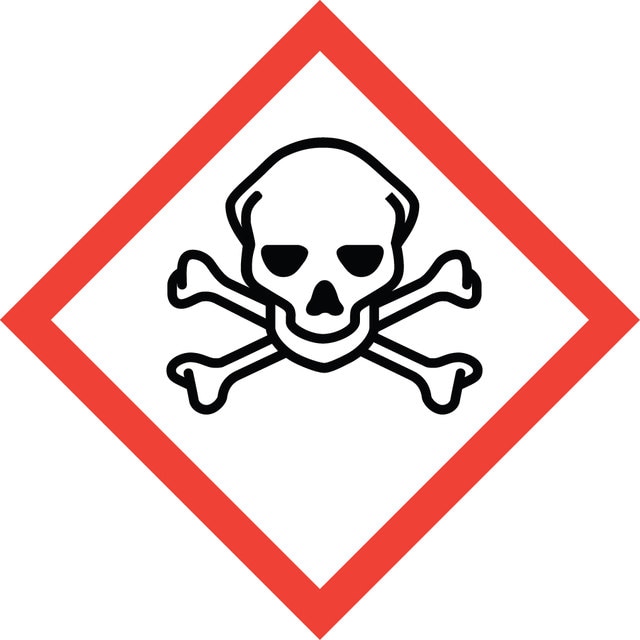
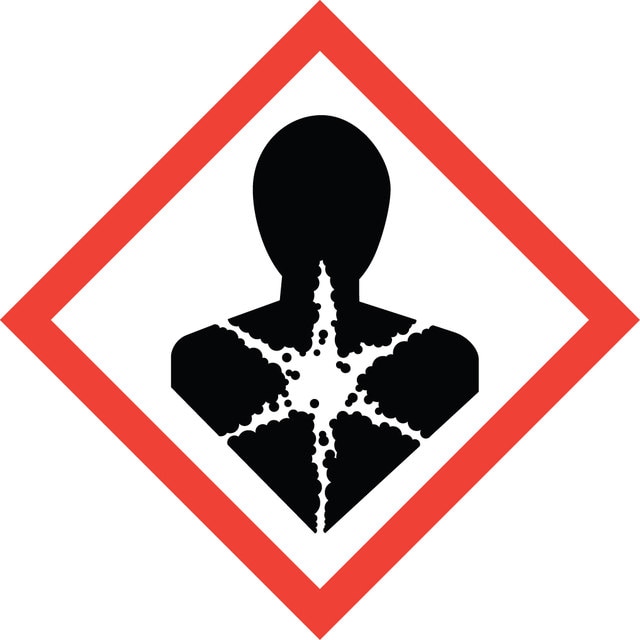
pictograms

Skull and crossbonesHealth hazard

signalword

Danger

Hazard Classifications

Acute Tox. 2 Inhalation - Acute Tox. 2 Oral - Repr. 2 - STOT SE 3

target_organs

Central nervous system

Storage Class

6.1A - Combustible acute toxic Cat. 1 and 2 / very toxic hazardous materials

wgk

WGK 3

flash_point_f

Not applicable

flash_point_c

Not applicable

ppe

Eyeshields, Faceshields, Gloves, type P2 (EN 143) respirator cartridges


Choose from one of the most recent versions:

Certificates of Analysis (COA)

Lot/Batch Number

Don't see the Right Version?

If you require a particular version, you can look up a specific certificate by the Lot or Batch number.

Already Own This Product?

Find documentation for the products that you have recently purchased in the Document Library.

Visit the Document Library

Amanda Bruening et al.
Substance use & misuse, 54(11), 1825-1833 (2019-05-21)
Background: Research has noted that rates of recreational use of erectile dysfunction medication (EDM) are particularly high among men who have sex with other men. Though previous research has investigated recreational EDM use in relation to substance use, its association
Dieter Müller et al.
Clinical toxicology (Philadelphia, Pa.), 57(9), 806-812 (2019-02-19)
Introduction: Fentanyl derivatives like cyclopropylfentanyl have recently appeared on the recreational drug market. Cyclopropylfentanyl is probably a highly potent opioid, but human toxicological data are not available so far. Similar to other fentanyl derivatives the most serious acute health risk
Jesús Gómez-Bujedo et al.
The American journal of drug and alcohol abuse, 45(4), 365-376 (2019-01-15)
Background: Interpretation bias tasks such as word association tests have shown a moderate relation with substance use, but most studies have been conducted in nonclinical samples and these tasks are difficult to rate. Objectives: To provide: (1) reliability evidence of
Jennifer I Lissemore et al.
Translational psychiatry, 8(1), 82-82 (2018-04-19)
Cognitive behavioral therapy (CBT) and selective serotonin reuptake inhibitors (SSRIs) are both effective treatments for some patients with obsessive-compulsive disorder (OCD), yet little is known about the neurochemical changes related to these treatment modalities. Here, we used positron emission tomography
Tine van de Donk et al.
Pain, 160(4), 860-869 (2018-12-27)
In this experimental randomized placebo-controlled 4-way crossover trial, we explored the analgesic effects of inhaled pharmaceutical-grade cannabis in 20 chronic pain patients with fibromyalgia. We tested 4 different cannabis varieties with exact knowledge on their [INCREMENT]-tetrahydrocannabinol (THC) and cannabidiol (CBD)

Our team of scientists has experience in all areas of research including Life Science, Material Science, Chemical Synthesis, Chromatography, Analytical and many others.

Contact Technical Service