
CAT100

Catalase Assay Kit
sufficient for ≥100 tests enzymatic, determination of catalase activity in tissues and cells
Synonym(s):
Catalase Activity Detection Kit
Sign In to View Organizational & Contract Pricing.
Select a Size
About This Item
NACRES:
NA.84
UNSPSC Code:
12161503
Related Categories
Application
Suitable for studying catalase activity in various tissues and subcellular organelles.
Sutitable for Colorimetric and UV Assays
Biochem/physiol Actions
Catalase is a ubiquitous antioxidant enzyme which catalyses the decomposition of hydrogen peroxide (H2O2) to water and oxygen. Hydrogen peroxide is formed in the eukaryotic cell as a by-product of various oxidases and superoxide dismutases. Hydrogen peroxide accumulation in cells causes oxidation of cellular targets such as DNA, proteins, and lipids leading to mutagenesis and cell death. Removal of the H2O2 from the cell by catalase provides protection against oxidative damage to living cells and its role in oxidative stress related diseases has been widely studied.
This assay method is based on the measurement of the hydrogen peroxide substrate remaining after the action of catalase. First, the catalase converts hydrogen peroxide to water and oxygen (catalatic pathway) and then this enzymatic reaction is stopped with sodium azide. An aliquot of the reaction mix is then assayed for the amount of hydrogen peroxide remaining by a colorimetric method.10 The colorimetric method uses a substituted phenol (3,5-dichloro-2-hydroxybenzenesulfonic acid), which couples oxidatively to 4-aminoantipyrine in the presence of hydrogen peroxide and horseradish peroxidase (HRP) to give a red quinoneimine dye (N-(4-antipyryl)-3-chloro-5-sulfonatep-benzoquinone-monoimine) that absorbs at 520 nm
Features and Benefits
- Useful for determining catalase activity - may be used in various tissues and cells
- Simple, optimized protocol - A simple colorimetric assay for analysis of peroxisome enrichment and catalase activity
General description
The Catalase Assay Kit contains all necessary components for studying catalase activity in various tissues and subcellular organelles.
Other Notes
One unit of catalase will decompose 1.0 micromole of hydrogen peroxide to oxygen and water per minute at pH 7.0 at 25 °C at a substrate concentration of 50 mM hydrogen peroxide.
Preparation Note
Use ultrapure water in preparation of all solutions.
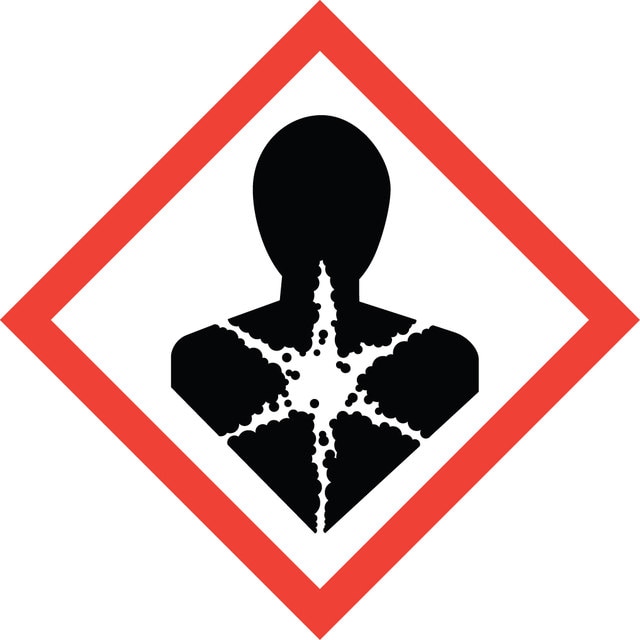
signalword
Danger
hcodes
pcodes
Hazard Classifications
Resp. Sens. 1
Storage Class
12 - Non Combustible Liquids
wgk
WGK 1
flash_point_f
Not applicable
flash_point_c
Not applicable
ppe
Eyeshields, Gloves, multi-purpose combination respirator cartridge (US)
Choose from one of the most recent versions:
Already Own This Product?
Find documentation for the products that you have recently purchased in the Document Library.
M B Hampton et al.
FEBS letters, 414(3), 552-556 (1997-10-10)
The induction of apoptosis in Jurkat T-lymphocytes with 50 microM hydrogen peroxide was associated with caspase activation. Caspase activity was first detected 3 h after treatment, and the morphological features of apoptosis were apparent by 6 h. At higher concentrations
M Zámocký et al.
Progress in biophysics and molecular biology, 72(1), 19-66 (1999-08-14)
This review gives an overview about the structural organisation of different evolutionary lines of all enzymes capable of efficient dismutation of hydrogen peroxide. Major potential applications in biotechnology and clinical medicine justify further investigations. According to structural and functional similarities
S Tada-Oikawa et al.
FEBS letters, 442(1), 65-69 (1999-01-29)
Pulsed field gel electrophoresis showed that the initiation time of DNA breakage induced by the DNA alkylating agent duocarmycin A, which is not a redox-cycling agent, was almost the same in the human leukemia cell line HL-60 and its H2O2-resistant
M Ding et al.
Journal of cell science, 113 ( Pt 13), 2409-2419 (2000-06-15)
The intracellular protozoan parasite Toxoplasma gondii, like all members of the phylum Apicomplexa, is known to possess many organelles: in addition to mitochondria and the compartments of the secretory pathway, there is a reduced chloroplast (the apicoplast) and the phylum-specific
A J Kowaltowski et al.
FEBS letters, 473(2), 177-182 (2000-05-17)
The involvement of reactive oxygen species in Ca(2+)-induced mitochondrial membrane permeabilization and cell viability was studied using yeast cells in which the thioredoxin peroxidase (TPx) gene was disrupted and/or catalase was inhibited by 3-amino-1,2, 4-triazole (ATZ) treatment. Wild-type Saccharomyces cerevisiae
Related Content
Our team of scientists has experience in all areas of research including Life Science, Material Science, Chemical Synthesis, Chromatography, Analytical and many others.
Contact Technical Service