Skip to Content
Merck

Z2625

Zomepirac sodium salt

Synonym(s):

5-(p-Chlorobenzoyl)-1,4-dimethylpyrrole-2-acetic acid sodium-potassium salt

Sign In to View Organizational & Contract Pricing.

Select a Size


About This Item

Linear Formula:
C15H13ClNO3Na
CAS Number:
Molecular Weight:
313.71
NACRES:
NA.77
PubChem Substance ID:
UNSPSC Code:
12161501
EC Number:
264-669-2
MDL number:
Quality level:
Technical Service
Need help? Our team of experienced scientists is here for you.
Let Us Assist
Technical Service
Need help? Our team of experienced scientists is here for you.
Let Us Assist

InChI key

SEEXPXUCHVGZGU-UHFFFAOYSA-M

InChI

1S/C15H14ClNO3.Na/c1-9-7-12(8-13(18)19)17(2)14(9)15(20)10-3-5-11(16)6-4-10;/h3-7H,8H2,1-2H3,(H,18,19);/q;+1/p-1

SMILES string

Cc1cc(CC(=O)O[Na])n(C)c1C(=O)c2ccc(Cl)cc2

Quality Level

Application

An NSAID. Circumvents MRP-mediated multidrug resistance. Significantly increases the cytotoxicity of the anthracyclines (doxorubicin, daunorubicin and epirubicin), as well as teniposide, VP-16 and vincristine.

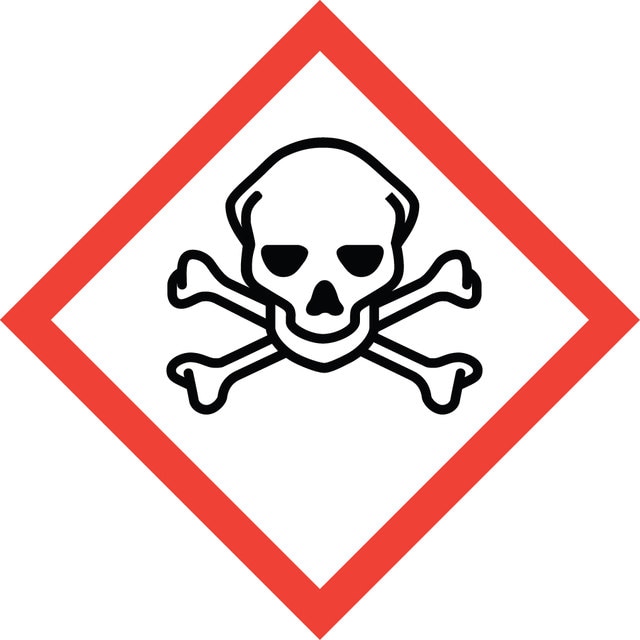
pictograms

Skull and crossbones

signalword

Danger

Hazard Classifications

Acute Tox. 2 Oral - Acute Tox. 3 Dermal - Acute Tox. 3 Inhalation

Storage Class

6.1A - Combustible acute toxic Cat. 1 and 2 / very toxic hazardous materials

wgk

WGK 3

flash_point_f

Not applicable

flash_point_c

Not applicable

ppe

Eyeshields, Faceshields, Gloves, type P2 (EN 143) respirator cartridges


Choose from one of the most recent versions:

Certificates of Analysis (COA)

Lot/Batch Number

Don't see the Right Version?

If you require a particular version, you can look up a specific certificate by the Lot or Batch number.

Already Own This Product?

Find documentation for the products that you have recently purchased in the Document Library.

Visit the Document Library

Karolina Pietrowska et al.
Electrophoresis, 39(9-10), 1233-1240 (2018-01-03)
Cataract is the leading cause of blindness worldwide. Epidemiological studies revealed up to a fivefold increased prevalence of cataracts in diabetic subjects. Metabolomics is nowadays frequently implemented to understand pathophysiological processes responsible for disease occurrence and progression. It has also
A R King et al.
Journal of pharmacological and toxicological methods, 36(3), 131-136 (1996-11-01)
Acyl glucuronide conjugates of acidic drugs are chemically unstable metabolites, able to undergo a number of reactions including covalent binding interactions with proteins. The question of whether any toxicological or immunological responses result from such covalent modification of native proteins
M J Bailey et al.
Chemical research in toxicology, 9(3), 659-666 (1996-04-01)
Carboxylate drugs usually form acyl glucuronide conjugates as major metabolites. These electrophilic metabolites are reactive, capable of undergoing hydrolysis, rearrangement, and covalent binding reactions to proteins. The last-mentioned property has the potential to initiate immune and other toxic responses in
G R Cannell et al.
Life sciences, 70(1), 37-48 (2002-01-05)
Many nonsteroidal anti-inflammatory drugs (NSAIDs) which have antiproliferative activity in colon cancer cells are carboxylate compounds forming acyl glucuronide metabolites. Acyl glucuronides are potentially reactive, able to hydrolyse, rearrange into isomers, and covalently modify proteins under physiological conditions. This study
P Zia-Amirhosseini et al.
The Biochemical journal, 311 ( Pt 2), 431-435 (1995-10-15)
Human serum albumins modified by covalently bound tolmetin or zomepirac were synthesized as models for similar products formed in vivo from acyl glucuronides. Activated esters of both drugs were prepared with 1-ethyl-3-(3-dimethylaminopropyl)-carbodi-imide, and then allowed to react with human serum

Our team of scientists has experience in all areas of research including Life Science, Material Science, Chemical Synthesis, Chromatography, Analytical and many others.

Contact Technical Service