Skip to Content
Merck

203076

Cobalt

granular, 99.99% trace metals basis

Sign In to View Organizational & Contract Pricing.

Select a Size

Change View

About This Item

Empirical Formula (Hill Notation):
Co
CAS Number:
Molecular Weight:
58.93
PubChem Substance ID:
eCl@ss:
38190601
UNSPSC Code:
12141710
NACRES:
NA.23
EC Number:
231-158-0
MDL number:
Technical Service
Need help? Our team of experienced scientists is here for you.
Let Us Assist


assay

99.99% trace metals basis

form

granular

reaction suitability

core: cobalt

resistivity

6.24 μΩ-cm, 20°C

bp

2900 °C (lit.)

density

8.9 g/mL at 25 °C (lit.)

SMILES string

[Co]

InChI

1S/Co

InChI key

GUTLYIVDDKVIGB-UHFFFAOYSA-N

Application

Employed in the synthesis of a metal-rich layered telluride, TaCo2Te2, which possesses ideal characteristics for photovoltaic applications, for surface scanning studies, and which may give clean and atomically flat surfaces.


Still not finding the right product?

Explore all of our products under Cobalt


pictograms

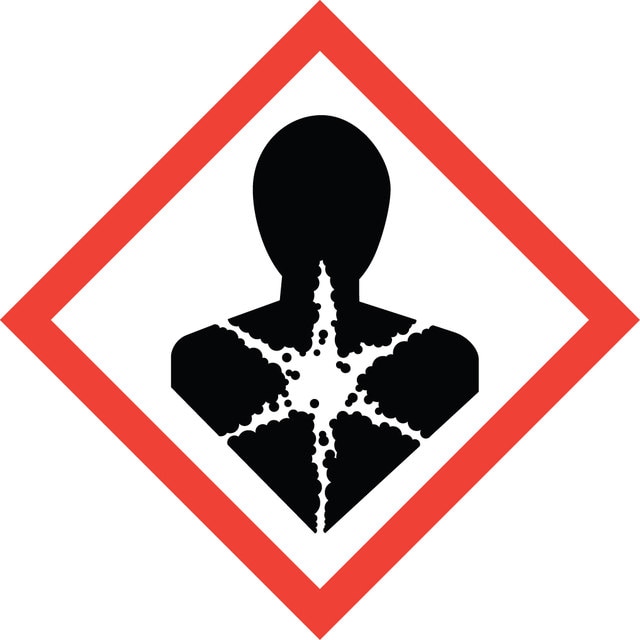
FlameHealth hazard

signalword

Danger

Hazard Classifications

Aquatic Chronic 4 - Carc. 1B - Eye Irrit. 2 - Flam. Sol. 1 - Muta. 2 - Repr. 1B - Resp. Sens. 1 - Skin Sens. 1

Storage Class

4.1B - Flammable solid hazardous materials

wgk

WGK 3

flash_point_f

Not applicable

flash_point_c

Not applicable

ppe

dust mask type N95 (US), Eyeshields, Faceshields, Gloves


Choose from one of the most recent versions:

Certificates of Analysis (COA)

Lot/Batch Number

Don't see the Right Version?

If you require a particular version, you can look up a specific certificate by the Lot or Batch number.

Already Own This Product?

Find documentation for the products that you have recently purchased in the Document Library.

Visit the Document Library


Articles

Biomedical implants are essentially foreign substances within the human body that must survive many years’ exposure to demanding mechanical and physiological conditions. Despite these challenges, metal implants have been widely used to substitute for or rebuild hard tissues such as bones and teeth.


Neuhasen, J. et al.
Chemistry of Materials, 10, 3870-3870 (1998)
Heather De Bari et al.
Acta crystallographica. Section F, Structural biology and crystallization communications, 69(Pt 3), 228-236 (2013-03-23)
The X-ray crystal structure of ribosome hibernation promoting factor (HPF) from Vibrio cholerae is presented at 2.0 Å resolution. The crystal was phased by two-wavelength MAD using cocrystallized cobalt. The asymmetric unit contained two molecules of HPF linked by four Co
S Perconti et al.
Journal of biological regulators and homeostatic agents, 27(2), 443-454 (2013-07-09)
Size-dependent characteristics of novel engineered nanomaterials might result in unforeseen biological responses and toxicity. To address this issue, we used cDNA microarray analysis (13443 genes) coupled with bioinformatics and functional gene annotation studies to investigate the transcriptional profiles of Balb/3T3