Skip to Content
Merck

12852

Copper(II) sulfate

puriss., meets analytical specification of Ph. Eur., BP, USP, anhydrous, 99-100.5% (based on anhydrous substance)

Synonym(s):

Cupric sulfate

Sign In to View Organizational & Contract Pricing.

Select a Size

Change View

About This Item

Linear Formula:
CuSO4
CAS Number:
Molecular Weight:
159.61
NACRES:
NA.21
PubChem Substance ID:
UNSPSC Code:
12352302
EC Number:
231-847-6
MDL number:
Assay:
99-100.5% (based on anhydrous substance)
Form:
solid
Technical Service
Need help? Our team of experienced scientists is here for you.
Let Us Assist


vapor pressure

7.3 mmHg ( 25 °C)

Quality Level

grade

puriss.

assay

99-100.5% (based on anhydrous substance)

form

solid

quality

meets analytical specification of Ph. Eur., BP, USP

impurities

residual solvents, complies

loss

≤1% loss on drying, 250 °C

pH

3.5-4.5 (20 °C, 50 g/L)

mp

200 °C (dec.) (lit.)

density

3.603 g/mL at 25 °C (lit.)

anion traces

chloride (Cl-): ≤100 mg/kg

cation traces

Ca: ≤50 mg/kg, Fe: ≤30 mg/kg, K: ≤100 mg/kg, Mg: ≤100 mg/kg, Na: ≤200 mg/kg, Ni: ≤50 mg/kg, Pb: ≤80 mg/kg

SMILES string

[Cu++].[O-]S([O-])(=O)=O

InChI

1S/Cu.H2O4S/c;1-5(2,3)4/h;(H2,1,2,3,4)/q+2;/p-2

InChI key

ARUVKPQLZAKDPS-UHFFFAOYSA-L

General description

Copper(II) sulfate acts as a redox catalyst along with potassium permanganate for the oxidation of alcohols. On heating above 560°C, it decomposes to CuO.5
It can find applications in agriculture as a nutrient for plants. It can also serve as a precursor in the production of foliar bactericides and fungicides.

Application

Copper(II) sulfate may be employed for the following studies:
  • As a catalyst for the acetylation of alcohols and phenols under solvent-free conditions.
  • To compose the electrolyte for the electrodeposition of Cu-Zn-Sn precursors, required for the preparation of Cu2ZnSnS4 (CZTS) thin films.
  • As a Lewis acid catalyst for the dehydration of alcohols.5


Still not finding the right product?

Explore all of our products under Copper(II) sulfate
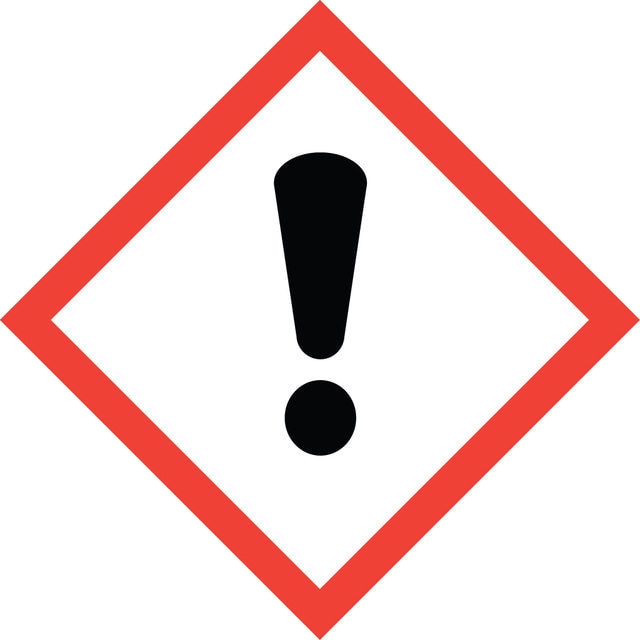

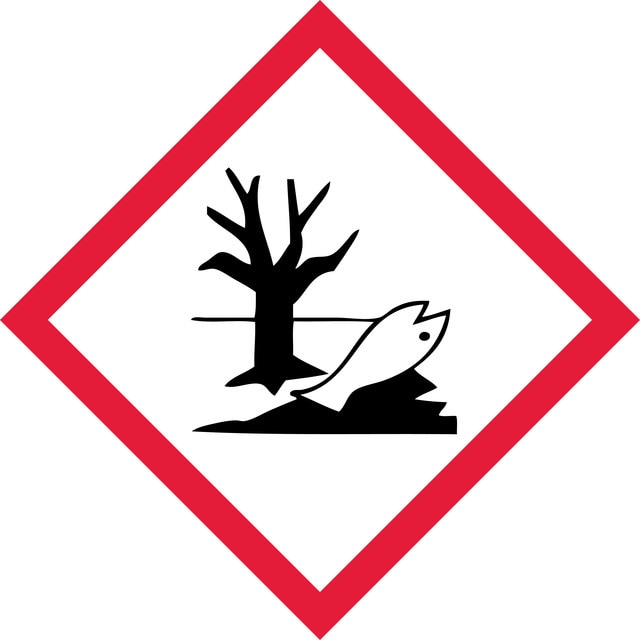
pictograms

Exclamation markEnvironment

signalword

Warning

Hazard Classifications

Acute Tox. 4 Oral - Aquatic Acute 1 - Aquatic Chronic 1 - Eye Irrit. 2 - Skin Irrit. 2

Storage Class

11 - Combustible Solids

flash_point_f

Not applicable

flash_point_c

Not applicable


Choose from one of the most recent versions:

Certificates of Analysis (COA)

Lot/Batch Number

It looks like we've run into a problem, but you can still download Certificates of Analysis from our Documents section.

If you need assistance, please contact Customer Support

Already Own This Product?

Find documentation for the products that you have recently purchased in the Document Library.

Visit the Document Library


Author - Richardson W.H
Handbook of Copper Compounds and Applications (1997)
Wei Zhao et al.
Dalton transactions (Cambridge, England : 2003), (8)(8), 1509-1517 (2005-04-13)
Three novel metal-organic frameworks (MOFs), [Cu(1)SO4].H2O (4), [Cu2(2)2(SO4)2].4H2O (5) and [Cu(3)(H2O)]SO4.5.5H2O (6), were obtained by hydrothermal reactions of CuSO4.5H2O with the corresponding ligands, which have different flexibility. The structures of the synthesized complexes were determined by single-crystal X-ray diffraction analyses.
Damijana Urankar et al.
Journal of combinatorial chemistry, 10(6), 981-985 (2008-10-17)
Azoamides, previously established as bioactive intracellular GSH-depleting agents, were decorated with a terminal alkyne moiety to 4 and then were transformed, by copper(I)-catalyzed azide-alkyne cycloaddition (CuAAC), into different ligand-arm functionalized azoamides 6. Azides 5 having ligand-arms amenable for binding to