
139181

Bromodichloromethane
≥97%
Synonym(s):
Dichlorobromomethane
Sign In to View Organizational & Contract Pricing.
Select a Size
Change View
About This Item
Linear Formula:
BrCHCl2
CAS Number:
Molecular Weight:
163.83
UNSPSC Code:
12352100
NACRES:
NA.22
PubChem Substance ID:
EC Number:
200-856-7
Beilstein/REAXYS Number:
1697005
MDL number:
Assay:
≥97%
Form:
liquid
Quality Segment
assay
≥97%
form
liquid
contains
potassium carbonate as stabilizer
refractive index
n20/D 1.497 (lit.)
bp
87 °C (lit.)
mp
−55 °C (lit.)
solubility
water: insoluble
density
1.98 g/mL at 25 °C (lit.)
functional group
bromo, chloro
SMILES string
ClC(Cl)Br
InChI
1S/CHBrCl2/c2-1(3)4/h1H
InChI key
FMWLUWPQPKEARP-UHFFFAOYSA-N
Application
Bromodichloromethane was used to investigate the in vivo genotoxicity of chlorodibromomethane, bromodichloromethane and bromoform in mice.
Biochem/physiol Actions
Bromodichloromethane (BDCM) induces steatohepatitic injury in human liver. BDCM induces the cell proliferation in different tissues and kidney damage by renal tuble cell proliferation in male F344 rats.
Still not finding the right product?
Explore all of our products under Bromodichloromethane
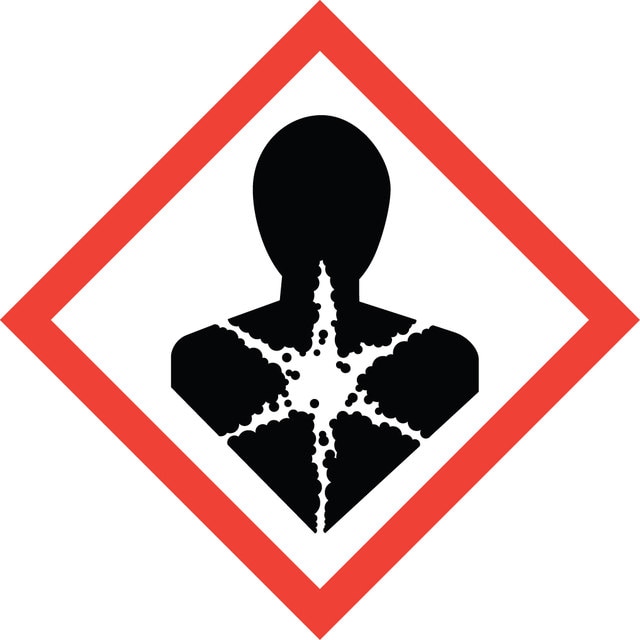
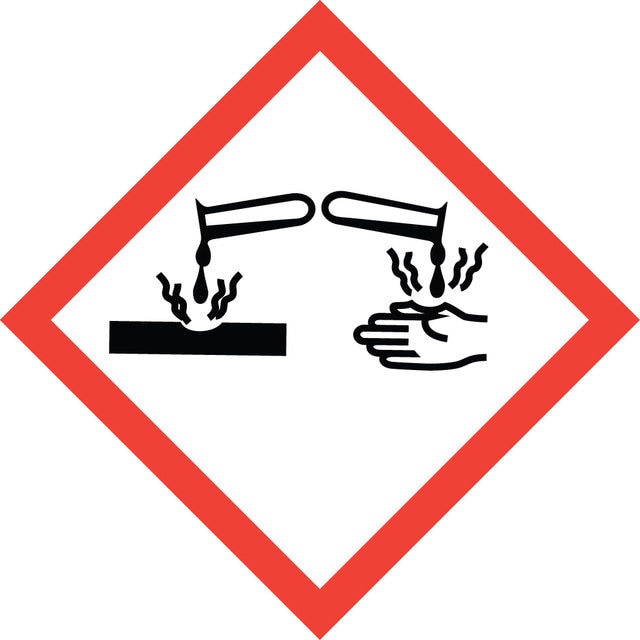

signalword
Danger
hcodes
Hazard Classifications
Acute Tox. 4 Oral - Carc. 2 - Eye Dam. 1 - Skin Irrit. 2 - STOT SE 3
target_organs
Respiratory system
Storage Class
10 - Combustible liquids
wgk
WGK 3
flash_point_f
Not applicable
flash_point_c
Not applicable
ppe
Eyeshields, Faceshields, Gloves, type ABEK (EN14387) respirator filter
Choose from one of the most recent versions:
Already Own This Product?
Find documentation for the products that you have recently purchased in the Document Library.