
130915

2-Bromophenol
98%
Synonym(s):
o-Bromophenol
Sign In to View Organizational & Contract Pricing.
Select a Size
Change View
About This Item
Linear Formula:
BrC6H4OH
CAS Number:
Molecular Weight:
173.01
UNSPSC Code:
12352100
NACRES:
NA.22
PubChem Substance ID:
EC Number:
202-432-7
Beilstein/REAXYS Number:
1905115
MDL number:
Assay:
98%
Form:
liquid
Quality Level
assay
98%
form
liquid
refractive index
n20/D 1.589 (lit.)
bp
195 °C (lit.)
mp
3-7 °C (lit.)
density
1.492 g/mL at 25 °C (lit.), 1.6235 g/mL at 25 °C
functional group
bromo
SMILES string
Oc1ccccc1Br
InChI
1S/C6H5BrO/c7-5-3-1-2-4-6(5)8/h1-4,8H
InChI key
VADKRMSMGWJZCF-UHFFFAOYSA-N
Gene Information
human ... ALOX12(239), ALOX15(246)
Application
2-Bromophenol was used in the preparation of anti-benzofurobenzofuran diimides. It was also used to study the photodegradation of 2-bromophenol using UV-Vis spectroscopy and HPLC.
Still not finding the right product?
Explore all of our products under 2-Bromophenol
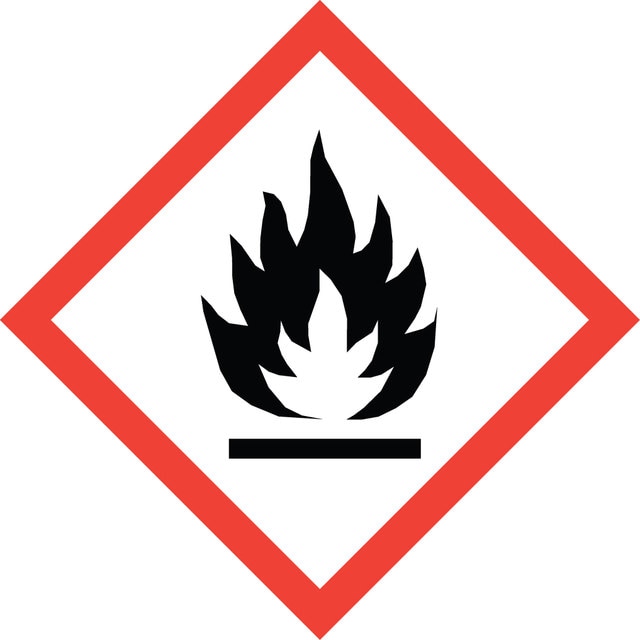


signalword
Warning
Hazard Classifications
Acute Tox. 4 Oral - Aquatic Acute 1 - Eye Irrit. 2 - Flam. Liq. 3 - Skin Irrit. 2 - STOT SE 3
target_organs
Respiratory system
Storage Class
3 - Flammable liquids
flash_point_f
107.6 °F - closed cup
flash_point_c
42 °C - closed cup
ppe
Eyeshields, Faceshields, Gloves, type ABEK (EN14387) respirator filter
Choose from one of the most recent versions:
Already Own This Product?
Find documentation for the products that you have recently purchased in the Document Library.
Sabin-Lucian Suraru et al.
The Journal of organic chemistry, 79(1), 128-139 (2013-11-28)
Here we report a selective method for the core-extension of naphthalene diimide (NDI) with two annulated indole rings leading to carbazolo[2,3-b]carbazole diimides (CbDIs) with exclusive syn-connectivity based on a regioselective nucleophilic substitution reaction of Br4-NDI with arylamines, followed by palladium-catalyzed
Catherine S Evans et al.
Environmental science & technology, 39(7), 2128-2134 (2005-05-06)
The homogeneous, gas-phase oxidative thermal degradation of 2-bromophenol was studied in a 1 cm i.d., fused silica flow reactor at a concentration of 88 ppm, reaction time of 2.0 s, over a temperature range from 300 to 1000 degrees C.
Christian Eidamshaus et al.
Organic letters, 10(19), 4211-4214 (2008-08-30)
A one-pot synthesis of benzofurans which utilizes a palladium-catalyzed enolate arylation is described. The process demonstrates broad substrate scope and provides differentially substituted benzofurans in moderate to excellent yields. The utility of the method is further demonstrated by the synthesis