
474762

Tin(II) chloride dihydrate
≥99.97% trace metals basis
Synonym(s):
Stannous dichloride dihydrate, Stannous chloride dihydrate
Select a Size
About This Item
Quality Segment
assay
≥99.97% trace metals basis
reaction suitability
core: tin, reagent type: catalyst
bp
652 °C (lit.)
mp
37-38 °C (dec.) (lit.)
SMILES string
O.O.Cl[SnH2]Cl
InChI
1S/2ClH.2H2O.Sn/h2*1H;2*1H2;/q;;;;+2/p-2
InChI key
FWPIDFUJEMBDLS-UHFFFAOYSA-L
Application
- 3-Aminoimidazo[1,2-a]pyridines via three-component condensation reaction of aromatic aldehydes, 2-aminopyridines, and isonitriles.
- Pyrazolo[5,4-b]quinoline derivatives via cyclocondensation reaction of 5-amino-3-(arylamino)-1H-pyrazole-4-carbonitriles with cyclohexane-1,3-dione or dimedone.
- Polylactic acid from aqueous lactic acid in the presence of succinic anhydride.
It can also be used as a cocatalyst to synthesize indole derivatives by treating anilines with trialkanolamines in the presence of ruthenium as a catalyst.
Still not finding the right product?
Explore all of our products under Tin(II) chloride dihydrate
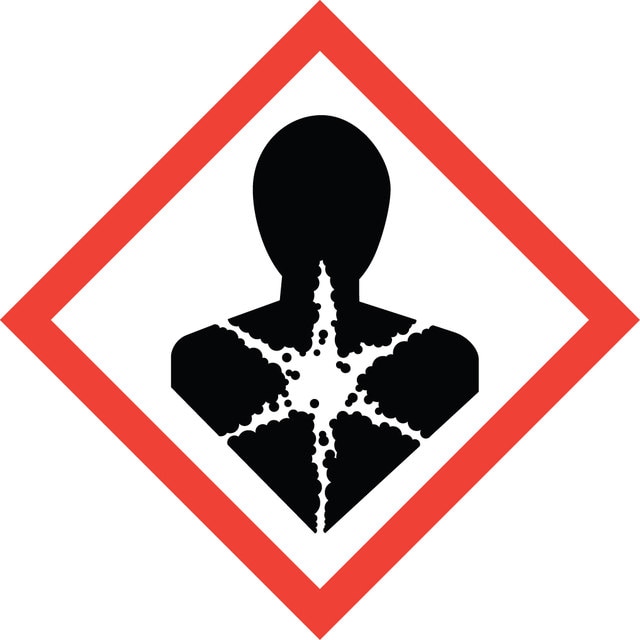
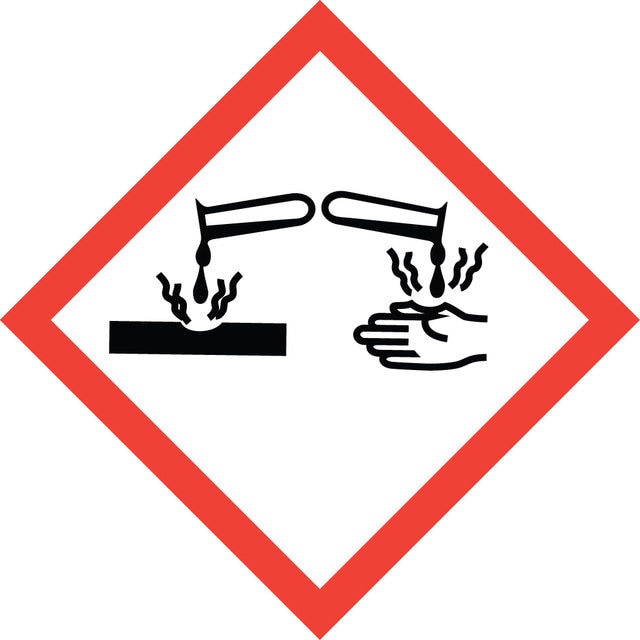

signalword
Danger
Hazard Classifications
Acute Tox. 4 Inhalation - Acute Tox. 4 Oral - Aquatic Chronic 3 - Eye Dam. 1 - Met. Corr. 1 - Skin Corr. 1B - Skin Sens. 1 - STOT RE 2 Oral - STOT SE 3
target_organs
Cardio-vascular system, Respiratory system
Storage Class
8B - Non-combustible corrosive hazardous materials
wgk
WGK 3
flash_point_f
Not applicable
flash_point_c
Not applicable
ppe
Eyeshields, Faceshields, Gloves, type P3 (EN 143) respirator cartridges
Choose from one of the most recent versions:
Already Own This Product?
Find documentation for the products that you have recently purchased in the Document Library.