
225819

Hydrazine hydrate
reagent grade, N2H4 50-60 %
Synonym(s):
Hydrazinium hydroxide
Select a Size
About This Item
grade
reagent grade
Quality Level
vapor density
>1 (vs air)
vapor pressure
5 mmHg ( 25 °C)
form
liquid
composition
Degree of hydration, ~1.5 , N2H4, 50-60%
expl. lim.
99.99 %
concentration
50.0-60.0% (%H4N2 by Na2S2O3 basis, titration)
density
1.029 g/mL at 25 °C (lit.)
SMILES string
NN.[H]O[H]
InChI
1S/H4N2.H2O/c1-2;/h1-2H2;1H2
InChI key
IKDUDTNKRLTJSI-UHFFFAOYSA-N
General description
Application
- Preparation of silver nanoparticles.
- Transformation of monosubstituted nitrobenzene derivatives to the corresponding anilines.
- Along with graphite for the conversion of nitro compounds (aromatic and aliphatic) to the amino compounds.
- 3-(2-Benzyloxy-6-hydroxyphenyl)-5-styrylpyrazoles by reacting with 5-benzyloxy-2-styrylchromones.
- 3,5-Diphenyl-2-pyrazoline derivatives by reacting with 1,3-diphenyl-2-propen-1-one.
- 3′-Aryl-1,2,3,4,4′,5′-hexahydrospiro[quinoxalin-2,5′-pyrazol]-3-ones by reacting with 3-arylacylidene-3,4-dihydroquinoxalin-2(1H)-ones.
- It may also be used in the catalytic reduction of nitroarenes to aromatic amines.
signalword
Danger
flash_point_f
204.8 °F - closed cup
flash_point_c
96 °C - closed cup
ppe
Faceshields, Gloves, Goggles, type ABEK (EN14387) respirator filter
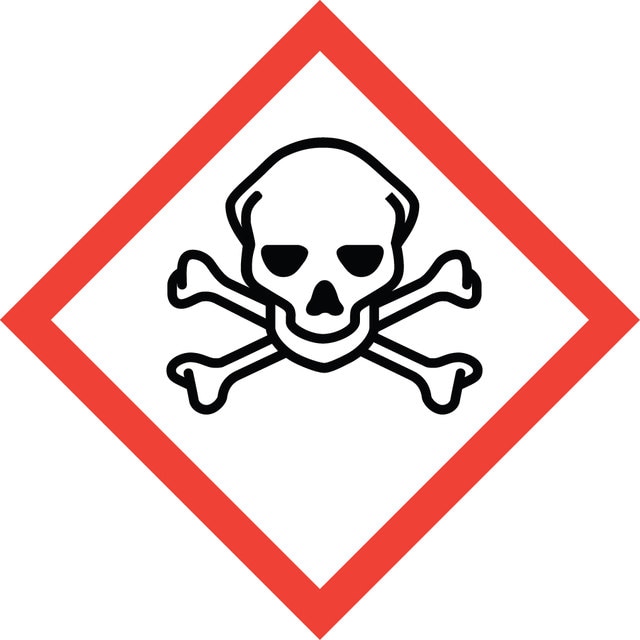
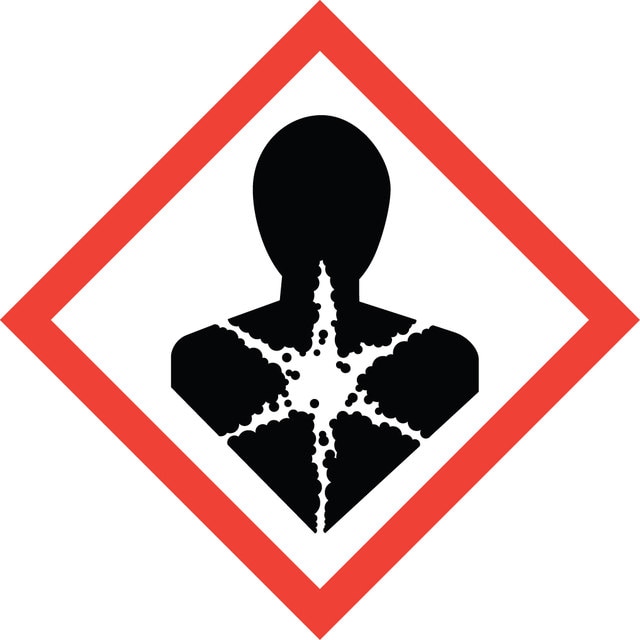
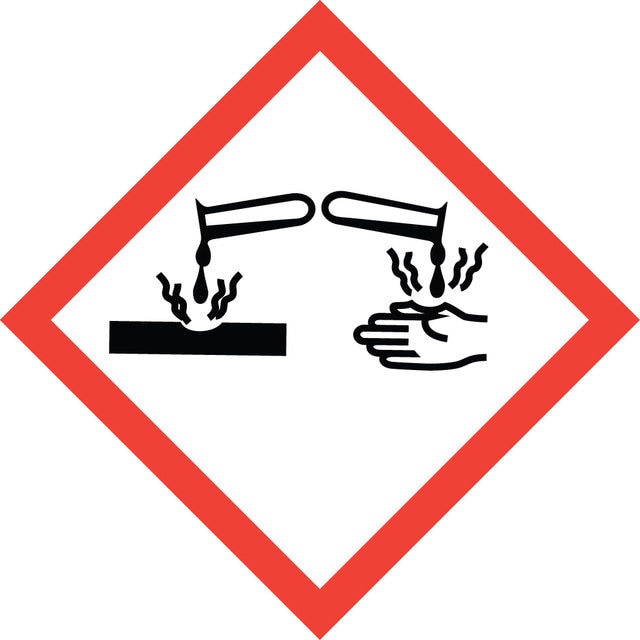
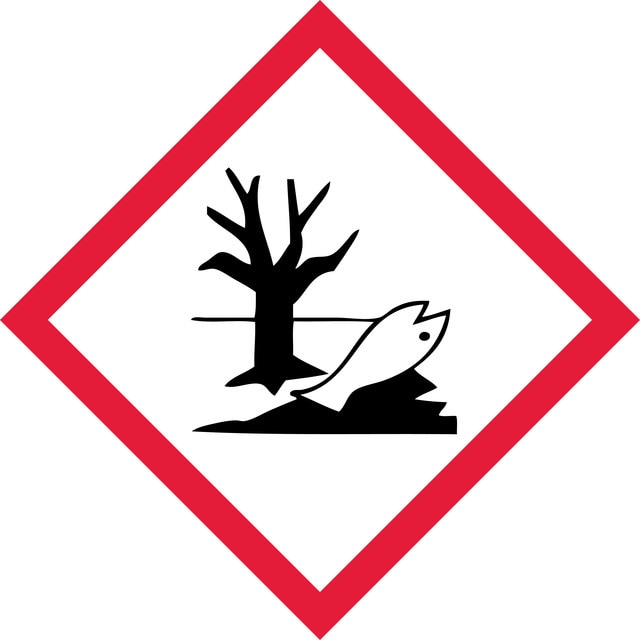
Hazard Classifications
Acute Tox. 2 Inhalation - Acute Tox. 3 Dermal - Acute Tox. 4 Oral - Aquatic Acute 1 - Aquatic Chronic 1 - Carc. 1B - Eye Dam. 1 - Skin Corr. 1B - Skin Sens. 1
Storage Class
6.1A - Combustible acute toxic Cat. 1 and 2 / very toxic hazardous materials
Choose from one of the most recent versions:
Already Own This Product?
Find documentation for the products that you have recently purchased in the Document Library.