Skip to Content
Merck

L3771

Sodium dodecyl sulfate

greener alternative

BioReagent, suitable for electrophoresis, Molecular Biology, ≥98.5% (GC)

Synonym(s):

Dodecyl sodium sulfate, Dodecyl sulfate sodium salt, Lauryl sulfate sodium salt, SDS, Sodium lauryl sulfate

Sign In to View Organizational & Contract Pricing.

Select a Size


About This Item

Linear Formula:
CH3(CH2)11OSO3Na
CAS Number:
Molecular Weight:
288.38
NACRES:
NB.22
PubChem Substance ID:
eCl@ss:
39093306
UNSPSC Code:
12161902
EC Number:
205-788-1
MDL number:
Beilstein/REAXYS Number:
3599286
Technical Service
Need help? Our team of experienced scientists is here for you.
Let Us Assist
Technical Service
Need help? Our team of experienced scientists is here for you.
Let Us Assist

Product Name

Sodium dodecyl sulfate, BioReagent, suitable for electrophoresis, Molecular Biology, ≥98.5% (GC)

InChI

1S/C12H26O4S.Na/c1-2-3-4-5-6-7-8-9-10-11-12-16-17(13,14)15;/h2-12H2,1H3,(H,13,14,15);/q;+1/p-1

InChI key

DBMJMQXJHONAFJ-UHFFFAOYSA-M

SMILES string

[Na+].CCCCCCCCCCCCOS([O-])(=O)=O

biological source

synthetic

grade

Molecular Biology

description

anionic

product line

BioReagent

assay

≥98.5% (GC)

form

powder

mol wt

micellar 18,000

Quality Level

greener alternative product characteristics

Catalysis
Learn more about the Principles of Green Chemistry.

sustainability

Greener Alternative Product

aggregation number

62

technique(s)

electrophoresis: suitable

impurities

≤2.0% water (Karl Fischer)

CMC

7-10 mM (20-25°C)

mp

204-207 °C (lit.)

transition temp

cloud point >100 °C

solubility

water: soluble

density

1.03 g/cm3 at 20 °C (68 °F)

anion traces

chloride (Cl-): ≤500 ppm
phosphate (PO43-): ≤10 ppm

cation traces

heavy metals (as Pb): ≤10 ppm

absorption

≤0.1 at 260 at 3%
≤0.1 at 280 at 3%

HLB

40

suitability

suitable for electrophoresis

foreign activity

DNase, RNase, none detected

greener alternative category

storage temp.

room temp

Looking for similar products? Visit Product Comparison Guide

Analysis Note

Tested for use in denatured polyacrylamide gel electrophoresis.

Application

Anionic detergent
Sodium dodecyl sulfate has been used:
  • in chromatin immunoprecipitation
  • in SDS-polyacrylamide gel electrophoresis (SDS-PAGE)
  • as a component of radioimmunoprecipitation assay buffer for immunoblotting
Used to solubilize and denature proteins for denaturing-PAGE. Most proteins bind SDS in a ratio of 1.4 g SDS per gram of protein. The charges intrinsic to the protein become insignificant compared to the overall negative charge provided by the bound SDS. The charge to mass ratio is essentially the same for each protein and will migrate in the gel based only on their size.

Features and Benefits

  • Highly versatile surfactant for your molecular biology and biochemical research
  • Suitable for electrophoresis applications
  • Tested to confirm low levels of heavy metal contamination,ensuring suitability for various applications.

General description

Sodium dodecyl sulfate (SDS), also known as sodium lauryl sulfate, is an anionic surfactant widely used in various scientific applications, particularly in molecular biology, biochemical, and cell biology research. Its effectiveness stems from its amphiphilic nature, allowing it to interact with both hydrophobic and hydrophilic molecules. SDS is a versatile detergent that excels in solubilizing and denaturing proteins, making it an essential tool in protein extraction and purification procedures. By disrupting protein structures, SDS facilitates the separation of proteins based on their molecular weight during SDS-PAGE electrophoresis.

Beyond protein analysis, SDS also finds applications in the electrophoretic separation of lipids, enabling the study and characterization of these important cellular components. Additionally, SDS is employed in various hybridization and molecular biology techniques, demonstrating its versatility across a range of research areas. SDS′s effectiveness in both ionic and anionic conditions further expands its utility, allowing it to adapt to diverse experimental setups and requirements. Its ability to unravel proteins by binding to peptide chains and imparting a negative charge effectively eliminates protein shape as a factor for gel separation, ensuring accurate protein size determination.
We are committed to bringing you Greener Alternative Products, which adhere to one or more of The 12 Principles of Greener Chemistry. This product is used as a surfactant to enhance catalysis.  Click here for more information.

Other Notes

For additional information on our range of Biochemicals, please complete this form.

signalword

Danger

Hazard Classifications

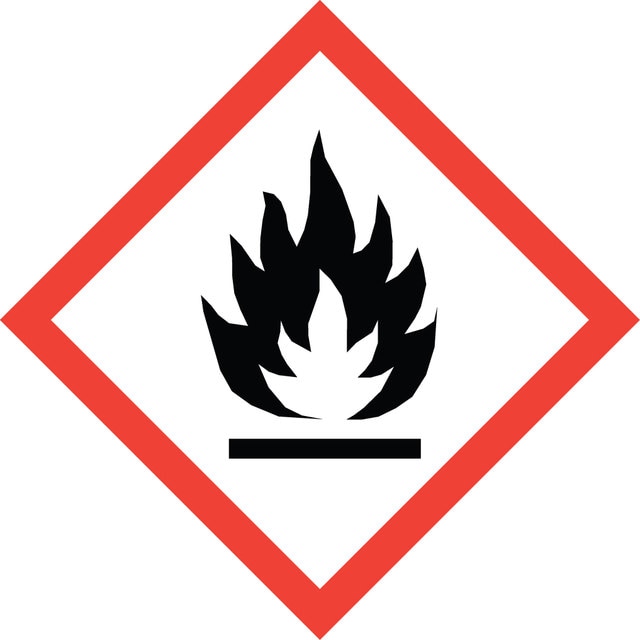
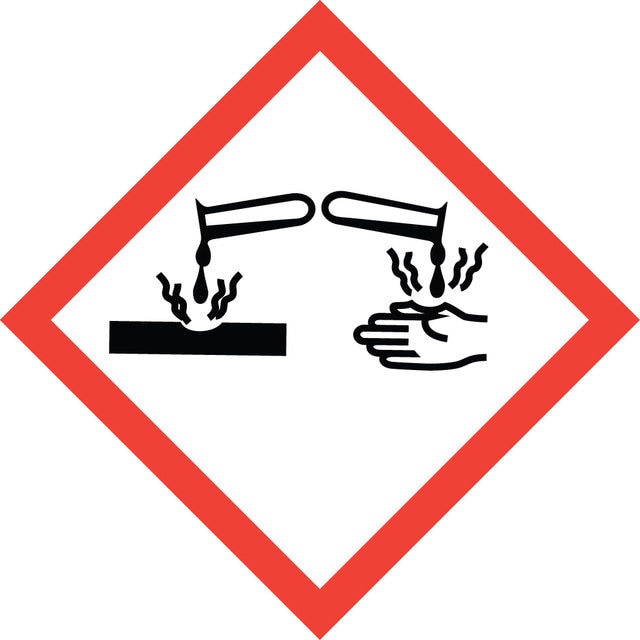
Acute Tox. 4 Inhalation - Acute Tox. 4 Oral - Aquatic Chronic 3 - Eye Dam. 1 - Flam. Sol. 2 - Skin Irrit. 2 - STOT SE 3

target_organs

Respiratory system

Storage Class

4.1B - Flammable solid hazardous materials

wgk

WGK 2

flash_point_f

338.0 °F

flash_point_c

170 °C

ppe

Eyeshields, Faceshields, Gloves, type P3 (EN 143) respirator cartridges


Choose from one of the most recent versions:

Certificates of Analysis (COA)

Lot/Batch Number

Don't see the Right Version?

If you require a particular version, you can look up a specific certificate by the Lot or Batch number.

Already Own This Product?

Find documentation for the products that you have recently purchased in the Document Library.

Visit the Document Library

Elisa Meneghetti et al.
Molecular neurobiology, 56(9), 6035-6045 (2019-02-03)
Prion diseases are fatal neurodegenerative disorders characterized by the cellular prion protein (PrPC) conversion into a misfolded and infectious isoform termed prion or PrPSc. The neuropathological mechanism underlying prion toxicity is still unclear, and the debate on prion protein gain-
Lekun Fang et al.
Oncotarget, 5(10), 2974-2987 (2014-06-11)
Colorectal cancer (CRC) is one of the most common cancers worldwide, especially in Western countries. Although chemotherapy is used as an adjuvant or as a palliative treatment, drug resistance poses a great challenge. This study intended to identify biomarkers as
S Desrivières et al.
Molecular psychiatry, 20(2), 263-274 (2014-02-12)
Despite the recognition that cortical thickness is heritable and correlates with intellectual ability in children and adolescents, the genes contributing to individual differences in these traits remain unknown. We conducted a large-scale association study in 1583 adolescents to identify genes
Kazuya Ishikawa et al.
Nature communications, 5, 5430-5430 (2014-11-13)
Pathogen effector proteins are delivered to host cells to suppress plant immunity. However, the mechanisms by which effector proteins function are largely unknown. Here we show that expression of XopP(Xoo), an effector of rice pathogen Xanthomonas oryzae pv. oryzae, in
S Bavamian et al.
Molecular psychiatry, 20(5), 573-584 (2015-01-28)
Bipolar disorder (BD) is a heritable neuropsychiatric disorder with largely unknown pathogenesis. Given their prominent role in brain function and disease, we hypothesized that microRNAs (miRNAs) might be of importance for BD. Here we show that levels of miR-34a, which

Our team of scientists has experience in all areas of research including Life Science, Material Science, Chemical Synthesis, Chromatography, Analytical and many others.

Contact Technical Service