Sign In to View Organizational & Contract Pricing.
Select a Size
About This Item
CAS Number:
UNSPSC Code:
12352204
NACRES:
NA.54
EC Number:
232-943-0
MDL number:
Specific activity:
≥2,500 units/mg protein
Assay:
>80% protein (biuret)
Biological source:
human erythrocytes
biological source
human erythrocytes
assay
>80% protein (biuret)
form
essentially salt-free, lyophilized powder
specific activity
≥2,500 units/mg protein
mol wt
32.0 kDa
composition
Protein, ≥80% biuret
manufacturer/tradename
Sigma-Aldrich
technique(s)
activity assay: suitable
color
white to off-white
pH range
7.6—10.5
pH
7.8
suitability
suitable for molecular biology
application(s)
life science and biopharma
storage temp.
−20°C
Quality Level
Gene Information
human ... SOD1(6647), SOD2(6648), SOD3(6649)
General description
Superoxide dismutases (SOD) are a group of low molecular weight metalloproteins present in all aerobic cells of plants, animals and micro-organisms. Three forms of SOD exist, based on the metal ions in the active site. These are Cu2+/Zn2+, Mn2+ and Fe2+ containing SOD. In vertebrate organisms, Cu/Zn-SOD is located in the cytoplasm as well as the mitochondrial intermembrane space, whereas Mn-SOD is located at the mitochondrial matrix space in prokaryotes. Fe-SOD is also found in prokaryotes and higher plants. Human erythrocyte SOD is a non-covalently bound homodimeric protein with two 16.3 kDa subunits containing 153 amino acids. Each dimer consists of two Cu2+ atoms and two Zn2+ atoms.
Application
Superoxide Dismutase from human erythrocytes has been used:
- to test its effect on human neutrophils in reactive oxygen species (ROS) measurement studies involving Pseudomonas aeruginosa infection
- as an antioxidant to test its effect on ROS generation induced by atmospheric-pressure plasma jet (APPJ) in red blood cell (RBC) homogenates using optical spectroscopy studies
- to test its attenuating effect on hemoglobin (Hb)-induced nuclear factor-kappa B (NF- κB) and hypoxia-inducible factor (HIF) activity in human dermal microvascular endothelial cells (HMECs-1)
- as a reference antioxidant protein to examine its expression in human intestinal Caco-2 cells following treatment with dietary flavonoids
- in combination with catalase to promote cell differentiation in vitro
Biochem/physiol Actions
Catalyzes the dismutation of superoxide radicals to hydrogen peroxide and molecular oxygen. Plays a critical role in the defense of cells against the toxic effects of oxygen radicals. Competes with nitric oxide (NO) for superoxide anion (which reacts with NO to form peroxynitrite), thereby SOD promotes the activity of NO. SOD has also been shown to suppress apoptosis in cultured rat ovarian follicles, neural cell lines, and transgenic mice.
Mutations in the SOD1 gene are implicated in Amyotrophic lateral sclerosis (ALS).
Analysis Note
For assay method, see McCord, J.M. and Fridovich, I., J. Biol. Chem., 244, 6049 (1969).
Other Notes
One unit will inhibit reduction of cytochrome c by 50% in a coupled system with xanthine oxidase at pH 7.8 at 25 °C in a 3.0 mL reaction volume. Xanthine oxidase concentration should produce an initial ΔA550 of 0.025 ± 0.005 per min.
signalword
Danger
hcodes
pcodes
Hazard Classifications
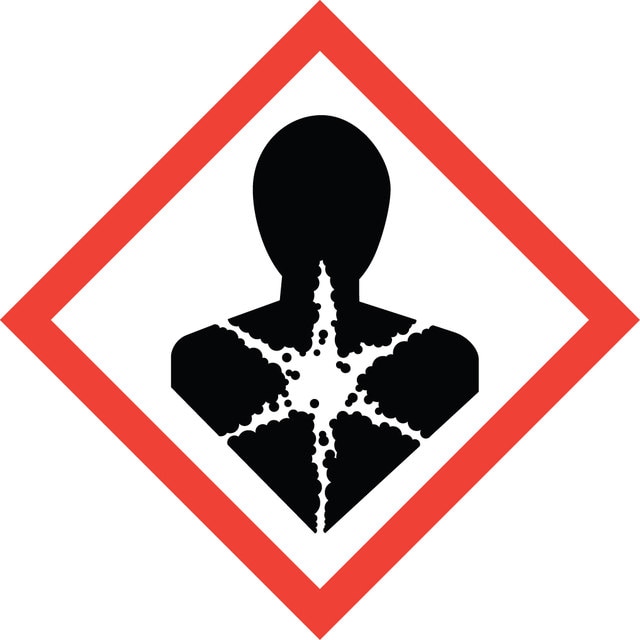
Resp. Sens. 1
Storage Class
11 - Combustible Solids
flash_point_f
Not applicable
flash_point_c
Not applicable
ppe
Eyeshields, Gloves, type N95 (US)
Choose from one of the most recent versions:
Already Own This Product?
Find documentation for the products that you have recently purchased in the Document Library.
Christina Lisk et al.
American journal of respiratory cell and molecular biology, 49(4), 619-626 (2013-05-30)
The release of hemoglobin (Hb) with hemolysis causes vascular dysfunction. New evidence implicates Hb-induced NF-κB and hypoxia inducible factor (HIF) activation, which may be under the control of a Toll-like receptor (TLR)-signaling pathway. Nearly all TLR-signaling pathways activate the myeloid
Cindy Gill et al.
Scientific reports, 9(1), 6724-6724 (2019-05-02)
Non-natively folded variants of superoxide dismutase 1 (SOD1) are thought to contribute to the pathogenesis of familial amyotrophic lateral sclerosis (ALS), however the relative toxicities of these variants are controversial. Here, we aimed to decipher the relationships between the different
J V Bannister et al.
CRC critical reviews in biochemistry, 22(2), 111-180 (1987-01-01)
The current status of superoxide dismutase (SOD) is that it is an enzyme with diverse ramifications. This review attempts an understanding of SOD as a structural, functional, and biological entity. Accordingly, the review is in three parts. The first part
L Guemouri et al.
Clinical chemistry, 37(11), 1932-1937 (1991-11-01)
We studied the biological variability of blood superoxide dismutase (SOD; EC 1.15.1.1), glutathione peroxidase (GPX; EC 1.11.1.9), and catalase (CAT; EC 1.11.1.6) in a sample of 1836 apparently health subjects, ages 4-97 years. SOD and GPX activities were assayed in
M Iu Eropkin et al.
Voprosy meditsinskoi khimii, 45(5), 384-388 (2000-01-15)
An oxidative stress is considered to be one of the major mechanisms of cytotoxicity. The purpose of present work was to study effects of some drugs with antihypoxic/antioxidant activity in cultured human lung embryonic fibroblasts under conditions of cytotoxic response
Related Content
Our team of scientists has experience in all areas of research including Life Science, Material Science, Chemical Synthesis, Chromatography, Analytical and many others.
Contact Technical Service