
174645

2-Methoxypropene
97%
Synonym(s):
Isopropenyl methyl ether
Sign In to View Organizational & Contract Pricing.
Select a Size
Change View
About This Item
Linear Formula:
CH2=C(CH3)OCH3
CAS Number:
Molecular Weight:
72.11
UNSPSC Code:
12352112
NACRES:
NA.22
PubChem Substance ID:
EC Number:
204-125-3
Beilstein/REAXYS Number:
1734635
MDL number:
Assay:
97%
Form:
liquid
Quality Level
vapor pressure
27.96 psi ( 55 °C), 8.28 psi ( 20 °C)
assay
97%
form
liquid
autoignition temp.
374 °F
refractive index
n20/D 1.382 (lit.)
bp
34-36 °C (lit.)
density
0.753 g/mL at 25 °C (lit.)
functional group
ether
storage temp.
2-8°C
SMILES string
COC(C)=C
InChI
1S/C4H8O/c1-4(2)5-3/h1H2,2-3H3
InChI key
YOWQWFMSQCOSBA-UHFFFAOYSA-N
Application
Used to protect adjacent hydroxyls in inositols as bisacetonides, and 1,2-diols in general.
Still not finding the right product?
Explore all of our products under 2-Methoxypropene
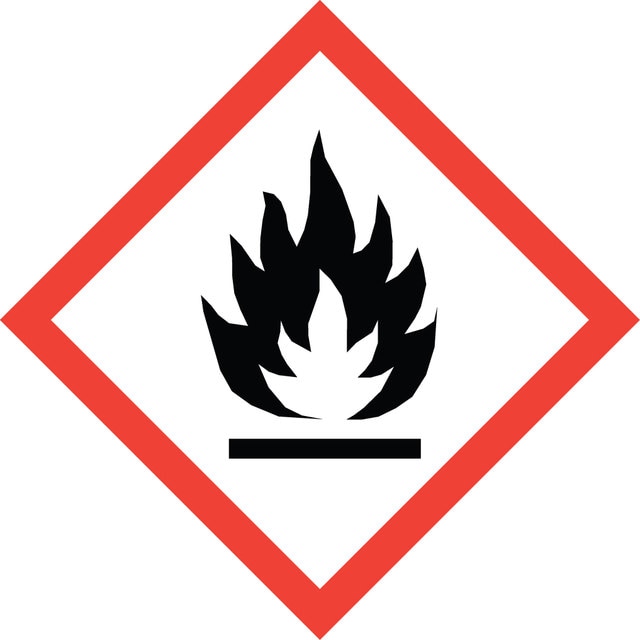
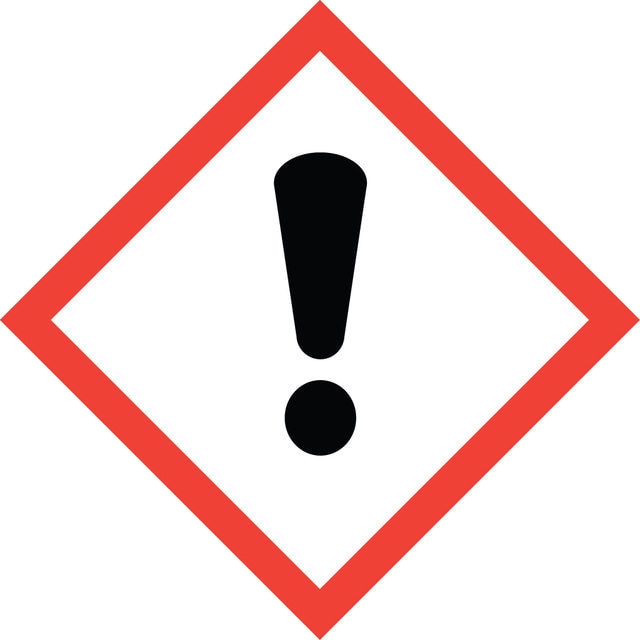
signalword
Danger
hcodes
Hazard Classifications
Acute Tox. 4 Oral - Flam. Liq. 1
supp_hazards
Storage Class
3 - Flammable liquids
wgk
WGK 1
flash_point_f
-20.2 °F - closed cup
flash_point_c
-29 °C - closed cup
ppe
Eyeshields, Faceshields, Gloves
Choose from one of the most recent versions:
Already Own This Product?
Find documentation for the products that you have recently purchased in the Document Library.
Journal of the American Chemical Society, 115, 4429-4429 (1993)
Mathieu L Viger et al.
Biomaterials, 133, 119-131 (2017-04-24)
Visualization of biochemical changes associated with disease is of great clinical significance, as it should allow earlier, more accurate diagnosis than structural imaging, facilitating timely clinical intervention. Herein, we report combining stimuli-responsive polymers and near-infrared fluorescent dyes (emission max: 790 nm)
Greene, T.W. Wuts, P.G.M.
Protective Groups in Organic Synthesis, 124-124 (1991)