
456055

Camphene
95%
Synonym(s):
(±)-Camphene, 2,2-Dimethyl-3-methylenebicyclo[2.2.1]heptane, 2,2-Dimethyl-3-methylenenorbornane, 2,2-Dimethyl-3-methylidenebicyclo[2.2.1]heptane, 2-Methylene-3,3-dimethylbicyclo[2.2.1]heptane, 3,3-Dimethyl-2-methylenenorbornane, 3,3-Dimethyl-2-methylenenorcamphane, DL-Camphene
Select a Size
About This Item
Quality Segment
assay
95%
form
solid
bp
159-160 °C (lit.)
mp
48-52 °C (lit.)
density
0.85 g/mL at 25 °C (lit.)
SMILES string
[H][C@]12CC[C@]([H])(C1)C(C)(C)C2=C
InChI
1S/C10H16/c1-7-8-4-5-9(6-8)10(7,2)3/h8-9H,1,4-6H2,2-3H3/t8-,9+/m0/s1
InChI key
CRPUJAZIXJMDBK-DTWKUNHWSA-N
General description
Application
- Isobornyl carboxylates by silica-supported tungstophosphoric acid-catalyzed liquid-phase esterification of C2-C6 fatty acids.
- Hydroaminated camphene via intermolecular anti-Markovnikov hydroamination reaction with N-hydroxyphthalimide and triethyl phosphite in the presence of dilauroyl peroxide as an initiator.
- Camphene oxide via methyltrioxorhenium-catalyzed epoxidation in the presence of H2O2 as an oxidant and pyrazole as a Lewis base adduct.
- Isobornyl alkyl ethers using alcohols via cation exchange resin-catalyzed alkoxylation.
Still not finding the right product?
Explore all of our products under Camphene
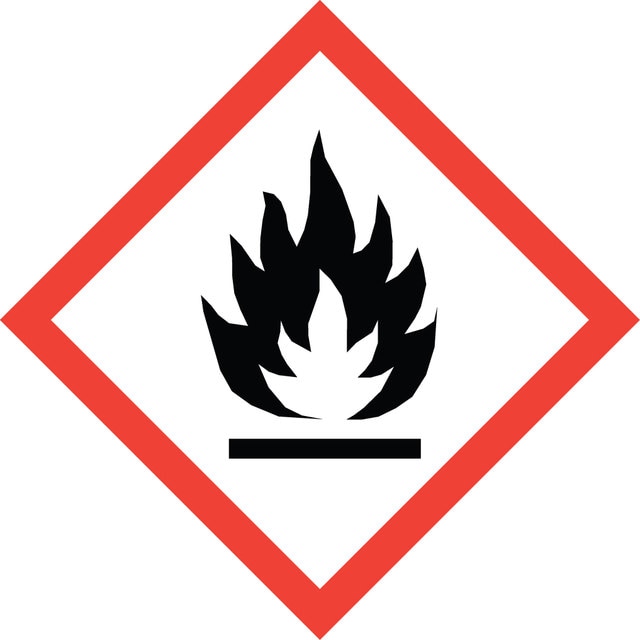

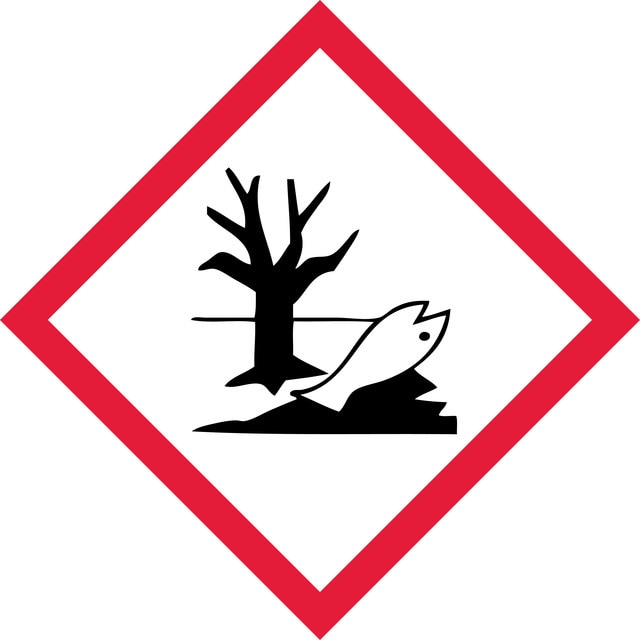
signalword
Danger
hcodes
Hazard Classifications
Aquatic Acute 1 - Aquatic Chronic 1 - Eye Irrit. 2 - Flam. Sol. 1
Storage Class
4.1B - Flammable solid hazardous materials
wgk
WGK 2
flash_point_f
78.8 °F - DIN 51755 Part 1
flash_point_c
26 °C - DIN 51755 Part 1
ppe
Eyeshields, Gloves, type P3 (EN 143) respirator cartridges
Choose from one of the most recent versions:
Already Own This Product?
Find documentation for the products that you have recently purchased in the Document Library.