Sign In to View Organizational & Contract Pricing.
Select a Size
Change View
About This Item
Linear Formula:
CF3(CF2)6COONH4
CAS Number:
Molecular Weight:
431.10
UNSPSC Code:
12352100
NACRES:
NA.22
PubChem Substance ID:
EC Number:
223-320-4
Beilstein/REAXYS Number:
4286466
MDL number:
Assay:
≥98.0% (sum of isomers)
Form:
powder
Quality Level
assay
≥98.0% (sum of isomers)
form
powder
functional group
carboxylic acid, fluoro
SMILES string
N.OC(=O)C(F)(F)C(F)(F)C(F)(F)C(F)(F)C(F)(F)C(F)(F)C(F)(F)F
InChI
1S/C8HF15O2.H3N/c9-2(10,1(24)25)3(11,12)4(13,14)5(15,16)6(17,18)7(19,20)8(21,22)23;/h(H,24,25);1H3
InChI key
YOALFLHFSFEMLP-UHFFFAOYSA-N
General description
Pentadecafluorooctanoicacid ammonium salt (Ammonium pentadecafluorooctanoate) is commonly used in the polymerization of fluorinated monomers. It is also used as a surfactant during chemical synthesis.
signalword
Danger
Hazard Classifications
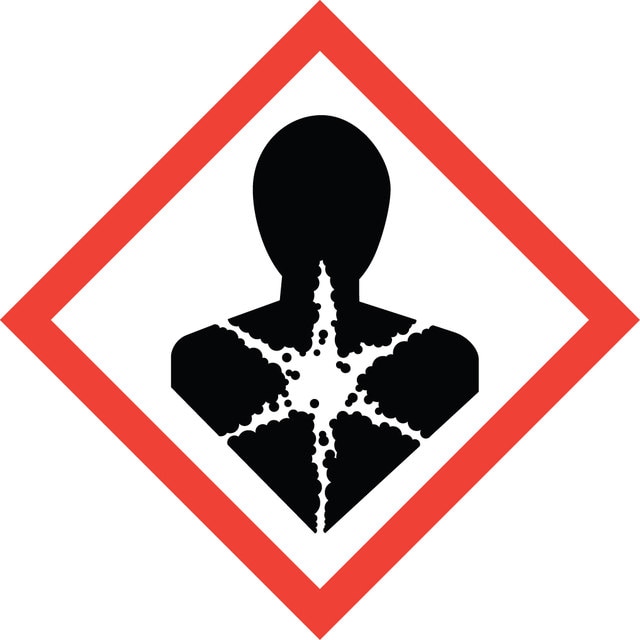
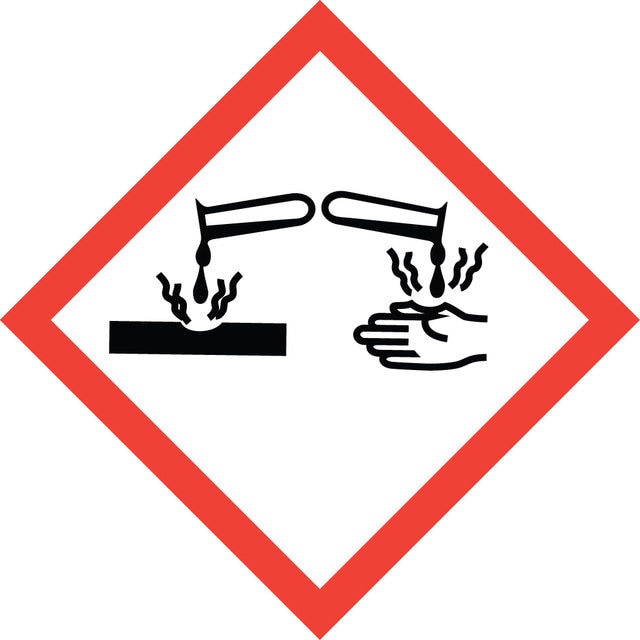
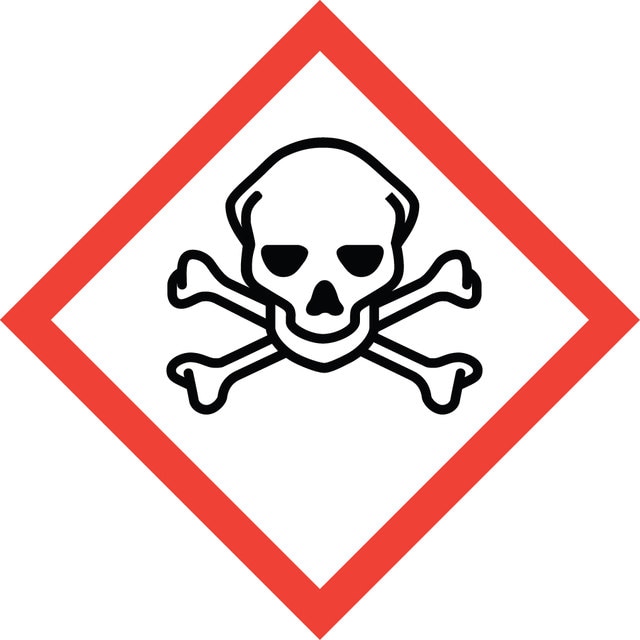
Acute Tox. 3 Inhalation - Acute Tox. 4 Oral - Carc. 2 - Eye Dam. 1 - Lact. - Repr. 1B - STOT RE 1
target_organs
Liver
Storage Class
6.1C - Combustible acute toxic Cat.3 / toxic compounds or compounds which causing chronic effects
wgk
WGK 3
flash_point_f
Not applicable
flash_point_c
Not applicable
ppe
dust mask type N95 (US), Eyeshields, Faceshields, Gloves
Choose from one of the most recent versions:
Already Own This Product?
Find documentation for the products that you have recently purchased in the Document Library.
Mei-Huei Chen et al.
Epidemiology (Cambridge, Mass.), 24(6), 800-808 (2013-09-17)
Epidemiologic data regarding the potential neurotoxicity of perfluorinated compounds (PFCs) are inconclusive. We investigated the associations between in utero exposure to perfluorooctanoic acid (PFOA) and perfluorooctyl sulfonate (PFOS) and early childhood neurodevelopment. We recruited 239 mother-infant pairs in northern Taiwan
A K Rosenmai et al.
Toxicology and applied pharmacology, 266(1), 132-142 (2012-11-13)
Polyfluoroalkyl phosphate surfactants (PAPS) are widely used in food contact materials (FCMs) of paper and board and have recently been detected in 57% of investigated materials. Human exposure occurs as PAPS have been measured in blood; however knowledge is lacking
Amanda Ode et al.
Environmental science and pollution research international, 20(11), 7970-7978 (2013-02-26)
In recent years, some perfluorinated compounds (PFCs) have been identified as potentially hazardous substances which are harmful to the environment and human health. According to limited data, PFC levels in humans could be influenced by several determinants. However, the findings