Sign In to View Organizational & Contract Pricing.
Select a Size
Change View
About This Item
Empirical Formula (Hill Notation):
C3H3N3
CAS Number:
Molecular Weight:
81.08
UNSPSC Code:
12352100
NACRES:
NA.22
PubChem Substance ID:
EC Number:
206-028-1
Beilstein/REAXYS Number:
104790
MDL number:
Assay:
≥96.5%
Quality Level
assay
≥96.5%
mp
77-83 °C (dec.) (lit.)
SMILES string
c1ncncn1
InChI
1S/C3H3N3/c1-4-2-6-3-5-1/h1-3H
InChI key
JIHQDMXYYFUGFV-UHFFFAOYSA-N
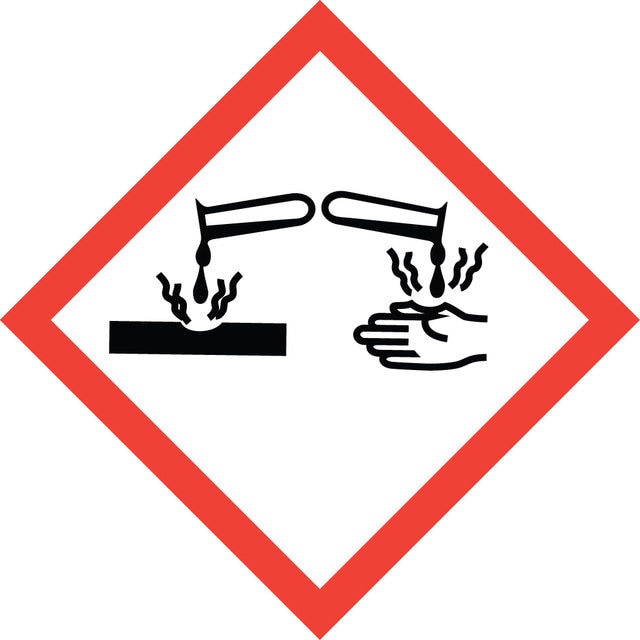
signalword
Danger
hcodes
Hazard Classifications
Acute Tox. 4 Oral - Eye Dam. 1 - Skin Irrit. 2 - STOT SE 3
target_organs
Respiratory system
Storage Class
11 - Combustible Solids
wgk
WGK 3
flash_point_f
Not applicable
flash_point_c
Not applicable
ppe
dust mask type N95 (US), Eyeshields, Gloves
Choose from one of the most recent versions:
Already Own This Product?
Find documentation for the products that you have recently purchased in the Document Library.
Shivraj Hariram Nile et al.
Food and chemical toxicology : an international journal published for the British Industrial Biological Research Association, 132, 110659-110659 (2019-07-06)
Subcritical water extraction (SWE) applied to analyses the bioactives from ashwagandha (W. somnifera) at varying temperature (100-200 °C) and extraction time (10-30 min). The effect of temperature and time has been investigated in terms of extraction yield (EY), total phenolic content (TPC)
Jerzy Drzewiecki et al.
Applied biochemistry and biotechnology (2018-05-10)
Electrophoretic, antioxidant, and FTIR profiles of some varieties of amaranth, quinoa, and buckwheat seeds and their by products were compared. Water extracts of these products were evaluated by the Folin-Ciocalteau method in order to determine total phenolic content. The antioxidant
Mengmeng Huang et al.
Scientific reports, 6, 32368-32368 (2016-09-03)
We used the support vector regression (SVR) approach to predict and unravel reduction/promotion effect of characteristic flavonoids on the acrylamide formation under a low-moisture Maillard reaction system. Results demonstrated the reduction/promotion effects by flavonoids at addition levels of 1-10000 μmol/L. The