Sign In to View Organizational & Contract Pricing.
Select a Size
About This Item
Linear Formula:
CuCl2 · 2 H2O
CAS Number:
Molecular Weight:
170.48
NACRES:
NA.75
PubChem Substance ID:
UNSPSC Code:
12352205
EC Number:
231-210-2
MDL number:
InChI key
MPTQRFCYZCXJFQ-UHFFFAOYSA-L
InChI
1S/2ClH.Cu.2H2O/h2*1H;;2*1H2/q;;+2;;/p-2
SMILES string
O.Cl[Cu]Cl
biological source
synthetic (inorganic)
product line
BioReagent
form
powder
technique(s)
cell culture | mammalian: suitable
solubility
water: 100 mg/mL, clear, blue
Quality Level
Application
Copper(II) chloride dihydrate has been used as a positive control in dispersion of zebrafish embryo. It has also been used for the preparation of trace metals mixture.
signalword
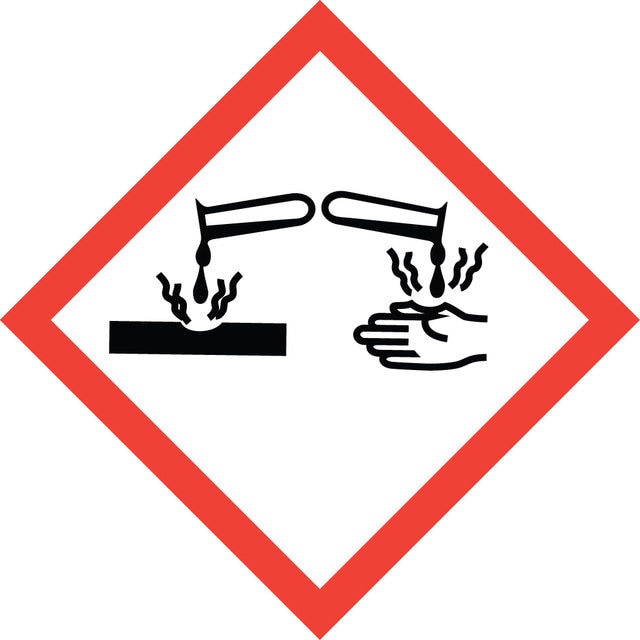
Danger
Hazard Classifications
Acute Tox. 4 Dermal - Acute Tox. 4 Oral - Aquatic Acute 1 - Aquatic Chronic 2 - Eye Dam. 1 - Skin Irrit. 2
Storage Class
8A - Combustible corrosive hazardous materials
wgk
WGK 3
flash_point_f
Not applicable
flash_point_c
Not applicable
ppe
dust mask type N95 (US), Eyeshields, Gloves
Choose from one of the most recent versions:
Already Own This Product?
Find documentation for the products that you have recently purchased in the Document Library.
Copper-containing mesoporous bioactive glass promotes angiogenesis in an in vivo zebrafish model
Romero-Sanchez LB, et al.
Acta Biomaterialia, 68, 272-285 (2018)
Soluble and Solid Iron Reduction Assays with Desulfitobacterium hafniense
Comensoli L, et al.
Bio-protocol, 8(ARTICLE), 340-340 (2018)
Jianping Li et al.
Arteriosclerosis, thrombosis, and vascular biology, 39(3), 513-522 (2019-02-01)
Objective- We aimed to assess whether exposure to higher levels of ambient air pollution impairs HDL (high-density lipoprotein) function and to elucidate the underlying biological mechanisms potentially involved. Approach and Results- In the Beijing AIRCHD study (Air Pollution and Cardiovascular
Adam B Robertson et al.
Nature protocols, 7(2), 340-350 (2012-01-28)
We describe a method for the efficient and selective identification of DNA containing the 5-hydroxymethylcytosine (5-hmC) modification. This protocol takes advantage of two proteins: T4 β-glucosyltransferase (β-gt), which converts 5-hmC to β-glucosyl-5-hmC (β-glu-5-hmC), and J-binding protein 1 (JBP1), which specifically
María S Islas et al.
Inorganic chemistry, 53(11), 5724-5737 (2014-05-16)
A new Cu(II) complex with the antihypertensive drug telmisartan, [Cu8Tlm16]·24H2O (CuTlm), was synthesized and characterized by elemental analysis and electronic, FTIR, Raman and electron paramagnetic resonance spectroscopy. The crystal structure (at 120 K) was solved by X-ray diffraction methods. The
Our team of scientists has experience in all areas of research including Life Science, Material Science, Chemical Synthesis, Chromatography, Analytical and many others.
Contact Technical Service