
S9697

Superoxide Dismutase bovine
recombinant, expressed in E. coli, lyophilized powder, ≥2500 units/mg protein, ≥90% (SDS-PAGE)
Synonym(s):
Superoxide Dismutase 1 bovine, cytocuprein, erythrocuprein, hemocuprein, CU/ZN-SOD, SOD, SOD1, Superoxide: superoxide oxidoreductase
Sign In to View Organizational & Contract Pricing.
Select a Size
Change View
About This Item
CAS Number:
UNSPSC Code:
12352204
NACRES:
NA.54
EC Number:
232-943-0
MDL number:
Specific activity:
≥2500 units/mg protein
Assay:
≥90% (SDS-PAGE)
Biological source:
bovine
Recombinant:
expressed in E. coli
biological source
bovine
Quality Segment
recombinant
expressed in E. coli
assay
≥90% (SDS-PAGE)
form
lyophilized powder
specific activity
≥2500 units/mg protein
storage condition
(Tightly closed)
technique(s)
inhibition assay: suitable
color
white
optimum pH
7.8 (25 °C)
pH range
7.6-10.5
pI
4.95
sequence note
MATKAVCVLKGDGPVQGTIHFEAKGDTVVVTGSITGLTEGDHGFHVHQFGDNTQGCTSAGPHFNPLSKKHGGPKDEERHVGDLGNVTADKNGVAIVDIVDPLISLSGEYSIIGRTMVVHEKPDDLGRGGNEESTKTGNAGSRLACGVIGIAK
UniProt accession no.
storage temp.
−20°C
General description
Research area: Cell Signaling
SOD from bovine erythrocytes was the first SOD to be found in mammalian tissues. There are three forms of SOD differentiated by the metal ions in the active site. These are Cu+2/Zn+2, Mn+2, and Fe+2 SOD. In vertebrates, Cu/Zn-SOD is found in the cytoplasm, chloroplast, and may be in extracellular space, while Mn-SOD is found in the mitochondrial matrix space and peroxisome. Fe-SOD is found in the chloroplast of prokaryotes and some higher plants.
SOD from bovine erythrocytes was the first SOD to be found in mammalian tissues. There are three forms of SOD differentiated by the metal ions in the active site. These are Cu+2/Zn+2, Mn+2, and Fe+2 SOD. In vertebrates, Cu/Zn-SOD is found in the cytoplasm, chloroplast, and may be in extracellular space, while Mn-SOD is found in the mitochondrial matrix space and peroxisome. Fe-SOD is found in the chloroplast of prokaryotes and some higher plants.
Application
Superoxide Dismutase bovine has been used:
- to construct a calibration curve for the evaluation of superoxide dismutase (SOD) enzyme activities
- in a study to investigate where lipoproteins may affect the L-arginine-nitric oxide pathway
- in a study to investigate the mass spectral evidence for carbonate-anion-radical-induced posttranslational modification of tryptophan to kynurenine in human Cu, Zn superoxide dismutase
Biochem/physiol Actions
Superoxide dismutase (SOD) catalyzes the dismutation of superoxide radicals to hydrogen peroxide and molecular oxygen. This reaction in turn activates redox-sensitive kinases and inactivates specific phosphatases to regulate redox-sensitive signaling pathway, including hypertrophy, proliferation, and migration. SOD serves as a potent antioxidant and protects the cells against the toxic effects of oxygen radicals. SOD may also suppress apoptosis by competing with nitric oxide (NO) for superoxide anion, which reacts with NO to form peroxynitrite, an inducer of apoptosis.
Preparation Note
Produced using animal component-free materials.
Reconstitute in 10 mM potassium phosphate, pH 7.4.
Analysis Note
Extinction coefficient: EmM= 10.3 (258 nM)
SOD has no significant absorbance peak at 280 nM because of the absence of tryptophan.
SOD has no significant absorbance peak at 280 nM because of the absence of tryptophan.
Other Notes
Inhibitors: cyanide, OH- (competitive), hydrogen peroxide
One unit will inhibit reduction of cytochrome c by 50% in a coupled system with xanthine oxidase at pH 7.8 at 25°C in a 3.0 ml reaction volume. Xanthine oxidase concentration should produce an initial ΔA550 of 0.025 ± 0.005 per min.
signalword
Danger
hcodes
pcodes
Hazard Classifications
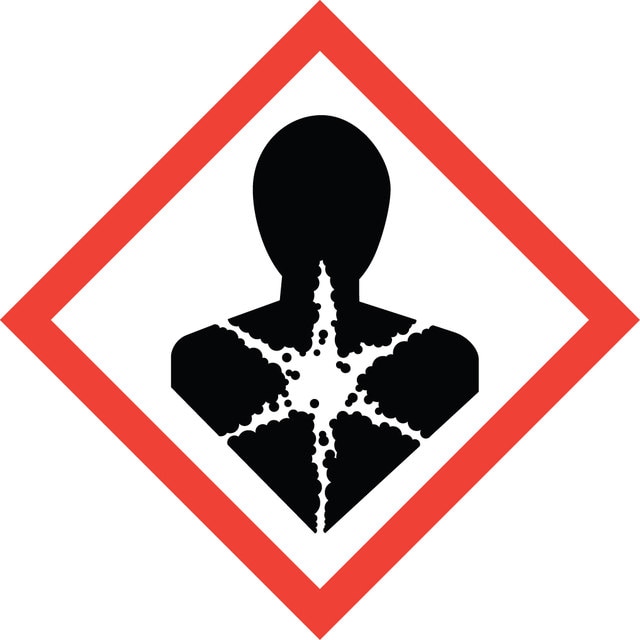
Resp. Sens. 1
Storage Class
10 - Combustible liquids
wgk
WGK 1
flash_point_f
Not applicable
flash_point_c
Not applicable
Choose from one of the most recent versions:
Already Own This Product?
Find documentation for the products that you have recently purchased in the Document Library.