Saltar al contenido
Merck

177741

Perfluorodecanoic acid

97%

Sinónimos:

Nonadecafluorodecanoic acid, Nonadecafluorocapric acid, Perfluorocapric acid, Perfluorodecanoic acid

Iniciar sesión para ver los precios por organización y contrato.

Seleccione un Tamaño


Acerca de este artículo

Fórmula lineal:
CF3(CF2)8CO2H
Número CAS:
Peso molecular:
514.08
UNSPSC Code:
12352100
NACRES:
NA.22
PubChem Substance ID:
EC Number:
206-400-3
Beilstein/REAXYS Number:
1810811
MDL number:
Assay:
97%
Servicio técnico
¿Necesita ayuda? Nuestro equipo de científicos experimentados está aquí para ayudarle.
Permítanos ayudarle
Servicio técnico
¿Necesita ayuda? Nuestro equipo de científicos experimentados está aquí para ayudarle.
Permítanos ayudarle

InChI key

PCIUEQPBYFRTEM-UHFFFAOYSA-N

InChI

1S/C10HF19O2/c11-2(12,1(30)31)3(13,14)4(15,16)5(17,18)6(19,20)7(21,22)8(23,24)9(25,26)10(27,28)29/h(H,30,31)

SMILES string

OC(=O)C(F)(F)C(F)(F)C(F)(F)C(F)(F)C(F)(F)C(F)(F)C(F)(F)C(F)(F)C(F)(F)F

vapor pressure

~10 mmHg ( 0 °C)

assay

97%

bp

218 °C/740 mmHg (lit.)

mp

77-81 °C (lit.)

solubility

methanol: soluble 10%, clear to very slightly hazy, colorless to faintly yellow

functional group

carboxylic acid, fluoro

Quality Level

¿Está buscando productos similares? Visita Guía de comparación de productos

Application

Perfluorodecanoic acid was used to evaluate the effect of nonadecafluorocapric acid on the levels of six thyroid function variables (thyroid stimulating hormone, free and total thyroxine, free and total triiodothyronine and thyroglobulin).

General description

The electrochemical mineralization of environmentally persistent perfluorodecanoic acid was studied.

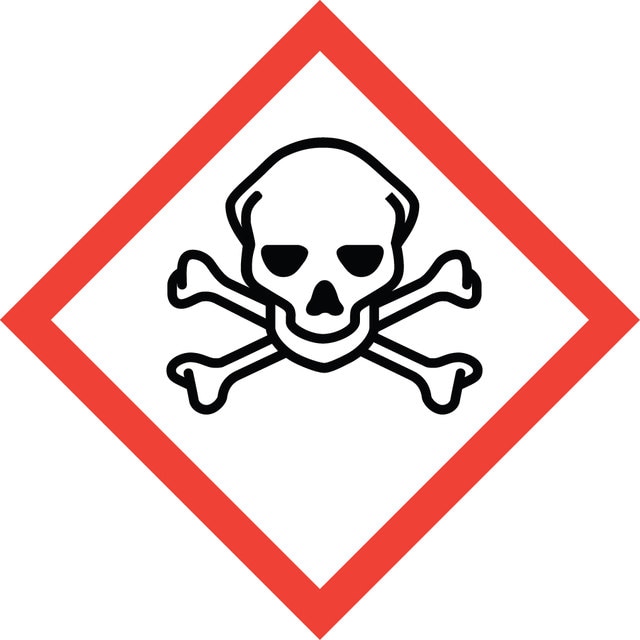
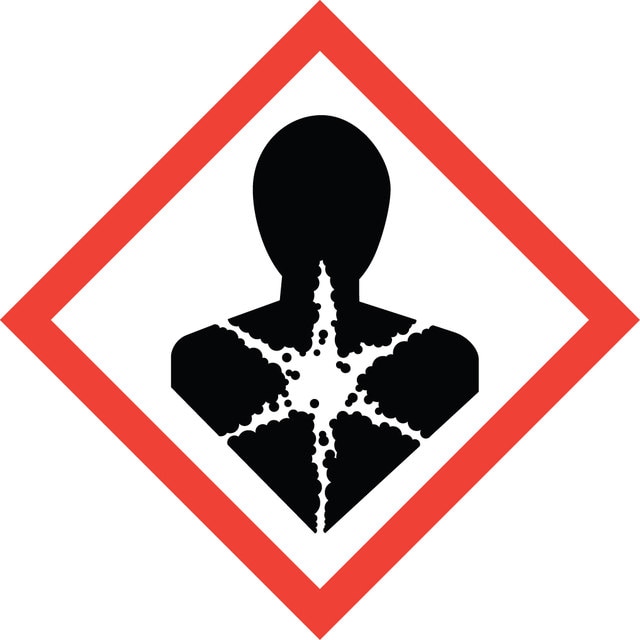
pictograms

Skull and crossbonesHealth hazard

signalword

Danger

Hazard Classifications

Acute Tox. 3 Oral - Carc. 2 - Lact. - Repr. 1B

Clase de almacenamiento

6.1C - Combustible acute toxic Cat.3 / toxic compounds or compounds which causing chronic effects

wgk

WGK 3

flash_point_f

Not applicable

flash_point_c

Not applicable

ppe

Eyeshields, Faceshields, Gloves, type P2 (EN 143) respirator cartridges


Elija entre una de las versiones más recientes:

Certificados de análisis (COA)

Lot/Batch Number

¿No ve la versión correcta?

Si necesita una versión concreta, puede buscar un certificado específico por el número de lote.

¿Ya tiene este producto?

Encuentre la documentación para los productos que ha comprado recientemente en la Biblioteca de documentos.

Visite la Librería de documentos

Anna Kärrman et al.
Environmental science and pollution research international, 17(3), 750-758 (2009-05-22)
Perfluorinated compounds (PFCs) are global environmental pollutants that bioaccumulate in wildlife and humans. Laboratory experiments have revealed toxic effects such as delayed development, humoral suppression, and hepatotoxicity. Although numerous human blood levels have been reported, little is known about distribution
Koichi Inoue et al.
Environmental health perspectives, 112(11), 1204-1207 (2004-08-04)
Fluorinated organic compounds (FOCs), such as perfluorooctane sulfonate (PFOS), perfluoro-octanoate (PFOA), and perfluorooctane sulfonylamide (PFOSA), are widely used in the manufacture of plastic, electronics, textile, and construction material in the apparel, leather, and upholstery industries. FOCs have been detected in
Laura A MacManus-Spencer et al.
Analytical chemistry, 82(3), 974-981 (2009-12-31)
Perfluorochemicals are globally pervasive contaminants that are persistent, bioaccumulative, and toxic. Perfluorocarboxylic acids (PFCAs) with 8-13 carbons accumulate in the liver and blood of aquatic organisms; PFCA-protein interactions may explain this accumulation pattern. Here, the interactions between PFCAs with 8-11
Hui Lin et al.
Environmental science & technology, 47(22), 13039-13046 (2013-10-30)
The electrochemical mineralization of environmentally persistent long-chain perfluorinated carboxylic acids (PFCAs), i.e., perfluorononanoic acid (C8F17COOH, PFNA) and perfluorodecanoic acid (C9F19COOH, PFDA) was investigated in aqueous solutions (0.25 mmol L(-1)) over Ti/SnO2-Sb-Ce (SnO2), Ti/SnO2-Sb/Ce-PbO2 (PbO2), and Ti/BDD (BDD) anodes under galvanostatic
Emanuela Corsini et al.
Toxicology and applied pharmacology, 258(2), 248-255 (2011-11-29)
We have previously shown that PFOA and PFOS directly suppress cytokine secretion in immune cells, with different mechanisms of action. In particular, we have demonstrated a role for PPAR-α in PFOA-induced immunotoxicity, and that PFOS has an inhibitory effect on

Nuestro equipo de científicos tiene experiencia en todas las áreas de investigación: Ciencias de la vida, Ciencia de los materiales, Síntesis química, Cromatografía, Analítica y muchas otras.

Póngase en contacto con el Servicio técnico