Saltar al contenido
Merck

239690

Succinic anhydride

≥99% (GC)

Sinónimos:

Dihydro-2,5-furandione

Iniciar sesión para ver los precios por organización y contrato.

Seleccione un Tamaño


Acerca de este artículo

Fórmula empírica (notación de Hill):
C4H4O3
Número CAS:
Peso molecular:
100.07
UNSPSC Code:
12162002
NACRES:
NA.23
PubChem Substance ID:
EC Number:
203-570-0
Beilstein/REAXYS Number:
108441
MDL number:
Servicio técnico
¿Necesita ayuda? Nuestro equipo de científicos experimentados está aquí para ayudarle.
Permítanos ayudarle
Servicio técnico
¿Necesita ayuda? Nuestro equipo de científicos experimentados está aquí para ayudarle.
Permítanos ayudarle

InChI key

RINCXYDBBGOEEQ-UHFFFAOYSA-N

InChI

1S/C4H4O3/c5-3-1-2-4(6)7-3/h1-2H2

SMILES string

O=C1CCC(=O)O1

vapor density

3.5 (vs air)

vapor pressure

1 mmHg ( 92 °C)

assay

≥99% (GC)

form

solid

bp

261 °C (lit.)

mp

118-120 °C (lit.)

Quality Level

¿Está buscando productos similares? Visita Guía de comparación de productos

Categorías relacionadas

Application

Succinic anhydride can be used:
  • In the preparation of covalently cross-linked oxidized-alginate/N-succinyl-chitosan hydrogels, as injectable systems towards tissue engineering.
  • In preparing functionalized oxide surfaces on a chip.
  • As a starting material to synthesize polyesters in presence of a metal triflate as a catalyst.
  • As a cross-linking agent to enhance the mechanicalproperties and antimicrobial activities of zein films.

General description
Succinic anhydride is a cyclic anhydride of succinic acid with a five-membered ring. It is widely used in the manufacture of polymeric materials, pharmaceuticals, agrochemicals, dyes, surface-active agents, and organic flame-retardant materials. It also finds application as a cross-linking agent in ion-exchange membranes and a curing agent for epoxy resins.

signalword

Danger

Hazard Classifications

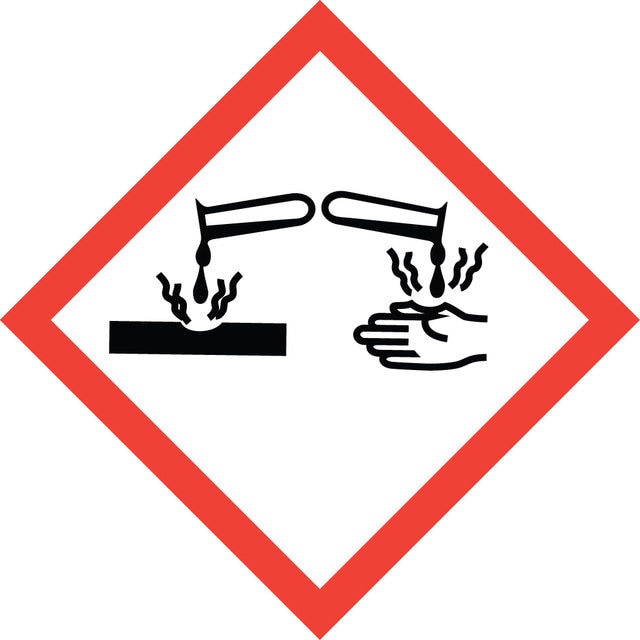
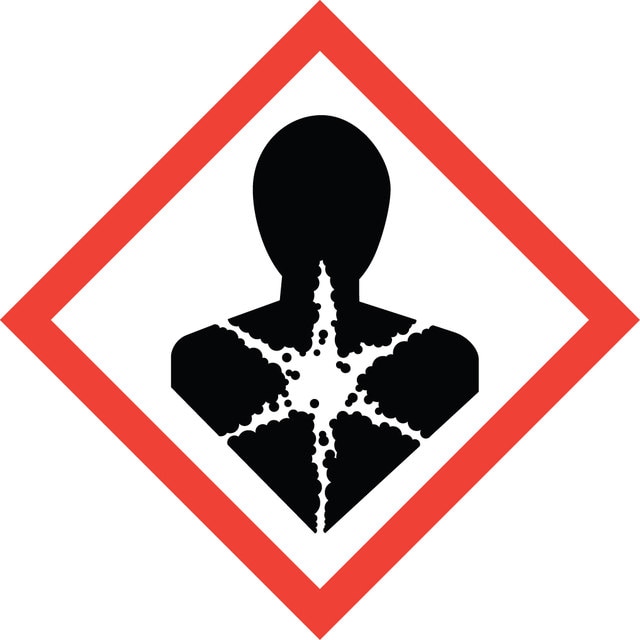
Acute Tox. 4 Oral - Eye Dam. 1 - Resp. Sens. 1 - Skin Corr. 1B - Skin Sens. 1

Clase de almacenamiento

8A - Combustible corrosive hazardous materials

wgk

WGK 1

flash_point_f

314.6 °F

flash_point_c

157 °C

ppe

dust mask type N95 (US), Eyeshields, Gloves


Elija entre una de las versiones más recientes:

Certificados de análisis (COA)

Lot/Batch Number

¿No ve la versión correcta?

Si necesita una versión concreta, puede buscar un certificado específico por el número de lote.

¿Ya tiene este producto?

Encuentre la documentación para los productos que ha comprado recientemente en la Biblioteca de documentos.

Visite la Librería de documentos

Allan D Rogalsky et al.
Journal of biomedical materials research. Part A, 99(3), 367-375 (2011-10-25)
Novel injectable hydrogels have been formed at 37°C under physiological pH using a polymer-polymer crosslinking reaction. Three different formulations were tested. After 1-day cure time at body temperature, the elastic modulus of unswollen samples ranged between 3 and 5 kPa
Sang Hyun Baek et al.
Analytical chemistry, 81(18), 7737-7742 (2009-08-12)
We present a novel dielectrophoretic technique that can be used to characterize molecular interactions inside a microfluidic device. Our approach allows functionalized beads which are initially at rest on a functionalized surface to be pulled away from the surface by
Yi Zhou et al.
Journal of nanobiotechnology, 15(1), 87-87 (2017-11-29)
Chemotherapeutic drugs used for cancer therapy frequently encounter multiple-drug resistance (MDR). Nanoscale carriers that can target tumors to accumulate and release drugs intracellularly have the greatest potential for overcoming MDR. Glucose transporter-1 (GLUT-1) and glutathione (GSH) overexpression in cancer cells
Mostafa Akbarzadeh Khiavi et al.
BioImpacts : BI, 10(1), 27-36 (2020-01-29)
Introduction: Currently, drug-induced reactive oxygen species (ROS) mediating apoptosis pathway have extensively been investigated in designing effective strategies for
Eugenio Calandrini et al.
Optics express, 27(18), 25912-25919 (2019-09-13)
Nanoporous gold can be exploited as plasmonic material for enhanced spectroscopy both in the visible and in the near-infrared spectral regions. In particular, the peculiar morphology of such a substrate leads to a higher field confinement with respect to conventional

Nuestro equipo de científicos tiene experiencia en todas las áreas de investigación: Ciencias de la vida, Ciencia de los materiales, Síntesis química, Cromatografía, Analítica y muchas otras.

Póngase en contacto con el Servicio técnico