
287571

Bis(2,2,2-trifluoroethyl) ether
98%
Sinónimos:
2,2,2-Trifluoroethyl ether, Flurothyl
Iniciar sesión para ver los precios por organización y contrato.
Seleccione un Tamaño
Acerca de este artículo
Fórmula lineal:
(CF3CH2)2O
Número CAS:
Peso molecular:
182.06
UNSPSC Code:
12352100
NACRES:
NA.22
PubChem Substance ID:
MDL number:
Beilstein/REAXYS Number:
1811927
Assay:
98%
Form:
liquid
Servicio técnico
¿Necesita ayuda? Nuestro equipo de científicos experimentados está aquí para ayudarle.
Permítanos ayudarleServicio técnico
¿Necesita ayuda? Nuestro equipo de científicos experimentados está aquí para ayudarle.
Permítanos ayudarleQuality Level
assay
98%
form
liquid
refractive index
n20/D 1.300 (lit.)
bp
62-63 °C (lit.)
density
1.404 g/mL at 25 °C (lit.)
functional group
ether, fluoro
SMILES string
FC(F)(F)COCC(F)(F)F
InChI
1S/C4H4F6O/c5-3(6,7)1-11-2-4(8,9)10/h1-2H2
InChI key
KGPPDNUWZNWPSI-UHFFFAOYSA-N
Categorías relacionadas
Application
Bis(2,2,2-trifluoroethyl) ether was used to diminish self-discharge of Li-S cells having both low- and high-sulfur-loading sulfur cathodes.
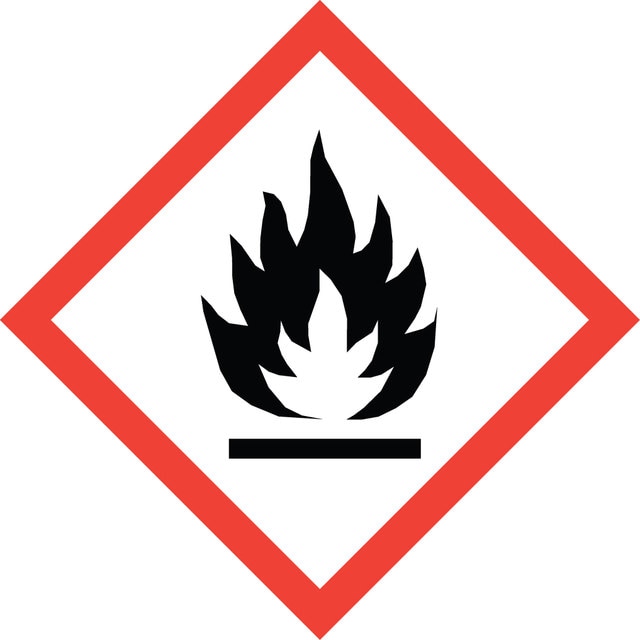

signalword
Danger
hcodes
Hazard Classifications
Eye Irrit. 2 - Flam. Liq. 2 - Skin Irrit. 2 - STOT SE 3
target_organs
Respiratory system
Clase de almacenamiento
3 - Flammable liquids
wgk
WGK 3
flash_point_f
33.8 °F - closed cup
flash_point_c
1 °C - closed cup
ppe
Eyeshields, Faceshields, Gloves
Elija entre una de las versiones más recientes:
¿Ya tiene este producto?
Encuentre la documentación para los productos que ha comprado recientemente en la Biblioteca de documentos.
Omar I Khan et al.
Neurobiology of disease, 39(3), 362-371 (2010-05-11)
Frequent interictal spikes are a common finding in the electroencephalograms of children with epileptic encephalopathies. While it is well recognized that interictal spikes are a biological marker of seizures and can lead to transitory cognitive impairment, whether interictal spikes can
Havisha B Karnam et al.
Epilepsy research, 85(2-3), 221-230 (2009-04-28)
Clinical studies have suggested that seizures in newborns are more damaging than seizures occurring in older children. However, these studies are difficult to interpret for a variety of factors including differing etiologies of seizures across ages. Animal studies can provide
Megan Leigh Lewis et al.
Epilepsia, 59(7), 1316-1326 (2018-06-03)
In different cohorts, 5%-30% of individuals with autism spectrum disorder (ASD) also have epilepsy. The high co-occurrence of these disorders suggests that a common mechanistic link may exist. The underlying pathophysiology of this comorbidity remains unknown. To investigate the mechanism(s)
Stacey B B Dutton et al.
Epilepsia, 52(11), 2050-2056 (2011-08-02)
We evaluated the ability of the ketogenic diet (KD) to improve thresholds to flurothyl-induced seizures in two mouse lines with Scn1a mutations: one that models Dravet syndrome (DS) and another that models genetic (generalized) epilepsy with febrile seizures plus (GEFS+).
Yogendrasinh H Raol et al.
Annals of neurology, 65(3), 326-336 (2009-04-01)
Neonatal seizures occur frequently, are often refractory to anticonvulsants, and are associated with considerable morbidity and mortality. Genetic and electrophysiological evidence indicates that KCNQ voltage-gated potassium channels are critical regulators of neonatal brain excitability. This study tests the hypothesis that
Nuestro equipo de científicos tiene experiencia en todas las áreas de investigación: Ciencias de la vida, Ciencia de los materiales, Síntesis química, Cromatografía, Analítica y muchas otras.
Póngase en contacto con el Servicio técnico