
359769

trans,trans-2,4-Hexadienoic acid potassium salt
ReagentPlus®, 99%
Sinónimos:
Potassium sorbate, Potassium 2,4-hexadienoate, Sorbic acid potassium salt
Iniciar sesión para ver los precios por organización y contrato.
Seleccione un Tamaño
Acerca de este artículo
Fórmula lineal:
CH3CH=CHCH=CHCOOK
Número CAS:
Peso molecular:
150.22
UNSPSC Code:
12352100
NACRES:
NA.22
PubChem Substance ID:
EC Number:
246-376-1
Beilstein/REAXYS Number:
5357554
MDL number:
Assay:
99%
Form:
solid
Servicio técnico
¿Necesita ayuda? Nuestro equipo de científicos experimentados está aquí para ayudarle.
Permítanos ayudarleServicio técnico
¿Necesita ayuda? Nuestro equipo de científicos experimentados está aquí para ayudarle.
Permítanos ayudarleQuality Level
product line
ReagentPlus®
assay
99%
form
solid
SMILES string
[K+].C\C=C\C=C\C([O-])=O
InChI
1S/C6H8O2.K/c1-2-3-4-5-6(7)8;/h2-5H,1H3,(H,7,8);/q;+1/p-1/b3-2+,5-4+;
InChI key
CHHHXKFHOYLYRE-STWYSWDKSA-M
Categorías relacionadas
General description
Sorbates have been reported to be less toxic than benzoate and have been classified as “Generally Recognized as Safe” (GRAS) additives by the U.S. Food and Drug Administration (FDA).Sorbic acid is metabolised to mainly to carbon dioxide. While the minor amounts are converted to trans,trans-muconic acid (ttMA), which is excreted unchanged into the urine. Urinary ttMA is a biomarker for the occupational and environmental exposure to benzene. Ability of trans,trans-2,4-Hexadienoic acid potassium salt (Sorbic acid potassium salt, Potassium sorbate) to induce chromosome aberrations, sister chromatid exchanges (SCE) and gene mutations in cultured Chinese hamster V79 cells has been examined.Potassium sorbate is reported to be less genotoxic than the sodium salt analog.
Application
- Determination of preservatives in canned food products: Investigates the presence of preservatives, including trans,trans-2,4-Hexadienoic acid potassium salt, in canned foods (AM Charles, 2014).
- The effect of selected preservatives on the growth of Listeria monocytogenes in ready-to-eat foods: Examines the inhibitory effects of potassium sorbate (trans-2,4-hexadienoic acid potassium salt) on Listeria monocytogenes (L Necidová, B Mrňousová, D Haruštiaková, Š Bursová, 2019).
- Effect of leave‐on cosmetic antimicrobial preservatives on healthy skin resident Staphylococcus epidermidis: Evaluates the impact of various preservatives, including trans,trans-2,4-Hexadienoic acid potassium salt, on skin microbiota (W Zhang, X Wang, L Zhao, Y Gu, 2023).
- Catalytic Strategy for Conversion of Triacetic Acid Lactone to Potassium Sorbate: Describes a method for synthesizing potassium sorbate from triacetic acid lactone using a catalytic process (MS Kim, D Choi, J Ha, K Choi, JH Yu, JA Dumesic, 2023).
Legal Information
ReagentPlus is a registered trademark of Merck KGaA, Darmstadt, Germany
Disclaimer
The product is not intended for use as a biocide under global biocide regulations, including but not limited to US EPA′s Federal Insecticide Fungicide and Rodenticide Act, European Biocidal Products Regulation, Canada’s Pest Management Regulatory Agency, Turkey’s Biocidal Products Regulation, Korea’s Consumer Chemical Products and Biocide Safety Management Act (K-BPR) and others.
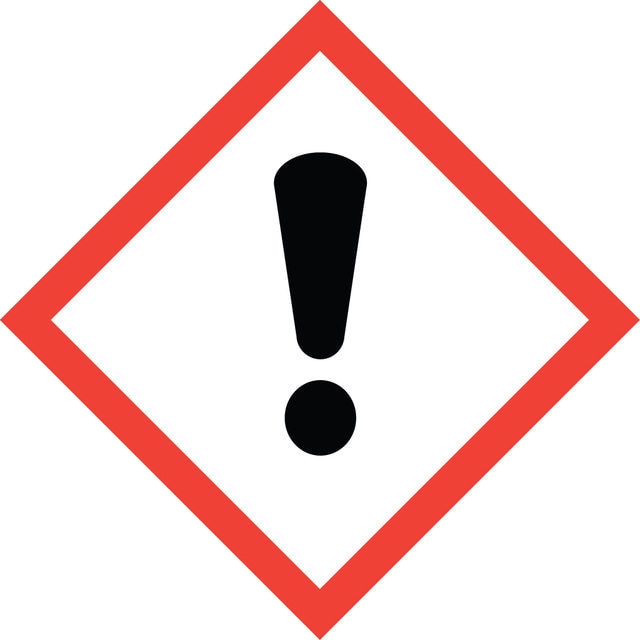
signalword
Warning
hcodes
Hazard Classifications
Eye Irrit. 2
Clase de almacenamiento
11 - Combustible Solids
wgk
WGK 1
flash_point_f
Not applicable
flash_point_c
Not applicable
ppe
dust mask type N95 (US), Eyeshields, Gloves
Elija entre una de las versiones más recientes:
¿Ya tiene este producto?
Encuentre la documentación para los productos que ha comprado recientemente en la Biblioteca de documentos.
M Teresa Pérez-Prior et al.
Journal of agricultural and food chemistry, 56(24), 11824-11829 (2008-12-05)
Sorbic acid reacts with nitrite to yield mutagenic products such as 1,4-dinitro-2-methylpyrrole (NMP) and ethylnitrolic acid (ENA). In order to know the stability of these compounds, a kinetic study of their decomposition reactions was performed in the 6.0-9.5 pH range.
M M Hasegawa et al.
Food and chemical toxicology : an international journal published for the British Industrial Biological Research Association, 22(7), 501-507 (1984-07-01)
The ability of sorbic acid and its potassium and sodium salts to induce chromosome aberrations, sister chromatid exchanges (SCE) and gene mutations in cultured Chinese hamster V79 cells was examined. Sodium sorbate caused significant induction of chromosome aberrations and SCE
T Renner et al.
Journal of chromatography. A, 847(1-2), 127-133 (1999-08-04)
The average daily uptake of the common food preservative sorbic acid is estimated to range from 0.01 to 1.1 mg kg-1. Sorbic acid mainly is metabolised to carbon dioxide. Minor amounts are converted to trans,trans-muconic acid (ttMA) as well as
Cheng-An Hwang et al.
Journal of food protection, 78(6), 1154-1160 (2015-06-04)
The surfaces of ready-to-eat meats are susceptible to postprocessing contamination by Listeria monocytogenes. This study quantified the lag-phase durations (LPD) and growth rates (GR) of L. monocytogenes on the surfaces of cooked ham as affected by sorbate solutions of different
Rui Cai et al.
International journal of food microbiology, 214, 145-150 (2015-08-25)
Alicyclobacillus acidoterrestris can survive the pasteurization process, multiply in pasteurized juices and produce guaiacol which causes medicinal or antiseptic off-flavors. Chemical preservatives have the potential to suppress outgrowth of surviving populations during subsequent storage of fruit juices. In the present
Nuestro equipo de científicos tiene experiencia en todas las áreas de investigación: Ciencias de la vida, Ciencia de los materiales, Síntesis química, Cromatografía, Analítica y muchas otras.
Póngase en contacto con el Servicio técnico