Saltar al contenido
Merck

451193

Nickel(II) chloride

anhydrous, powder, 99.99% trace metals basis

Sinónimos:

Nickel chloride, Nickel dichloride, Nickel dichloride (NiCl2 ), Nickelous chloride

Iniciar sesión para ver los precios por organización y contrato.

Seleccione un Tamaño


Acerca de este artículo

Fórmula lineal:
NiCl2
Número CAS:
Peso molecular:
129.60
NACRES:
NA.23
PubChem Substance ID:
UNSPSC Code:
12352302
EC Number:
231-743-0
MDL number:
Assay:
99.99% trace metals basis
Grade:
anhydrous
Form:
powder
Servicio técnico
¿Necesita ayuda? Nuestro equipo de científicos experimentados está aquí para ayudarle.
Permítanos ayudarle
Servicio técnico
¿Necesita ayuda? Nuestro equipo de científicos experimentados está aquí para ayudarle.
Permítanos ayudarle

Nombre del producto

Nickel(II) chloride, anhydrous, powder, 99.99% trace metals basis

InChI key

QMMRZOWCJAIUJA-UHFFFAOYSA-L

InChI

1S/2ClH.Ni/h2*1H;/q;;+2/p-2

SMILES string

Cl[Ni]Cl

grade

anhydrous

assay

99.99% trace metals basis

form

powder

reaction suitability

core: nickel

impurities

≤150.0 ppm Trace Metal Analysis

density

3.55 g/mL at 25 °C (lit.)

application(s)

battery precursors
catalysts
material synthesis precursor

Quality Level

¿Está buscando productos similares? Visita Guía de comparación de productos

Application

Nickel(II) chloride anhydrous can be used in advanced studies in battery technologies, such as nickel-based cathode materials for lithium-ion batteries and alternative battery chemistries. Used to investigate and improve the properties of electrode materials in nickel-cadmium (NiCd) and nickel-metal hydride (NiMH) batteries. Research into electrocatalysts for energy applications, including water splitting and fuel cells, frequently utilizes high-purity Nickel(II) chloride to ensure optimal performance and reproducibility. It can be used as a precursor in the synthesis of nickel nanoparticles, which have applications in catalysis, magnetic materials, and electronic devices. The high purity Nickel(II) chloride serves as a precursor for various nickel compounds, such as nickel oxides and hydroxides, which are studied for their electrical, magnetic, and catalytic properties.

Features and Benefits

Its high purity guarantees accurate and reproducible experimental results, making it essential for applications in catalysis, nanomaterial synthesis, battery research, material science, coordination chemistry, environmental chemistry, and analytical chemistry. The vapor-phase co-reductions with other metal halides such as aluminum chloride (cat. no. 449598) by hydrogen results in finely divided intermetallics with applications as structural materials or compounds with useful thermoelectric, magnetic, and oxidation-resistance properties. Used in the synthesis of semiconducting metal-containing polymers in which the polypyrrole backbone has a conformational energy minimum and is nearly planar.
The vapor-phase co-reductions with other metal halides such as aluminum chloride (cat. no. 449598) by hydrogen results in finely divided intermetallics with applications as structural materials or compounds with useful thermoelectric, magnetic, and oxidation-resistance properties. Used in the synthesis of semiconducting metal-containing polymers in which the polypyrrole backbone has a conformational energy minimum and is nearly planar.

General description

Nickel(II) chloride anhydrous, powder, 99.99% trace metals basis comes in a powder form or in chunks with trace metal impurities ≤ 150.0 ppm. It is a highly useful inorganic compound with a broad range of applications across various industries. Its relatively high purity makes it suitable for both industrial and laboratory settings. It is widely used in catalysis, electroplating, battery manufacturing, chemical synthesis, material science, dye and pigment production, and laboratory research.

signalword

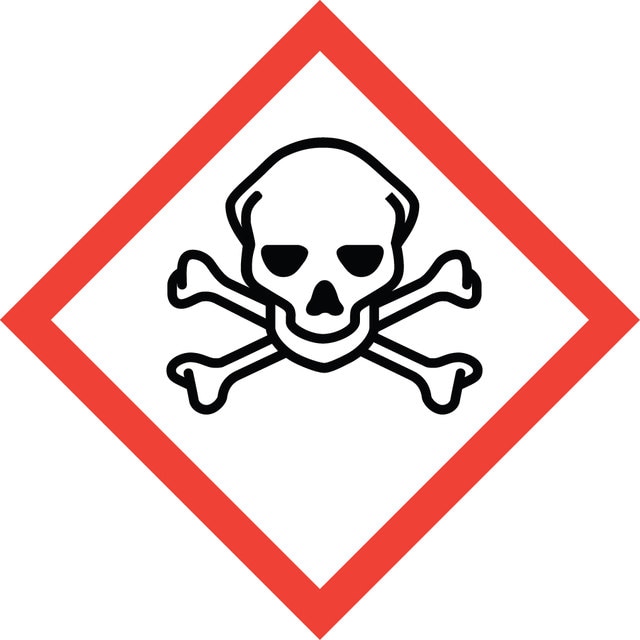
Danger

Hazard Classifications

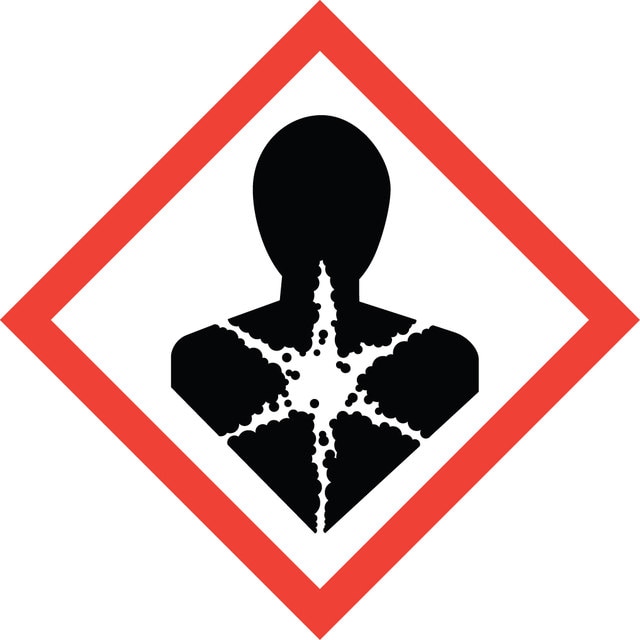
Acute Tox. 3 Inhalation - Acute Tox. 3 Oral - Aquatic Acute 1 - Aquatic Chronic 1 - Carc. 1A Inhalation - Muta. 2 - Repr. 1B - Resp. Sens. 1 - Skin Irrit. 2 - Skin Sens. 1 - STOT RE 1 Inhalation

target_organs

Lungs

Clase de almacenamiento

6.1D - Non-combustible acute toxic Cat.3 / toxic hazardous materials or hazardous materials causing chronic effects

wgk

WGK 3

flash_point_f

Not applicable

flash_point_c

Not applicable

ppe

Eyeshields, Faceshields, Gloves, type P3 (EN 143) respirator cartridges


Elija entre una de las versiones más recientes:

Certificados de análisis (COA)

Lot/Batch Number

¿No ve la versión correcta?

Si necesita una versión concreta, puede buscar un certificado específico por el número de lote.

¿Ya tiene este producto?

Encuentre la documentación para los productos que ha comprado recientemente en la Biblioteca de documentos.

Visite la Librería de documentos

Samuel Dessources et al.
Chemphyschem : a European journal of chemical physics and physical chemistry, 17(23), 3964-3973 (2016-09-23)
Hydrogen oxidation and evolution reactions (HOR and HER) are studied on Ptx Ni1-x /C materials synthesized by the bromide anion exchange method. Physicochemical characterization shows that this surfactant-free method enables the preparation of well-dispersed and effective catalysts for the processes
Ahmed Hasnain Jalal et al.
Biosensors & bioelectronics, 87, 522-530 (2016-09-07)
Multimodal electrochemical technique incorporating both open circuit potential (OCP) and amperometric techniques have been conceptualized and implemented to improve the detection of specific analyte in systems where more than one analyte is present. This approach has been demonstrated through the
Yuhang Li et al.
Nature communications, 11(1), 6190-6190 (2020-12-05)
Electroreduction uses renewable energy to upgrade carbon dioxide to value-added chemicals and fuels. Renewable methane synthesized using such a route stands to be readily deployed using existing infrastructure for the distribution and utilization of natural gas. Here we design a
Tamzin A Blewett et al.
Archives of environmental contamination and toxicology, 68(2), 382-394 (2014-12-30)
The mechanisms of nickel (Ni) toxicity in marine fish remain unclear, although evidence from freshwater (FW) fish suggests that Ni can act as a pro-oxidant. This study investigated the oxidative stress effects of Ni on the euryhaline killifish (Fundulus heteroclitus)
Rebecca A Musgrave et al.
Chemical science, 10(42), 9841-9852 (2020-02-06)
Ring-opening polymerisation (ROP) of strained [1]- and [2]metallocenophanes and related species is well-established, and the monomer ring-strain is manifest in a substantial tilting of the cyclopentadienyl ligands, giving α angles of ∼14-32°. Surprisingly, tetracarba[4]nickelocenophane [Ni(η5-C5H4)2(CH2)4] (2) undergoes ROP (pyridine, 20

Nuestro equipo de científicos tiene experiencia en todas las áreas de investigación: Ciencias de la vida, Ciencia de los materiales, Síntesis química, Cromatografía, Analítica y muchas otras.

Póngase en contacto con el Servicio técnico