Saltar al contenido
Merck

451665

Copper(II) chloride

anhydrous, powder, ≥99.995% trace metals basis

Sinónimos:

Cupric chloride

Iniciar sesión para ver los precios por organización y contrato.

Seleccione un Tamaño


Acerca de este artículo

Fórmula lineal:
CuCl2
Número CAS:
Peso molecular:
134.45
NACRES:
NA.23
PubChem Substance ID:
UNSPSC Code:
12352302
EC Number:
231-210-2
MDL number:
Assay:
≥99.995% trace metals basis
Grade:
anhydrous
Form:
powder
Servicio técnico
¿Necesita ayuda? Nuestro equipo de científicos experimentados está aquí para ayudarle.
Permítanos ayudarle
Servicio técnico
¿Necesita ayuda? Nuestro equipo de científicos experimentados está aquí para ayudarle.
Permítanos ayudarle

InChI key

ORTQZVOHEJQUHG-UHFFFAOYSA-L

InChI

1S/2ClH.Cu/h2*1H;/q;;+2/p-2

SMILES string

Cl[Cu]Cl

grade

anhydrous

assay

≥99.995% trace metals basis

form

powder

reaction suitability

core: copper

impurities

≤50.0 ppm Trace Metal Analysis

mp

620 °C (lit.)

density

3.386 g/mL at 25 °C (lit.)

application(s)

electroplating
material synthesis precursor

Quality Level

¿Está buscando productos similares? Visita Guía de comparación de productos

Categorías relacionadas

Application

Effective catalyst for the tetrahydropyranylation of alcohols, using mild conditions and in high yields.

General description

CuCl2 was used in studies investigating pleural fibrosis resulting from chronic inhalation of indium phosphide (InP) particles in mice.

Features and Benefits

  • High purity of ≥99.995% Copper(II) chloride minimizes impurities, boosting efficiency and selectivity in catalytic processes essential for organic synthesis and industrial chemical production.
  • The presence of low metal impurities in ≥99.995% copper(II) chloride ensure consistent quality in electroplating applications, enhancing adhesion and achieving uniform coatings on substrates without contamination that could compromise the finish.
  • Anhydrous CuCl₂ reduces the risk of hydrolysis, preventing unwanted by-products and enhancing the efficiency of chemical processes.

signalword

Danger

Hazard Classifications

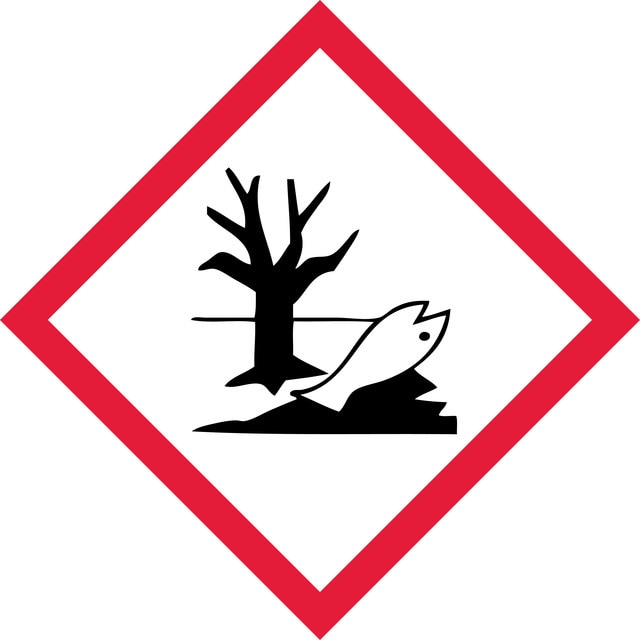
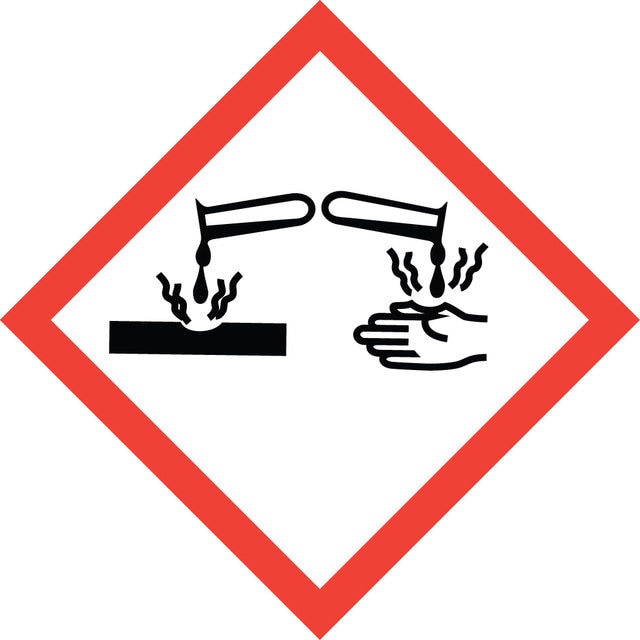
Acute Tox. 4 Dermal - Acute Tox. 4 Oral - Aquatic Acute 1 - Aquatic Chronic 2 - Eye Dam. 1 - Skin Irrit. 2

Clase de almacenamiento

8A - Combustible corrosive hazardous materials

wgk

WGK 3

flash_point_f

Not applicable

flash_point_c

Not applicable

ppe

dust mask type N95 (US), Eyeshields, Gloves


Elija entre una de las versiones más recientes:

Certificados de análisis (COA)

Lot/Batch Number

¿No ve la versión correcta?

Si necesita una versión concreta, puede buscar un certificado específico por el número de lote.

¿Ya tiene este producto?

Encuentre la documentación para los productos que ha comprado recientemente en la Biblioteca de documentos.

Visite la Librería de documentos

Bhalerao, U.T. et al.
Synthetic Communications, 26, 3081-3081 (1996)
Pieter Spincemaille et al.
Toxicology and applied pharmacology, 280(2), 345-351 (2014-08-20)
Wilson disease (WD) is caused by accumulation of excess copper (Cu) due to a mutation in the gene encoding the liver Cu transporter ATP7B, and is characterized by acute liver failure or cirrhosis and neuronal cell death. We investigated the
Su-Jeong Kim et al.
Free radical biology & medicine, 53(4), 936-950 (2012-06-12)
Loss-of-function mutations in the PARK7/DJ-1 gene cause early onset autosomal-recessive Parkinson disease. DJ-1 has been implicated in protection of neurons from oxidative stress and in regulation of transcriptional activity. However, whether there is a relationship between the subcellular localization of
Landon John G Edgar et al.
Organic letters, 14(16), 4226-4229 (2012-08-01)
Glycosyl 1-phosphates enriched in the α-anomer are obtained without the use of protecting groups in two steps starting from the free hemiacetal. Condensation of free hemiacetals with toluenesulfonylhydrazide yields a range of glycosylsulfonohydrazide donors which can be oxidized using cupric
Mónica João Barros Amorim et al.
Environmental pollution (Barking, Essex : 1987), 164, 164-168 (2012-03-01)
Environmental effects of copper nanoparticles are little studied in terrestrial ecosystems. In the present article, the toxicity of copper nanoparticles (Cu-NP) on the enchytraeid Enchytraeus albidus is compared to the toxicity of a copper-salt (CuCl(2)). The effect parameters studied were

Nuestro equipo de científicos tiene experiencia en todas las áreas de investigación: Ciencias de la vida, Ciencia de los materiales, Síntesis química, Cromatografía, Analítica y muchas otras.

Póngase en contacto con el Servicio técnico