Saltar al contenido
Merck

C0267

2-Chloroacetamide

≥98%

Sinónimos:

Chloracetamide, alpha-Chloroacetamide

Iniciar sesión para ver los precios por organización y contrato.

Seleccione un Tamaño


Acerca de este artículo

Fórmula lineal:
ClCH2CONH2
Número CAS:
Peso molecular:
93.51
UNSPSC Code:
12352100
NACRES:
NA.22
PubChem Substance ID:
EC Number:
201-174-2
Beilstein/REAXYS Number:
878191
MDL number:
Servicio técnico
¿Necesita ayuda? Nuestro equipo de científicos experimentados está aquí para ayudarle.
Permítanos ayudarle
Servicio técnico
¿Necesita ayuda? Nuestro equipo de científicos experimentados está aquí para ayudarle.
Permítanos ayudarle

Nombre del producto

2-Chloroacetamide, ≥98%

InChI

1S/C2H4ClNO/c3-1-2(4)5/h1H2,(H2,4,5)

InChI key

VXIVSQZSERGHQP-UHFFFAOYSA-N

SMILES string

NC(=O)CCl

vapor pressure

0.05 mmHg ( 20 °C)

assay

≥98%

form

powder

mp

116-118 °C (lit.)

Quality Level

¿Está buscando productos similares? Visita Guía de comparación de productos

Categorías relacionadas

Application

2-Chloroacetamidecan be used as a reactant to synthesize:
  • 2-Amino-4-chloroquinolines via o-alkylation of 4-chloro-1H-quinolin-2-ones and subsequent Smiles rearrangement.
  • 2-(Formylaryloxy)acetamides by reacting with hydroxybenzaldehydes in the presence of potassium carbonate as a base.
  • Biarylamine derivatives via aluminum triflate-catalyzed direct amination of benzhydrols.

General description
2-Chloroacetamide, also known as alpha-Chloroacetamide, is a chlorinated organic compound commonly used as a precursor in the synthesis of amides and thioamides.

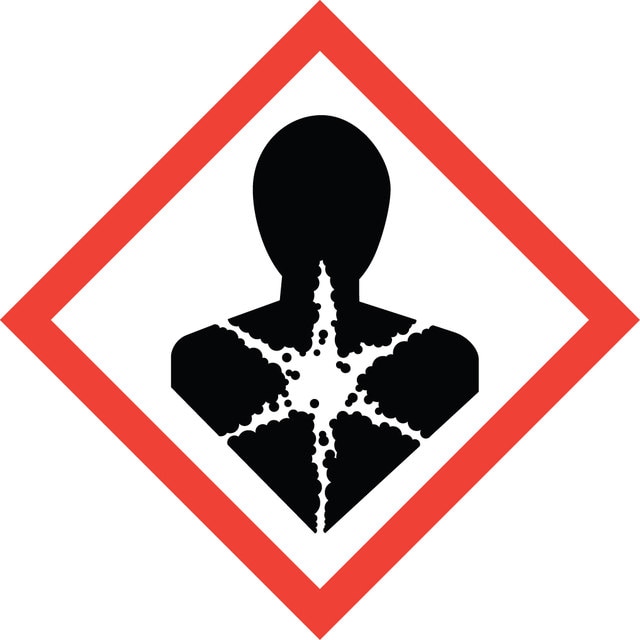
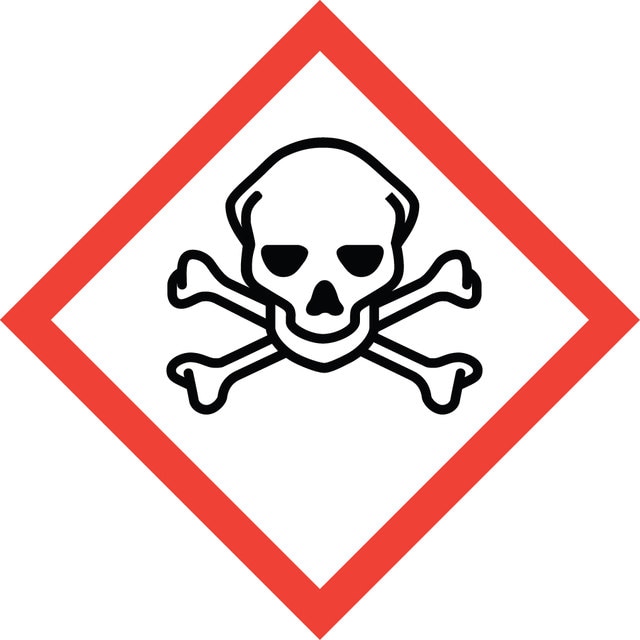
pictograms

Skull and crossbonesHealth hazard

signalword

Danger

Hazard Classifications

Acute Tox. 3 Oral - Repr. 2 - Skin Sens. 1

Clase de almacenamiento

6.1C - Combustible acute toxic Cat.3 / toxic compounds or compounds which causing chronic effects

wgk

WGK 2

flash_point_f

338.0 °F

flash_point_c

170 °C

ppe

Eyeshields, Faceshields, Gloves, type P3 (EN 143) respirator cartridges


Elija entre una de las versiones más recientes:

Certificados de análisis (COA)

Lot/Batch Number

¿No ve la versión correcta?

Si necesita una versión concreta, puede buscar un certificado específico por el número de lote.

¿Ya tiene este producto?

Encuentre la documentación para los productos que ha comprado recientemente en la Biblioteca de documentos.

Visite la Librería de documentos

Cleonice Rocha et al.
Environmental pollution (Barking, Essex : 1987), 152(1), 239-244 (2007-07-17)
Solid-phase microextraction coupled with gas chromatography-mass spectrometry (SPME-GC-MS) was used to analyze two triazine (atrazine and simazine) and three chloroacetamide herbicides (acetochlor, alachlor, and metolachlor) in water samples from a midwest US agricultural drainage ditch for two growing seasons. The
Jun Zhang et al.
Journal of agricultural and food chemistry, 59(9), 4614-4621 (2011-03-23)
A butachlor-degrading strain, designated FLY-8, was isolated from rice field soil and was identified as Paracoccus sp. Strain FLY-8 could degrade and utilize six chloroacetamide herbicides as carbon sources for growth, and the degradation rates followed the order alachlor >
Felix Boos et al.
Nature cell biology, 21(4), 442-451 (2019-03-20)
The cytosolic accumulation of mitochondrial precursors is hazardous to cellular fitness and is associated with a number of diseases. However, it is not observed under physiological conditions. Individual mechanisms that allow cells to avoid cytosolic accumulation of mitochondrial precursors have
K Eszter Borbas et al.
Bioconjugate chemistry, 18(4), 1205-1212 (2007-06-23)
Targeted radiopharmaceuticals offer the possibility of improved tumor imaging and radiotherapy, with reduced side effects. A variety of monoclonal antibodies and antibody fragments have previously been successfully radiolabeled and used in diagnostic imaging and targeted radiotherapy of cancer. Many such
Michelle L Hladik et al.
Environmental science & technology, 39(17), 6561-6574 (2005-09-30)
Although laboratory studies have revealed that many different neutral degradates of chloroacetamide herbicides can form during thermochemical, biological, and photochemical transformations, relatively few have been sought in the environment, despite their likely generation in appreciable amounts, relative persistence, and known

Nuestro equipo de científicos tiene experiencia en todas las áreas de investigación: Ciencias de la vida, Ciencia de los materiales, Síntesis química, Cromatografía, Analítica y muchas otras.

Póngase en contacto con el Servicio técnico