
C121452

p-Cymene
99%
Sinónimos:
1-Isopropyl-4-methylbenzene, 4-Isopropyltoluene
Iniciar sesión para ver los precios por organización y contrato.
Seleccione un Tamaño
Cambiar Vistas
Acerca de este artículo
Fórmula lineal:
CH3C6H4CH(CH3)2
Número CAS:
Peso molecular:
134.22
UNSPSC Code:
12352100
NACRES:
NA.22
PubChem Substance ID:
EC Number:
202-796-7
Beilstein/REAXYS Number:
1903377
MDL number:
Assay:
99%
Form:
liquid
Servicio técnico
¿Necesita ayuda? Nuestro equipo de científicos experimentados está aquí para ayudarle.
Permítanos ayudarlevapor density
4.62 (vs air)
vapor pressure
1.5 mmHg ( 20 °C), 3.7 mmHg ( 37.7 °C)
assay
99%
form
liquid
autoignition temp.
817 °F
expl. lim.
5.6 %
refractive index
n20/D 1.490 (lit.)
bp
176-178 °C (lit.)
density
0.86 g/mL at 25 °C (lit.)
SMILES string
CC(C)c1ccc(C)cc1
InChI
1S/C10H14/c1-8(2)10-6-4-9(3)5-7-10/h4-8H,1-3H3
InChI key
HFPZCAJZSCWRBC-UHFFFAOYSA-N
Application
p-Cymene is an alkyl aromatic hydrocarbon mainly used to study oxidation reactions under various conditions to synthesize highly valuable intermediates and building-blocks such as cymene hydroperoxide, 4-methyl acetophenone, 4-isopropyl benzyl alcohol, 4-isopropyl benzaldehyde and 4-isopropyl benzoic acid etc.
Still not finding the right product?
Explore all of our products under p-Cymene
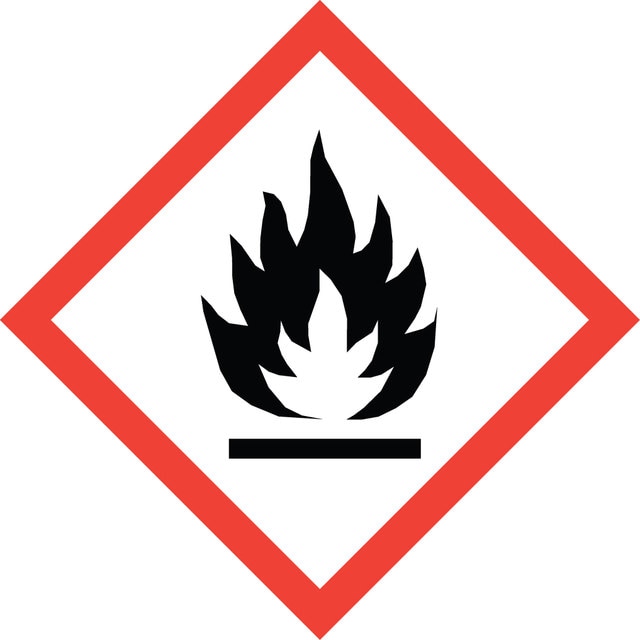
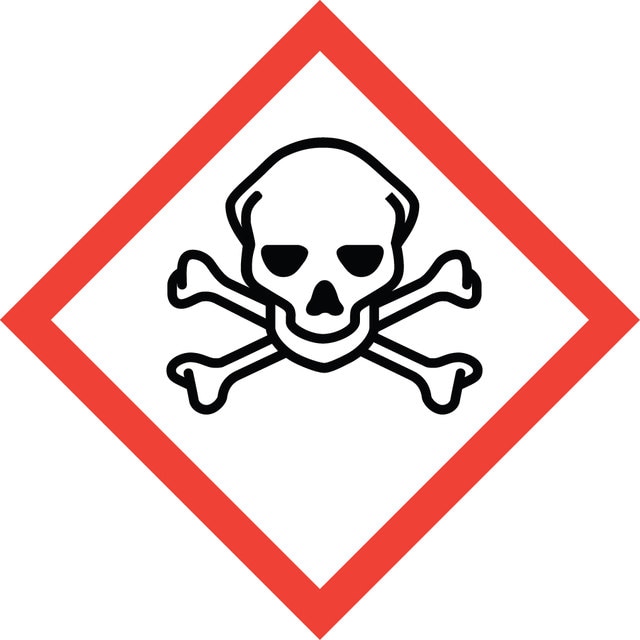
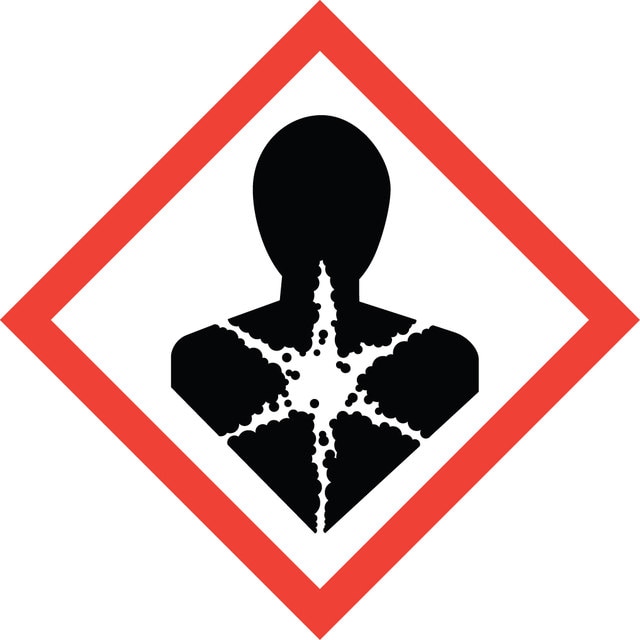
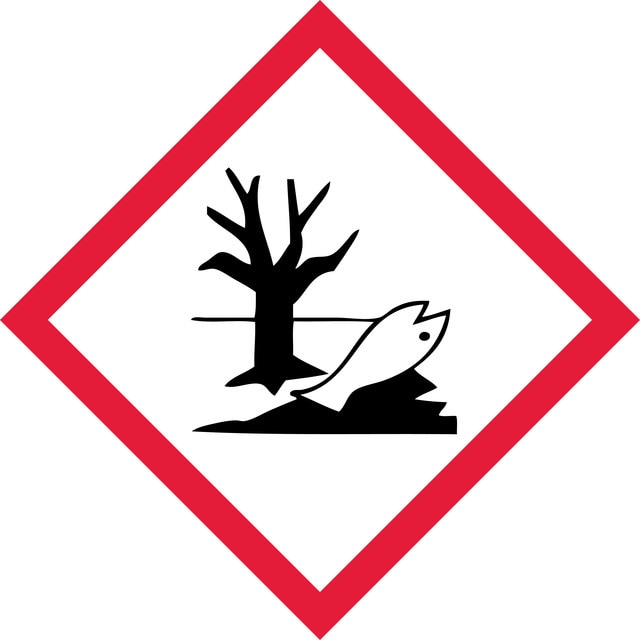
signalword
Danger
Hazard Classifications
Acute Tox. 3 Inhalation - Aquatic Chronic 2 - Asp. Tox. 1 - Flam. Liq. 3 - Repr. 2
Clase de almacenamiento
3 - Flammable liquids
flash_point_f
125.6 °F - closed cup
flash_point_c
52 °C - closed cup
ppe
Eyeshields, Faceshields, Gloves, type ABEK (EN14387) respirator filter
Elija entre una de las versiones más recientes:
¿Ya tiene este producto?
Encuentre la documentación para los productos que ha comprado recientemente en la Biblioteca de documentos.
Liquid-phase oxidation of p-cymene: Nature of intermediate hydroperoxides and relative activity of the alkyl groups
Serif, George Samuel and Hunt, CF and Bourns, AN
Canadian Journal of Chemistry, 31(12), 1229-1238 (1953)
Nanosized ruthenium particles decorated carbon nanofibers as active catalysts for the oxidation of p-cymene by molecular oxygen
Makgwane, Peter R and Ray, Suprakas Sinha
J. Mol. Catal. A: Chem., 373, 1-11 (2013)
Lucy Owen et al.
Molecular and cellular probes, 38, 25-30 (2017-12-25)
Many essential oil components are known to possess broad spectrum antimicrobial activity, including against antibiotic resistant bacteria. These compounds may be a useful source of new and novel antimicrobials. However, there is limited research on the structure-activity relationship (SAR) of