Saltar al contenido
Merck

F5396

Fenbendazole

≥98%

Sinónimos:

Methyl 5-(phenylthio)-2-benzimidazolecarbamate

Iniciar sesión para ver los precios por organización y contrato.

Seleccione un Tamaño


Acerca de este artículo

Fórmula empírica (notación de Hill):
C15H13N3O2S
Número CAS:
Peso molecular:
299.35
UNSPSC Code:
12352100
NACRES:
NA.22
PubChem Substance ID:
EC Number:
256-145-7
Beilstein/REAXYS Number:
759077
MDL number:
Assay:
≥98%
Servicio técnico
¿Necesita ayuda? Nuestro equipo de científicos experimentados está aquí para ayudarle.
Permítanos ayudarle
Servicio técnico
¿Necesita ayuda? Nuestro equipo de científicos experimentados está aquí para ayudarle.
Permítanos ayudarle

InChI key

HDDSHPAODJUKPD-UHFFFAOYSA-N

InChI

1S/C15H13N3O2S/c1-20-15(19)18-14-16-12-8-7-11(9-13(12)17-14)21-10-5-3-2-4-6-10/h2-9H,1H3,(H2,16,17,18,19)

SMILES string

COC(=O)Nc1nc2cc(Sc3ccccc3)ccc2[nH]1

assay

≥98%

Quality Level

¿Está buscando productos similares? Visita Guía de comparación de productos

Application


  • Fenbendazole in Veterinary Medicine: Investigated for efficacy against coccidicidal fungi in avian species, demonstrating broad-spectrum antiparasitic potential. Additionally, its environmental impact and pharmacokinetics reveal insights for sustainable agricultural practices and disease vector control. (Lozano et al., 2024), (Hachgenei et al., 2024), (Durden et al., 2023).

  • Food safety and allergen detection: Fenbendazole′s implications in food safety are explored through quantitative PCR methods for detecting allergenic species in foods, underscoring the importance of accurate detection techniques in food industry compliance and safety standards (Costa et al., 2023).

  • Analysis of antibiotic and anthelmintic residues: The occurrence and exposure evaluation of Fenbendazole residues in cow milk in China is studied, emphasizing the need for rigorous monitoring of food products to ensure public health safety (Chang et al., 2023).


General description

Fenbendazole also known as Methyl 5-(phenylthio)-2-benzimidazolecarbamate, is a benzimidazole anthelmintic and antiprotozoal agent.

pictograms

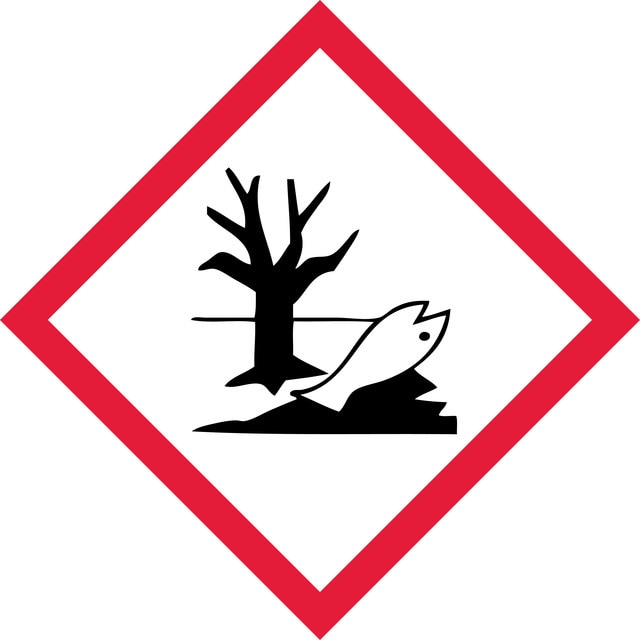
Health hazardEnvironment

signalword

Warning

Hazard Classifications

Aquatic Acute 1 - Aquatic Chronic 1 - Repr. 2 - STOT RE 2

target_organs

Liver,lymph node,Stomach,Nervous system

Clase de almacenamiento

11 - Combustible Solids

wgk

WGK 3

ppe

Eyeshields, Gloves, type N95 (US)


Elija entre una de las versiones más recientes:

Certificados de análisis (COA)

Lot/Batch Number

¿No ve la versión correcta?

Si necesita una versión concreta, puede buscar un certificado específico por el número de lote.

¿Ya tiene este producto?

Encuentre la documentación para los productos que ha comprado recientemente en la Biblioteca de documentos.

Visite la Librería de documentos

Penny K Patten et al.
Veterinary clinical pathology, 42(1), 103-108 (2013-01-03)
Mesocestoides cestode infections in dogs are well known for causing severe peritonitis with larvae or larval fragments (metacestodes, tetrathyridia, or calcareous corpuscles) frequently observed cytologically in peritoneal fluid samples. This case report describes the cytologic and clinical features of 2
C Chassaing et al.
Journal of medicinal chemistry, 51(5), 1111-1114 (2008-02-15)
Highly water-soluble prodrugs 1a- g of anthelmintic benzimidazole carbamates 2a- g were synthesized. These prodrugs combine high aqueous solubility and stability with high lability in the presence of alkaline phosphatases. The veterinary utility of 1a was shown by a pharmacodynamic
Nilambra Dogra et al.
The Journal of biological chemistry, 287(36), 30625-30640 (2012-06-30)
In recent years, there has been a great deal of interest in proteasome inhibitors as a novel class of anticancer drugs. We report that fenbendazole (FZ) (methyl N-(6-phenylsulfanyl-1H-benzimidazol-2-yl)carbamate) exhibits a potent growth-inhibitory activity against cancer cell lines but not normal
Niels C Kyvsgaard et al.
Veterinary parasitology, 181(2-4), 248-254 (2011-05-17)
Horses, mules and donkeys are indispensable farming and working animals in many developing countries, and their health status is important to the farmers. Strongyle parasites are ubiquitous in grazing horses world-wide and are known to constitute a threat to equine
Unexpected production loss caused by helminth parasites in weaned beef calves.
N D Sargison et al.
The Veterinary record, 167(19), 752-754 (2011-01-25)

Nuestro equipo de científicos tiene experiencia en todas las áreas de investigación: Ciencias de la vida, Ciencia de los materiales, Síntesis química, Cromatografía, Analítica y muchas otras.

Póngase en contacto con el Servicio técnico