Saltar al contenido
Merck

W203408

Allyl isothiocyanate

≥95%, FCC

Sinónimos:

AITC, Oil of mustard

Iniciar sesión para ver los precios por organización y contrato.

Seleccione un Tamaño


Acerca de este artículo

Fórmula lineal:
CH2=CHCH2NCS
Número CAS:
Peso molecular:
99.15
FEMA Number:
2034
Council of Europe no.:
2110
UNSPSC Code:
12164502
PubChem Substance ID:
Flavis number:
12.025
EC Number:
200-309-2
NACRES:
NA.21
MDL number:
Beilstein/REAXYS Number:
773748
Organoleptic:
horseradish; pungent
Grade:
Halal, Kosher
Biological source:
synthetic
Food allergen:
no known allergens
Servicio técnico
¿Necesita ayuda? Nuestro equipo de científicos experimentados está aquí para ayudarle.
Permítanos ayudarle
Servicio técnico
¿Necesita ayuda? Nuestro equipo de científicos experimentados está aquí para ayudarle.
Permítanos ayudarle

SMILES string

C=CCN=C=S

InChI

1S/C4H5NS/c1-2-3-5-4-6/h2H,1,3H2

InChI key

ZOJBYZNEUISWFT-UHFFFAOYSA-N

biological source

synthetic

grade

Halal, Kosher

reg. compliance

FCC, FDA 21 CFR 117, FDA 21 CFR 172.515

assay

≥95%

refractive index

n20/D 1.529 (lit.)

bp

150 °C (lit.)

mp

−80 °C (lit.)

density

1.013 g/mL at 25 °C (lit.)

application(s)

flavors and fragrances

documentation

see Safety & Documentation for available documents

food allergen

no known allergens

organoleptic

horseradish; pungent

storage temp.

2-8°C

Quality Level

¿Está buscando productos similares? Visita Guía de comparación de productos

General description

Allyl isothiocyanate is mainly found in Brassica species such as mustard, cabbage, and broccoli. It is formed by the degradation of the glucosinolate, sinigrin.

Biochem/physiol Actions

Naturally occurring constituent of cruciferous vegetables.

Disclaimer

For R&D or non-EU Food use. Not for retail sale.

signalword

Danger

Hazard Classifications

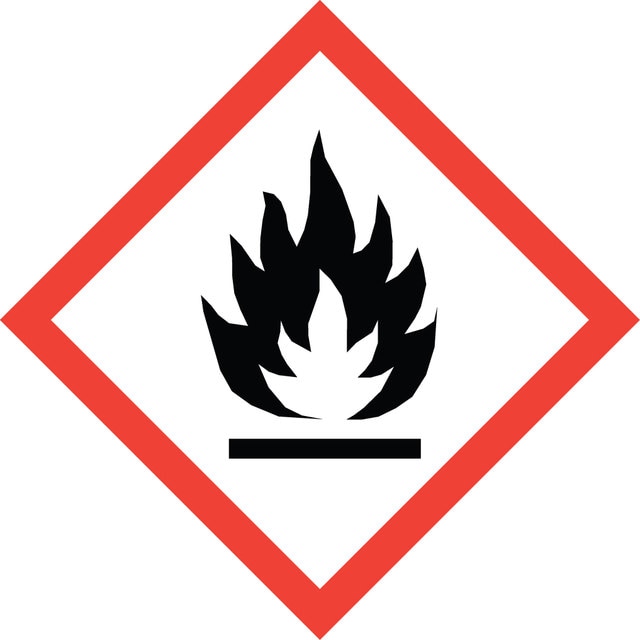
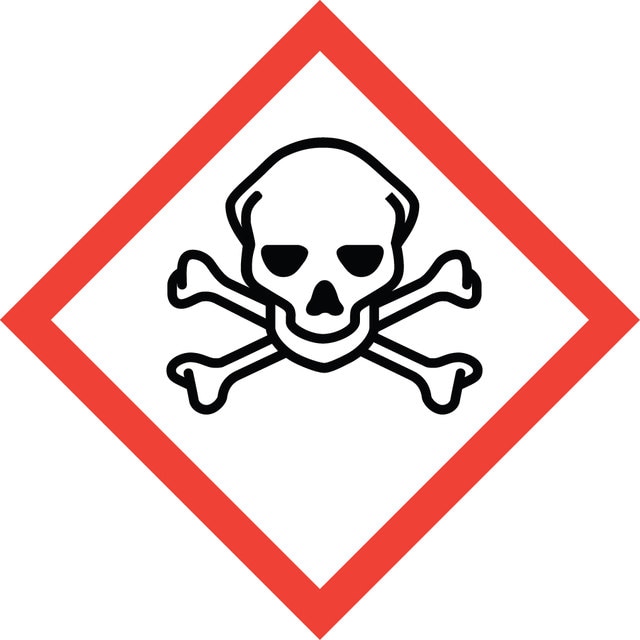
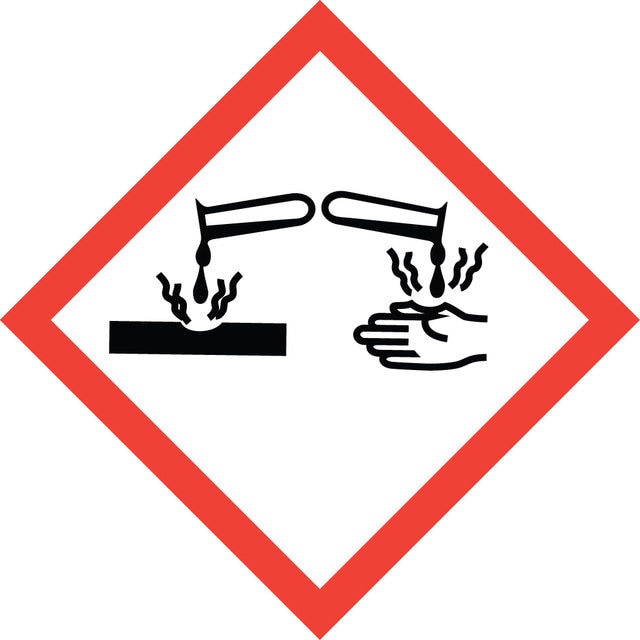
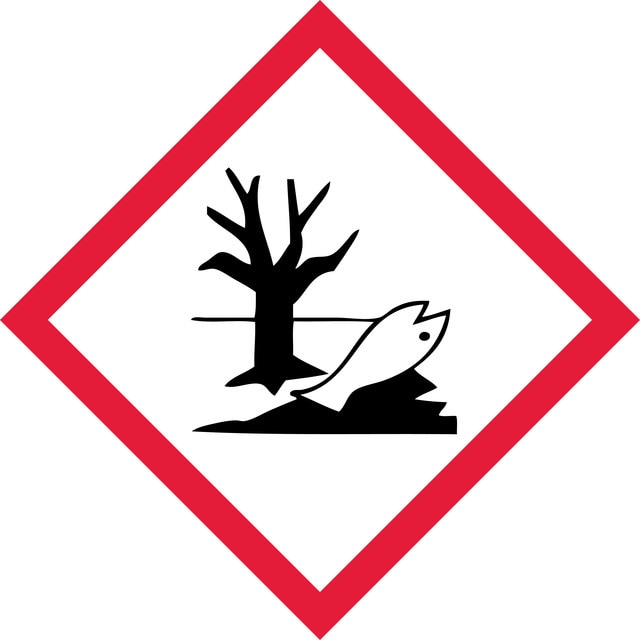
Acute Tox. 2 Dermal - Acute Tox. 2 Inhalation - Acute Tox. 4 Oral - Aquatic Acute 1 - Aquatic Chronic 1 - Eye Dam. 1 - Flam. Liq. 3 - Skin Corr. 1B - Skin Sens. 1

Clase de almacenamiento

3 - Flammable liquids

wgk

WGK 3

flash_point_f

113.0 °F - closed cup

flash_point_c

45 °C - closed cup

ppe

Eyeshields, Faceshields, Gloves, type ABEK (EN14387) respirator filter


Elija entre una de las versiones más recientes:

Certificados de análisis (COA)

Lot/Batch Number

¿No ve la versión correcta?

Si necesita una versión concreta, puede buscar un certificado específico por el número de lote.

¿Ya tiene este producto?

Encuentre la documentación para los productos que ha comprado recientemente en la Biblioteca de documentos.

Visite la Librería de documentos

Antibacterial mechanism of allyl isothiocyanate.
Lin CM, et al.
Journal of Food Protection, 63(6), 727-734 (2000)
Sensitization and desensitization to allyl isothiocyanate (mustard oil) in the nasal cavity.
Brand G & Jacquot L.
Chemical Senses, 27(7), 593-598 (2002)
Dong Xiao et al.
Carcinogenesis, 24(5), 891-897 (2003-05-29)
Dietary isothiocyanates (ITCs) are highly effective in affording protection against chemically induced cancers in laboratory animals. In the present study, we demonstrate that allyl isothiocyanate (AITC), a constituent of cruciferous vegetables, significantly inhibits proliferation of cultured PC-3 (androgen-independent) and LNCaP
Yuesheng Zhang
Molecular nutrition & food research, 54(1), 127-135 (2009-12-05)
Allyl isothiocyanate (AITC), which occurs in many common cruciferous vegetables, is widely and often frequently consumed by humans. Besides antimicrobial activity against a wide spectrum of pathogens, it showed anticancer activity in both cultured cancer cells and animal models, although
M Murata et al.
Free radical biology & medicine, 28(5), 797-805 (2000-04-08)
Several isothiocyanates have been proposed as promising chemopreventive agents for human cancers. However, it has been reported that allyl isothiocyanate exhibit carcinogenic potential, and benzyl isothiocyanate and phenethyl isothiocyanate have tumor-promoting activities. We investigated whether these isothiocyanates could cause DNA

Nuestro equipo de científicos tiene experiencia en todas las áreas de investigación: Ciencias de la vida, Ciencia de los materiales, Síntesis química, Cromatografía, Analítica y muchas otras.

Póngase en contacto con el Servicio técnico