Saltar al contenido
Merck

17-218

Kit de análisis de activación Ras

Sinónimos:

Ensayos de actividad de Ras

Iniciar sesión para ver los precios por organización y contrato.

Seleccione un Tamaño


Acerca de este artículo

UNSPSC Code:
12161503
NACRES:
NA.84
eCl@ss:
32161000
Servicio técnico
¿Necesita ayuda? Nuestro equipo de científicos experimentados está aquí para ayudarle.
Permítanos ayudarle
Servicio técnico
¿Necesita ayuda? Nuestro equipo de científicos experimentados está aquí para ayudarle.
Permítanos ayudarle

manufacturer/tradename

Upstate®

technique(s)

activity assay: suitable

NCBI accession no.

UniProt accession no.

shipped in

dry ice

Quality Level

Gene Information

human ... MRAS(22808)

General description

El homólogo del oncogén RAS muscular (ARM) desempeña un papel clave en las enfermedades cardiovasculares. El gen MRAS codifica un miembro de la superfamilia ras de proteínas de unión a GTP. El MRAS se encuentra en todos los tejidos, particularmente en el sistema cardiovascular. Está implicado en la transducción de señales, incluyendo el crecimiento y la diferenciación celulares.

Packaging

Capacidad del kit: 30 ensayos

Analysis Note

Este kit causó la precipitación de Ras-GTP de lisados de células HeLa que habían sido cargados con GTPγS. El Ras-GTP precipitado fue detectado por inmunoelectrotransferencia usando 1μg/ml de anti-Ras, clon RAS10

Other Notes

Reactivo de ensayo Ras (Raf-1 RBD, agarosa) (Nº ref. 14-278)

Anti-Ras, clon RAS10 (Nº ref. 05-516)

X100 GTPγS, 10mM (Nº ref. 20-) 176

X100 GDP, 100 mM (Nº ref. 20-177

Tampón de lisis/lavado Mg2+,X5 (Nº ref. 20-168)
Sustituye a: SGT435

Legal Information

UPSTATE is a registered trademark of Merck KGaA, Darmstadt, Germany

Disclaimer

Salvo que se indique lo contrario en nuestro catálogo o en otra documentación de la empresa que acompañe al producto, nuestros productos están indicados sólo para investigación y no deben utilizarse para ningún otro propósito, como, entre otros, usos comerciales no autorizados, diagnóstico in vitro, usos terapéuticos ex vivo o in vivo o cualquier tipo de consumo o aplicación en humanos o animales.

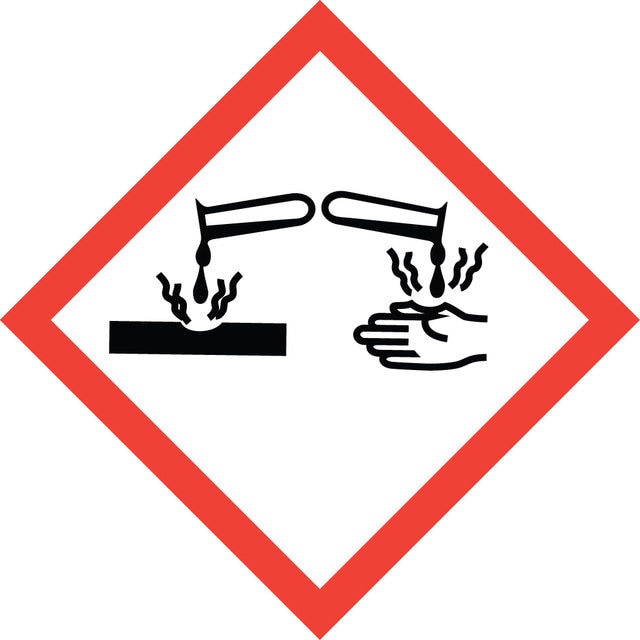
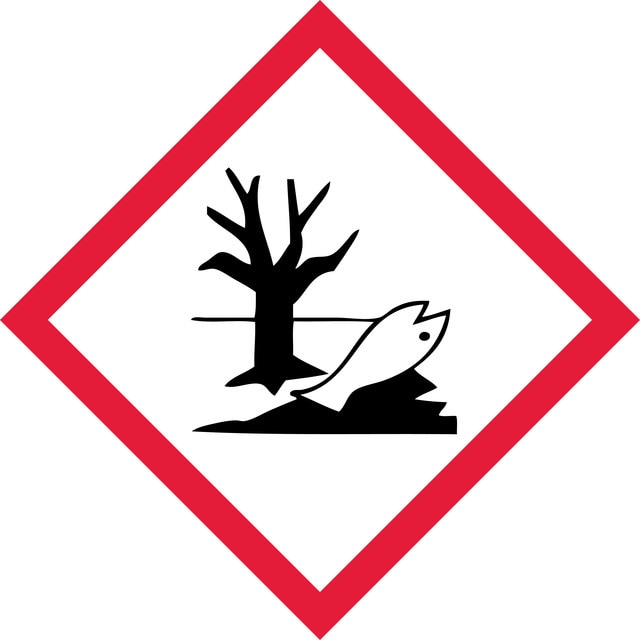
pictograms

CorrosionEnvironment

signalword

Danger

Clase de almacenamiento

10 - Combustible liquids

wgk

WGK 3

Hazard Classifications

Aquatic Acute 1 - Aquatic Chronic 2 - ED ENV 1 - Eye Dam. 1


Certificados de análisis (COA)

Busque Certificados de análisis (COA) introduciendo el número de lote del producto. Los números de lote se encuentran en la etiqueta del producto después de las palabras «Lot» o «Batch»

¿Ya tiene este producto?

Encuentre la documentación para los productos que ha comprado recientemente en la Biblioteca de documentos.

Visite la Librería de documentos

Fu-Ming Tsai et al.
Cellular signalling, 18(3), 349-358 (2005-07-12)
The retinoid-inducible gene 1 (RIG1) protein is a retinoid-inducible growth regulator. Previous studies have shown that the RIG1 protein inhibits the signaling pathways of Ras/mitogen-activated protein kinases. However, neither the mode of action nor the site of inhibition of RIG1
Michael R Bennett et al.
The Journal of neuroscience : the official journal of the Society for Neuroscience, 23(18), 7207-7217 (2003-08-09)
Neurofibromatosis type 1 (NF1) patients are predisposed to learning disabilities, macrocephaly, and brain tumors as well as abnormalities on magnetic resonance imaging that are postulated to result from abnormal myelination. Here we show that Nf1+/- spinal cords in adult mice
Richard J Calvert et al.
Analytical biochemistry, 343(2), 283-292 (2005-07-16)
Accurate measurement of activity of wild-type K-ras protein is important due to its tumor suppressor action in tissues such as lung. A published method by Taylor and co-workers uses plasmid-containing Escherichia coli cells to produce a glutathione-S-transferase/raf-1 ras binding domain
Fu-Ming Tsai et al.
Cellular signalling, 19(5), 989-999 (2007-01-02)
Retinoid-inducible gene 1 encodes RIG1 is a growth regulator, which inhibits the pathways of the RAS/mitogen-activated protein kinases by suppressing the activation of RAS. Confocal microscopic analysis demonstrated that RIG1 is localized in the endoplasmic reticulum (ER) and Golgi apparatus
Shin-ichiro Miura et al.
Biochemical and biophysical research communications, 306(4), 924-929 (2003-06-25)
Since we recently reported that high density lipoprotein, which contains the bioactive lipid sphingosine-1-phosphate (S1P) [Arterioscler. Thromb. Vasc. Biol. 23 (2003) 802], induced human coronary artery endothelial cell (HCEC) tube formation mediated by a Ras/Raf/ERK (extracellular signal-activated kinase) pathway, we

Contenido relacionado

"Aging: getting older, exhibiting the signs of age, the decline in the physical (and mental) well-being over time, leading to death. Since the beginning of time, man has been obsessed with trying to slow down, stop, or even reverse the signs of aging. Many have gone as far as experimenting with nutritional regimens, eccentric exercises, fantastic rituals, and naturally occurring or synthetic wonder-elements to evade the signs of normal aging. Biologically speaking, what is aging? And what does the latest research tell us about the possibility of discovering the elusive “fountain of youth”? Many advances in our understanding of aging have come from systematic scientific research, and perhaps it holds the key to immortality. Scientifically, aging can be defined as a systems-wide decline in organismal function that occurs over time. This decline occurs as a result of numerous events in the organism, and these events can be classified into nine “hallmarks” of aging, as proposed by López-Otin et al. (2013). Several of the pathologies associated with aging are a direct result of these events going to extremes and may also involve aberrant activation of proliferation signals or hyperactivity. The hallmarks of aging have been defined based on their fulfillment of specific aging related criteria, such as manifestation during normal aging, acceleration of aging if experimentally induced or aggravated, and retardation of aging if prevented or blocked, resulting in increased lifespan. The nine hallmarks of aging are genomic instability, telomere attrition, epigenetic alterations, loss of proteostasis, deregulated nutrient sensing, mitochondrial dysfunction, cellular senescence, stem cell exhaustion, and altered intercellular communication. The biological processes underlying aging are complex. By understanding the hallmarks in greater detail, we can get closer to developing intervention strategies that can make the aging process less of a decline, and more of a recline."

Número de artículo de comercio global

SKUGTIN
17-21804053252516689

Nuestro equipo de científicos tiene experiencia en todas las áreas de investigación: Ciencias de la vida, Ciencia de los materiales, Síntesis química, Cromatografía, Analítica y muchas otras.

Póngase en contacto con el Servicio técnico