
8.22263

2-Butanol
EMPLURA®
Sinónimos:
2-Butanol, sec-Butyl alcohol
Seleccione un Tamaño
Acerca de este artículo
vapor pressure
16.5 hPa ( 20 °C)
Quality Segment
product line
EMPLURA®
assay
≥99% (GC)
form
liquid
autoignition temp.
390 °C
potency
6480 mg/kg LD50, oral (Rat), >2000 mg/kg LD50, skin (Rat)
expl. lim.
1.4-9.8 % (v/v)
dilution
(low-cost alternative, for basic applications)
impurities
≤0.2% Water (Karl Fischer)
pH
7 (20 °C)
bp
99-102 °C/1013 hPa
mp
-115 °C
transition temp
flash point 24 °C
solubility
125 g/L
density
0.81 g/cm3 at 20 °C
storage temp.
2-30°C
SMILES string
OC(CC)C
InChI
1S/C4H10O/c1-3-4(2)5/h4-5H,3H2,1-2H3
InChI key
BTANRVKWQNVYAZ-UHFFFAOYSA-N
Application
- Machine-Learning-Based Kinetic-Free Hybrid Gray-Box Model to Predict Sulfuric-Acid-Catalyzed Esterification Reaction.: Describes a new machine learning model to optimize the esterification reaction process, which can potentially include the use of 2-butanol as a reactant or solvent (Wen X et al., 2024).
- Dynamic microbial and metabolic changes during Apulian Caciocavallo cheese-making and ripening produced according to a standardized protocol.: This research investigates the role of microbial communities and their metabolic activities in cheese production, where solvents like 2-butanol may be used in analytical methods (Vacca M et al., 2024).
- Interruption of p38(MAPK)-MSK1-CREB-MITF-M pathway to prevent hyperpigmentation in the skin.: Discusses the biochemical pathway involved in skin pigmentation, where 2-butanol may be employed in experimental procedures or as a solvent (Kim SH et al., 2024).
Analysis Note
Density (d 20 °C/ 4 °C): 0.806 - 0.807
Water (K. F.): ≤ 0.20 %
Identity (IR): passes test
Legal Information
Still not finding the right product?
Explore all of our products under 2-Butanol
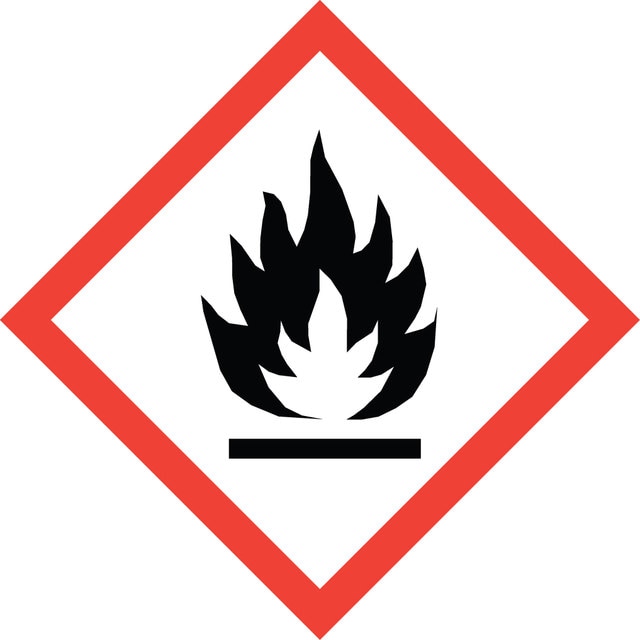

signalword
Warning
hcodes
Hazard Classifications
Eye Irrit. 2 - Flam. Liq. 3 - STOT SE 3
target_organs
Central nervous system, Respiratory system
Clase de almacenamiento
3 - Flammable liquids
wgk
WGK 1
flash_point_f
80.6 °F - closed cup
flash_point_c
27 °C - closed cup
Certificados de análisis (COA)
Busque los certificados de análisis (COA) introduciendo el número de lote del producto. Los números de lote se encuentran en la etiqueta del producto, justo después de las palabras «Lote» o «Batch».
¿Ya tiene este producto?
Encuentre la documentación para los productos que ha comprado recientemente en la Biblioteca de documentos.