Iniciar sesión para ver los precios por organización y contrato.
Seleccione un Tamaño
Cambiar Vistas
Acerca de este artículo
Fórmula lineal:
(CH3)2CHCH2OH
Número CAS:
Peso molecular:
74.12
EC Number:
201-148-0
UNSPSC Code:
12352001
PubChem Substance ID:
Beilstein/REAXYS Number:
1730878
MDL number:
Assay:
≥99.0%
Grade:
SAJ first grade
Bp:
108 °C (lit.)
Vapor pressure:
8 mmHg ( 20 °C), 8.8 mmHg ( 0 °C)
Servicio técnico
¿Necesita ayuda? Nuestro equipo de científicos experimentados está aquí para ayudarle.
Permítanos ayudarlegrade
SAJ first grade
vapor density
2.55 (vs air)
vapor pressure
8 mmHg ( 20 °C), 8.8 mmHg ( 0 °C)
assay
≥99.0%
form
liquid
autoignition temp.
801 °F
expl. lim.
10.6 %
availability
available only in Japan
dilution
(for analytical testing)
refractive index
n20/D 1.396 (lit.)
bp
108 °C (lit.)
mp
−108 °C (lit.)
density
0.803 g/mL at 25 °C (lit.)
SMILES string
CC(C)CO
InChI
1S/C4H10O/c1-4(2)3-5/h4-5H,3H2,1-2H3
InChI key
ZXEKIIBDNHEJCQ-UHFFFAOYSA-N
Still not finding the right product?
Explore all of our products under 2-Methyl-1-propanol
signalword
Danger
hcodes
Hazard Classifications
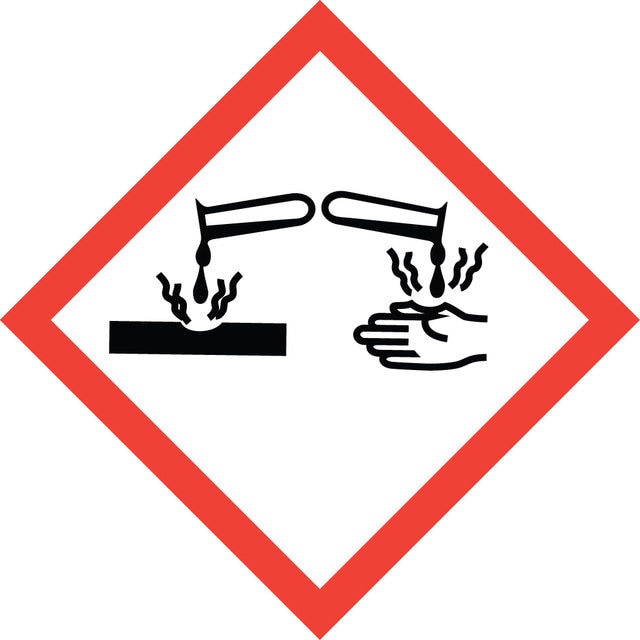
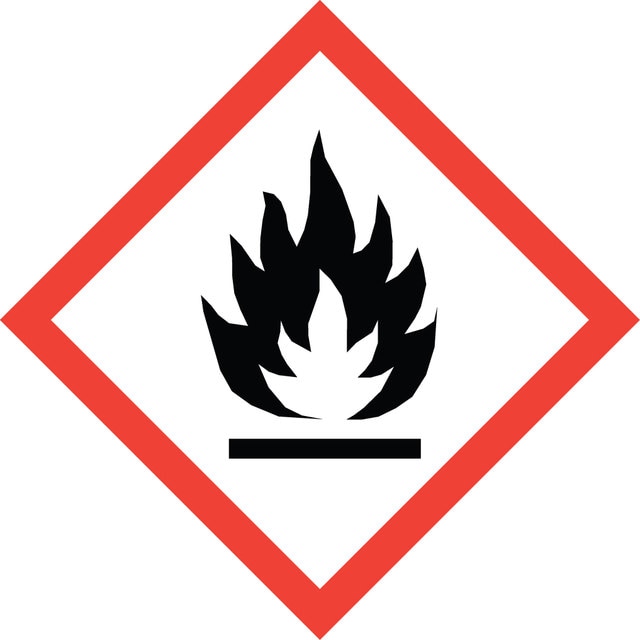
Eye Dam. 1 - Flam. Liq. 3 - Skin Irrit. 2 - STOT SE 3
target_organs
Central nervous system, Respiratory system
Clase de almacenamiento
3 - Flammable liquids
wgk
WGK 1
flash_point_f
82.4 °F - closed cup
flash_point_c
28 °C - closed cup
ppe
Eyeshields, Faceshields, Gloves, type ABEK (EN14387) respirator filter
Elija entre una de las versiones más recientes:
¿Ya tiene este producto?
Encuentre la documentación para los productos que ha comprado recientemente en la Biblioteca de documentos.
Jeremy J Minty et al.
Proceedings of the National Academy of Sciences of the United States of America, 110(36), 14592-14597 (2013-08-21)
Synergistic microbial communities are ubiquitous in nature and exhibit appealing features, such as sophisticated metabolic capabilities and robustness. This has inspired fast-growing interest in engineering synthetic microbial consortia for biotechnology development. However, there are relatively few reports of their use
Han Li et al.
Science (New York, N.Y.), 335(6076), 1596-1596 (2012-03-31)
One of the major challenges in using electrical energy is the efficiency in its storage. Current methods, such as chemical batteries, hydraulic pumping, and water splitting, suffer from low energy density or incompatibility with current transportation infrastructure. Here, we report
D Norbäck et al.
Occupational and environmental medicine, 52(6), 388-395 (1995-06-01)
As a part of the worldwide European Community respiratory health survey, possible relations between symptoms of asthma, building characteristics, and indoor concentration of volatile organic compounds (VOCs) in dwellings were studied. The study comprised 88 subjects, aged 20-45 years, from