Saltar al contenido
Merck

01700

Acrilamida

purum, ≥98.0% (GC)

Sinónimos:

2-Propenamida, Amida del ácido acrílico

Iniciar sesión para ver los precios por organización y contrato.

Seleccione un Tamaño


Acerca de este artículo

Fórmula lineal:
CH2=CHCONH2
Número CAS:
Peso molecular:
71.08
NACRES:
NB.22
PubChem Substance ID:
eCl@ss:
39031205
UNSPSC Code:
41105319
EC Number:
201-173-7
MDL number:
Beilstein/REAXYS Number:
605349
Servicio técnico
¿Necesita ayuda? Nuestro equipo de científicos experimentados está aquí para ayudarle.
Permítanos ayudarle
Servicio técnico
¿Necesita ayuda? Nuestro equipo de científicos experimentados está aquí para ayudarle.
Permítanos ayudarle

Nombre del producto

Acrilamida, purum, ≥98.0% (GC)

InChI key

HRPVXLWXLXDGHG-UHFFFAOYSA-N

InChI

1S/C3H5NO/c1-2-3(4)5/h2H,1H2,(H2,4,5)

SMILES string

NC(=O)C=C

vapor density

2.45 (vs air)

vapor pressure

0.03 mmHg ( 40 °C)

grade

purum

assay

≥98.0% (GC)

bp

125 °C/25 mmHg (lit.)

mp

81-87 °C
82-86 °C (lit.)

solubility

water: soluble 200 g/L at 20 °C

storage temp.

room temp

Quality Level

¿Está buscando productos similares? Visita Guía de comparación de productos

Categorías relacionadas

Application

Acrylamide has been used for preparing slab gel gradients for polyacrylamide gel electrophoresis (PAGE).

Biochem/physiol Actions

Acrylamide is a reactive, water soluble vinyl monomer. It causes a decrease in the number of neuritis per cell as well as reduces the rate of protein synthesis.

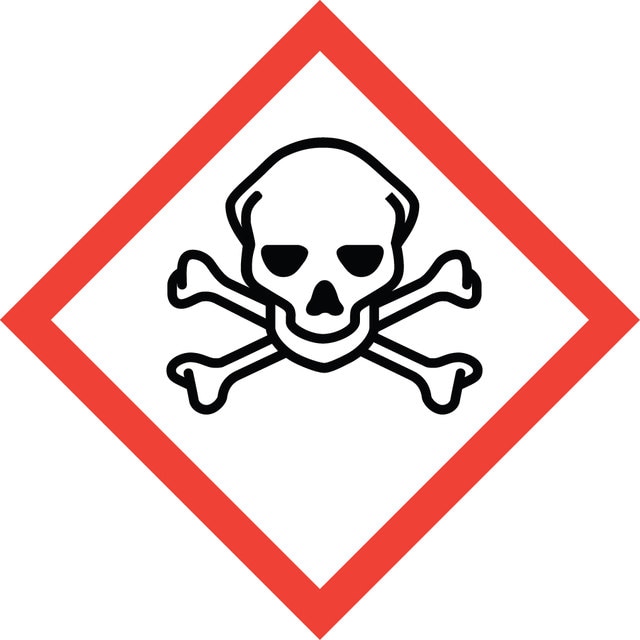
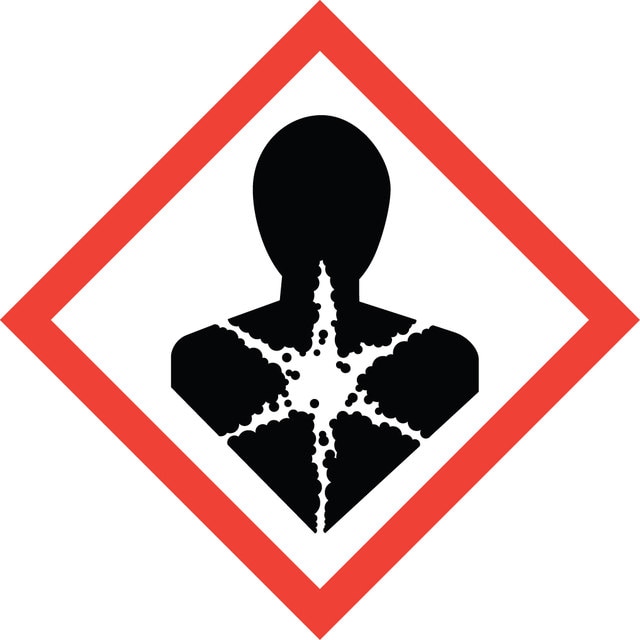
pictograms

Skull and crossbonesHealth hazard

signalword

Danger

Hazard Classifications

Acute Tox. 3 Oral - Acute Tox. 4 Dermal - Acute Tox. 4 Inhalation - Carc. 1B - Eye Irrit. 2 - Muta. 1B - Repr. 2 - Skin Irrit. 2 - Skin Sens. 1 - STOT RE 1 Oral

target_organs

Peripheral nervous system

Clase de almacenamiento

6.1C - Combustible acute toxic Cat.3 / toxic compounds or compounds which causing chronic effects

wgk

WGK 3

flash_point_f

280.4 °F - closed cup

flash_point_c

138 °C - closed cup

ppe

Eyeshields, Faceshields, Gloves, type P3 (EN 143) respirator cartridges


Elija entre una de las versiones más recientes:

Certificados de análisis (COA)

Lot/Batch Number

¿No ve la versión correcta?

Si necesita una versión concreta, puede buscar un certificado específico por el número de lote.

¿Ya tiene este producto?

Encuentre la documentación para los productos que ha comprado recientemente en la Biblioteca de documentos.

Visite la Librería de documentos

M W Cunningham et al.
The Journal of experimental medicine, 164(4), 998-1012 (1986-10-01)
mAbs produced by immunization of BALB/c mice with Streptococcus pyogenes M type 5 membranes were further characterized for their reaction with S. pyogenes pep M5 protein and with autoantigens associated with human cell lines. mAbs 36.2.2 and 54.2.8 simultaneously reacted
M Nordin-Andersson et al.
Cell biology and toxicology, 19(1), 43-51 (2003-03-29)
Basal cytotoxicity, morphological changes and alterations in cell physiological and neurochemical functions were studied in differentiated human neuroblastoma (SH-SY5Y) cells during exposure to acrylamide and during a subsequent recovery period after cessation of exposure. Acrylamide induced a 20% reduction in
Jonas S Laursen et al.
Journal of the American Chemical Society, 135(7), 2835-2844 (2013-01-25)
Non-natural peptide analogs have significant potential for the development of new materials and pharmacologically active ligands. One such architecture, the β-peptoids (N-alkyl-β-alanines), has found use in a variety of biologically active compounds but has been sparsely studied with respect to
Arianna Rath et al.
Proceedings of the National Academy of Sciences of the United States of America, 110(39), 15668-15673 (2013-09-11)
SDS/PAGE is universally used in biochemistry, cell biology, and immunology to resolve minute protein amounts readily from tissue and cell extracts. Although molecular weights of water-soluble proteins are reliably determined from their SDS/PAGE mobility, most helical membrane proteins, which comprise
Janneke G F Hogervorst et al.
Critical reviews in toxicology, 40(6), 485-512 (2010-02-23)
Since 2002, it is known that the probable human carcinogen acrylamide is present in commonly consumed carbohydrate-rich foods, such as French fries and potato chips. In this review, the authors discuss the body of evidence on acrylamide carcinogenicity from both

Nuestro equipo de científicos tiene experiencia en todas las áreas de investigación: Ciencias de la vida, Ciencia de los materiales, Síntesis química, Cromatografía, Analítica y muchas otras.

Póngase en contacto con el Servicio técnico