
471577

Dimetilsulfuro
≥99%
Sinónimos:
DMS, Sulfuro de metilo
Iniciar sesión para ver los precios por organización y contrato.
Seleccione un Tamaño
Cambiar Vistas
Acerca de este artículo
Fórmula lineal:
(CH3)2S
Número CAS:
Peso molecular:
62.13
UNSPSC Code:
12352100
NACRES:
NA.21
PubChem Substance ID:
EC Number:
200-846-2
Beilstein/REAXYS Number:
1696847
MDL number:
Assay:
≥99%
Servicio técnico
¿Necesita ayuda? Nuestro equipo de científicos experimentados está aquí para ayudarle.
Permítanos ayudarlevapor density
2.1 (vs air)
Quality Level
vapor pressure
26.24 psi ( 55 °C), 7.79 psi ( 20 °C)
assay
≥99%
autoignition temp.
402 °F
expl. lim.
19.7 %
refractive index
n20/D 1.435 (lit.)
bp
38 °C (lit.)
mp
−98 °C (lit.)
solubility
water: soluble 7.28 g/L at 20 °C
density
0.846 g/mL at 25 °C (lit.)
functional group
thioether
SMILES string
CSC
InChI
1S/C2H6S/c1-3-2/h1-2H3
InChI key
QMMFVYPAHWMCMS-UHFFFAOYSA-N
Gene Information
rat ... Maoa(29253), Maob(25750)
General description
Dimethyl sulfide (DMS) is a biogenic sulfur compound that is released from the ocean to the atmosphere. It forms the main component of the global sulfur cycle. The thermal decomposition behavior of dimethyl sulfide in gas phase has been investigated in a static system at 681-723K. The mechanism of its photochemical oxidation in atmosphere has been described. The rate constant of the gas phase reaction between OH radicals and DMS have been determined by relative rate methods and flash photolysis technique. The differential Raman cross section, σDMS at different excitation wavelengths has been measured. The adsorption of DMS on activated carbons (ACs) has been reported to take place by hydrogen bonding.
Application
- Characterization of the aroma-active compounds in Xiaokeng green tea by three pretreatment methods combined with gas chromatography-olfactometry (GC-O).: This study identified and characterized the aroma-active compounds in Xiaokeng green tea, highlighting the significant role of dimethyl sulfide as a contributor to its unique aroma profile (Gan et al., 2024).
- Novel insights into dimethylsulfoniopropionate cleavage by deep subseafloor fungi.: This article provides new insights into the metabolic pathways of deep-sea fungi, focusing on the cleavage of dimethylsulfoniopropionate (DMSP) and subsequent production of dimethyl sulfide, impacting sulfur cycling in marine ecosystems (Liu et al., 2024).
- Adsorption Mechanism and Regeneration Performance of Calcined Zeolites for Hydrogen Sulfide and Its Application.: The study explores the use of calcined zeolites for the adsorption of hydrogen sulfide, a precursor to dimethyl sulfide, and discusses the material′s regeneration performance for industrial applications (Zha et al., 2024).
Still not finding the right product?
Explore all of our products under Dimetilsulfuro
signalword
Danger
hcodes
Hazard Classifications
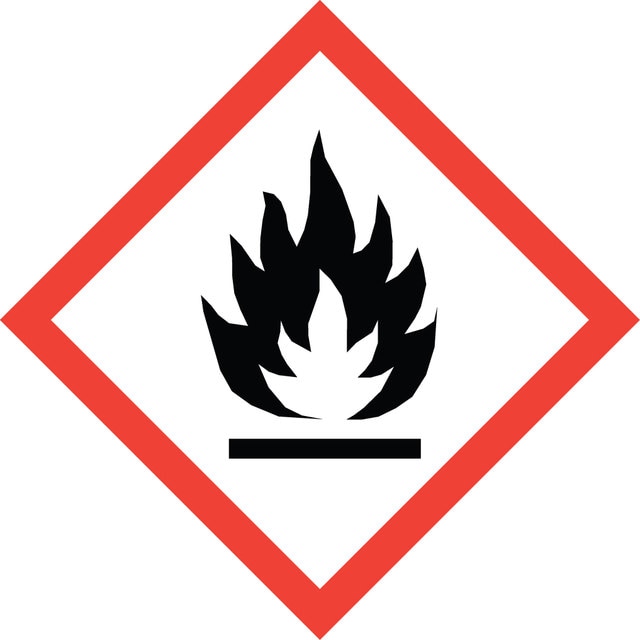
Flam. Liq. 2
Clase de almacenamiento
3 - Flammable liquids
wgk
WGK 1
flash_point_f
-32.8 °F - closed cup
flash_point_c
-36 °C - closed cup
ppe
Eyeshields, Faceshields, Gloves
Elija entre una de las versiones más recientes:
¿Ya tiene este producto?
Encuentre la documentación para los productos que ha comprado recientemente en la Biblioteca de documentos.
The reaction of OH radicals with dimethyl sulfide.
Wallington TJ, et al.
International Journal of Chemical Kinetics, 18(8), 837-846 (1986)
Adsorption of dimethyl sulfide vapors by activated carbons.
Goyal M, et al.
Colloids and Surfaces. A, Physicochemical and Engineering Aspects, 322(1), 164-169 (2008)
The pyrolysis of dimethyl sulfide, kinetics and mechanism.
Shum LGS and Benson SW.
International Journal of Chemical Kinetics, 17(7), 749-761 (1985)