Saltar al contenido
Merck

C9510

Pyrocatechol

≥99%

Sinónimos:

1,2-Benzenediol, 1,2-Dihydroxybenzene, 2-Hydroxyphenol, Catechol

Iniciar sesión para ver los precios por organización y contrato.

Seleccione un Tamaño


Acerca de este artículo

Fórmula lineal:
C6H4-1,2-(OH)2
Número CAS:
Peso molecular:
110.11
UNSPSC Code:
12352104
NACRES:
NA.28
PubChem Substance ID:
EC Number:
204-427-5
Beilstein/REAXYS Number:
471401
MDL number:
Servicio técnico
¿Necesita ayuda? Nuestro equipo de científicos experimentados está aquí para ayudarle.
Permítanos ayudarle
Servicio técnico
¿Necesita ayuda? Nuestro equipo de científicos experimentados está aquí para ayudarle.
Permítanos ayudarle

InChI

1S/C6H6O2/c7-5-3-1-2-4-6(5)8/h1-4,7-8H

InChI key

YCIMNLLNPGFGHC-UHFFFAOYSA-N

SMILES string

Oc1ccccc1O

biological source

synthetic (organic)

vapor density

3.8 (vs air)

vapor pressure

1 mmHg ( 75 °C), 10 mmHg ( 118.3 °C)

assay

≥99%

form

powder

color

white to faint beige

bp

245 °C (lit.)

Quality Level

solubility

water: 50 mg/mL, clear, colorless to faintly yellow

storage temp.

room temp

¿Está buscando productos similares? Visita Guía de comparación de productos

Disclaimer
May discolor on exposure to air and light.

signalword

Danger

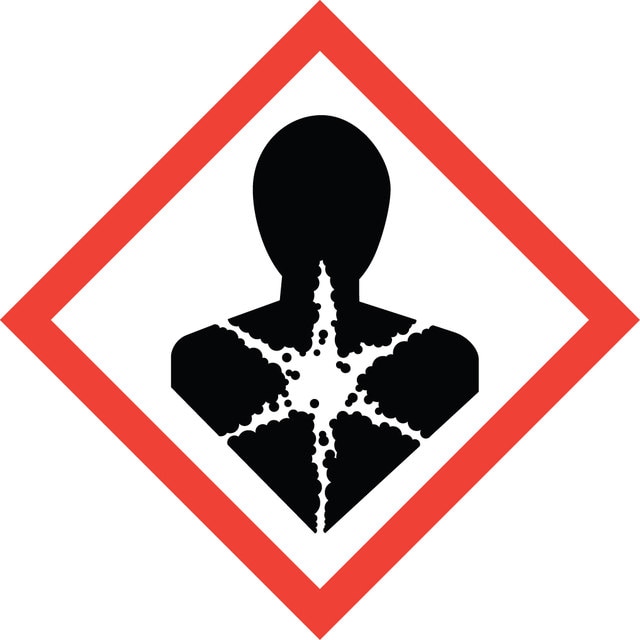
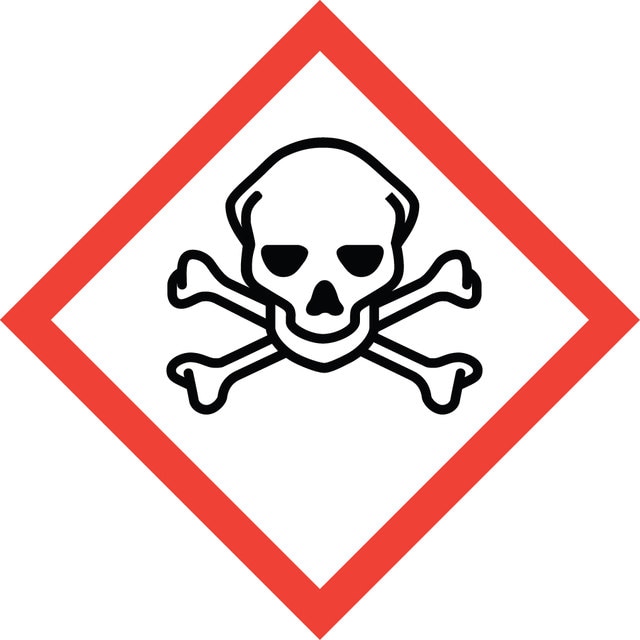
Hazard Classifications

Acute Tox. 3 Dermal - Acute Tox. 3 Oral - Carc. 1B - Eye Dam. 1 - Muta. 2 - Skin Irrit. 2 - Skin Sens. 1

Clase de almacenamiento

6.1C - Combustible acute toxic Cat.3 / toxic compounds or compounds which causing chronic effects

wgk

WGK 3

flash_point_f

260.6 °F - closed cup

flash_point_c

127 °C - closed cup

ppe

dust mask type N95 (US), Eyeshields, Faceshields, Gloves


Elija entre una de las versiones más recientes:

Certificados de análisis (COA)

Lot/Batch Number

¿No ve la versión correcta?

Si necesita una versión concreta, puede buscar un certificado específico por el número de lote.

¿Ya tiene este producto?

Encuentre la documentación para los productos que ha comprado recientemente en la Biblioteca de documentos.

Visite la Librería de documentos

Myung-Hyun Ryou et al.
Advanced materials (Deerfield Beach, Fla.), 25(11), 1571-1576 (2013-01-03)
Conjugation of mussel-inspired catechol groups to various polymer backbones results in materials suitable as silicon anode binders. The unique wetness-resistant adhesion provided by the catechol groups allows the silicon nanoparticle electrodes to maintain their structure throughout the repeated volume expansion
R D Irons
Journal of toxicology and environmental health, 16(5), 673-678 (1985-01-01)
Occupational exposure to benzene has long been associated with toxicity to the blood and bone marrow, including lymphocytopenia, pancytopenia, aplastic anemia, acute myelogenous leukemia, and possibly lymphoma. A variety of studies have established that benzene itself is not the toxic
Ying Qu et al.
Biosensors & bioelectronics, 44, 85-88 (2013-02-12)
New graphene-silk peptide (Gr-SP) nanosheets were prepared and successfully fabricated with tyrosinase (Tyr) as a novel biosensor for the determination of phenolic compounds. The Gr-SP nanosheets were fully characterized with transmission electron microscopy, x-ray diffraction, x-ray photoelectron spectroscopy, UV/Vis and
Christian J Kastrup et al.
Proceedings of the National Academy of Sciences of the United States of America, 109(52), 21444-21449 (2012-12-14)
The treatment of diseased vasculature remains challenging, in part because of the difficulty in implanting drug-eluting devices without subjecting vessels to damaging mechanical forces. Implanting materials using adhesive forces could overcome this challenge, but materials have previously not been shown
R Zand et al.
Clinical pharmacology and therapeutics, 54(2), 142-149 (1993-08-01)
We studied the effect of isoniazid administration on the cytochrome P4502E1-catalyzed elimination of chlorzoxazone and acetaminophen. Isoniazid, 300 mg daily, was administered for 7 days to a group of 10 volunteer slow acetylators. Acetaminophen, 500 mg, and chlorzoxazone, 750 mg

Nuestro equipo de científicos tiene experiencia en todas las áreas de investigación: Ciencias de la vida, Ciencia de los materiales, Síntesis química, Cromatografía, Analítica y muchas otras.

Póngase en contacto con el Servicio técnico