Saltar al contenido
Merck

M8884

Methyl Green

~85% purity, powder

Sinónimos:

Ethyl Green

Iniciar sesión para ver los precios por organización y contrato.

Seleccione un Tamaño


Acerca de este artículo

Fórmula lineal:
C27H35BrClN3 · ZnCl2
Número CAS:
Peso molecular:
653.24
UNSPSC Code:
12171500
NACRES:
NA.47
PubChem Substance ID:
EC Number:
230-415-4
MDL number:
Colour Index Number:
42590
Beilstein/REAXYS Number:
3914106
Servicio técnico
¿Necesita ayuda? Nuestro equipo de científicos experimentados está aquí para ayudarle.
Permítanos ayudarle
Servicio técnico
¿Necesita ayuda? Nuestro equipo de científicos experimentados está aquí para ayudarle.
Permítanos ayudarle

Nombre del producto

Methyl Green, zinc chloride salt, ~85%

InChI key

RRKSQWOQZFIQKW-UHFFFAOYSA-J

InChI

1S/C27H35N3.BrH.3ClH.Zn/c1-8-30(6,7)26-19-13-23(14-20-26)27(21-9-15-24(16-10-21)28(2)3)22-11-17-25(18-12-22)29(4)5;;;;;/h9-20H,8H2,1-7H3;4*1H;/q+2;;;;;+2/p-4

SMILES string

[Cl-].[Br-].Cl[Zn]Cl.CC[N+](C)(C)c1ccc(cc1)\C(c2ccc(cc2)N(C)C)=C3/C=C\C(C=C3)=[N+](\C)C

assay

~85%

form

powder

composition

Dye Content, ≥83%

technique(s)

titration: suitable

color

red to very dark red

pH

0.2-1.8, yellow to blue

mp

>300 °C (lit.)

solubility

water: 1 mg/mL

εmax

>11100.00 at 417-425 nm in water at 0.005 g/L
>16000 at 311-319 nm in water at 0.005 g/L
>60000 at 626-634 nm in water at 0.005 g/L

application(s)

diagnostic assay manufacturing
hematology
histology

storage temp.

room temp

Quality Level

¿Está buscando productos similares? Visita Guía de comparación de productos

Categorías relacionadas

Analysis Note

Dye content based on molecular weight of monobromo-monochloro ZnCl2 salt (653.2).
Material may be a mixture of monobromo-monochloro and dichloro ZnCl2 salts. Halogen contents listed on label.

Application

Methyl green is suitable as a nuclear counterstain in enzyme histochemistry, immunostaining, and in situ hybridization as the bluish-green color will be in contrast with red, purple, brown, and black products of histochemical reactions. It is also suitable as a tracking dye in Acid-polyacrylamide gel electrophoresis to separate gliadins. It has been used in the histochemical staining for the apoptosis examination of kidney tissue and as a nuclear stain for labeling embryos.

General description

Methyl green is a synthetic, triphenylmethane-type cationic dye related to ethyl green mainly used as DNA stain in histochemistry. It possesses aniline rings with different degrees of methylation. The dye binds specifically to the A-T rich regions of the major groove of DNA with the help of two positive charges. Methyl green in combination with pyronin is extensively used to stain RNA and plasma cells in tissue sections and cytologic preparations.

signalword

Danger

Hazard Classifications

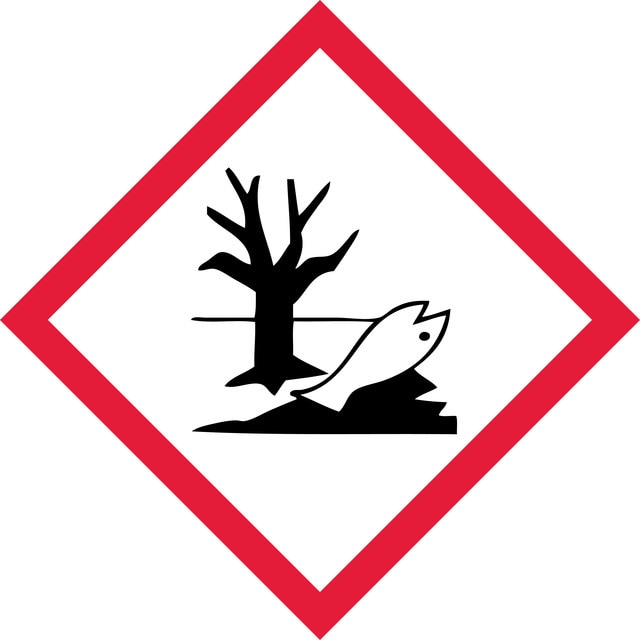
Aquatic Chronic 2 - Eye Dam. 1 - Skin Corr. 1B - STOT SE 3

target_organs

Respiratory system

Clase de almacenamiento

8A - Combustible corrosive hazardous materials

wgk

WGK 3

ppe

dust mask type N95 (US), Eyeshields, Gloves


Elija entre una de las versiones más recientes:

Certificados de análisis (COA)

Lot/Batch Number

¿No ve la versión correcta?

Si necesita una versión concreta, puede buscar un certificado específico por el número de lote.

¿Ya tiene este producto?

Encuentre la documentación para los productos que ha comprado recientemente en la Biblioteca de documentos.

Visite la Librería de documentos

Expression of the axonal membrane glycoprotein M6a is regulated by chronic stress.
Cooper B
PLoS ONE, 4, e3659-e3659 (2009)
Lens epithelial cell apoptosis appears to be a common cellular basis for non-congenital cataract development in humans and animals.
Li WC
The Journal of Cell Biology, 130, 169-169 (1995)
A new semi-selective medium for Xanthomonas campestris pv. vitians, the causal agent of bacterial leaf spot of lettuce.
Toussaint V, et. al.
Plant Disease, 85, 131-131 (2001)
International Review of Cytology (1955)
A new semi-selective medium for Xanthomonas campestris pv. vitians, the causal agent of bacterial leaf spot of lettuce.
Toussaint VCE et al.
Plant Disease, 85, 131-136 (2001)

Nuestro equipo de científicos tiene experiencia en todas las áreas de investigación: Ciencias de la vida, Ciencia de los materiales, Síntesis química, Cromatografía, Analítica y muchas otras.

Póngase en contacto con el Servicio técnico