
S6172

Sodium persulfate
BioXtra, ≥99%
Sinónimos:
Sodium peroxodisulfate
Seleccione un Tamaño
Acerca de este artículo
InChI key
CHQMHPLRPQMAMX-UHFFFAOYSA-L
InChI
1S/2Na.H2O8S2/c;;1-9(2,3)7-8-10(4,5)6/h;;(H,1,2,3)(H,4,5,6)/q2*+1;/p-2
SMILES string
[Na+].[Na+].[O-]S(=O)(=O)OOS([O-])(=O)=O
product line
BioXtra
assay
≥99%
reaction suitability
reagent type: oxidant
impurities
<0.0005% Phosphorus (P), <0.1% Insoluble matter
solubility
H2O: 1 M at 20 °C, clear, colorless
anion traces
chloride (Cl-): <0.05%
cation traces
Al: <0.0005%, Ca: <0.005%, Cu: <0.0005%, Fe: <0.0005%, K: <0.02%, Mg: <0.001%, Pb: <0.001%, Zn: <0.0005%
Quality Level
¿Está buscando productos similares? Visita Guía de comparación de productos
Categorías relacionadas
Application
<li><strong>Electrochemical treatment of organic pollutants in landfill leachate using a three-dimensional electrode system.</strong>: This study explores the electrochemical treatment of landfill leachate using a three-dimensional electrode system. Sodium persulfate is used as an oxidizing agent to degrade organic pollutants effectively, providing a potential method for waste management and environmental protection (Yu et al., 2020).</li>
<li><strong>The Box-Benkhen experimental design for the optimization of the electrocatalytic treatment of wastewaters with high concentrations of phenol and organic matter.</strong>: This paper discusses the optimization of electrocatalytic treatment processes for wastewater containing high levels of phenol and organic matter using sodium persulfate. The study provides valuable insights for improving wastewater treatment efficiency (GilPavas et al., 2009).</li>
<li><strong>Reaction of pectin and glycidyl methacrylate and ulterior formation of free films by reticulation.</strong>: This research involves the chemical modification of pectin with glycidyl methacrylate followed by cross-linking using sodium persulfate, leading to the formation of free-standing films. These films have potential applications in pharmaceuticals and food packaging (Maior et al., 2008).</li>
</ul>
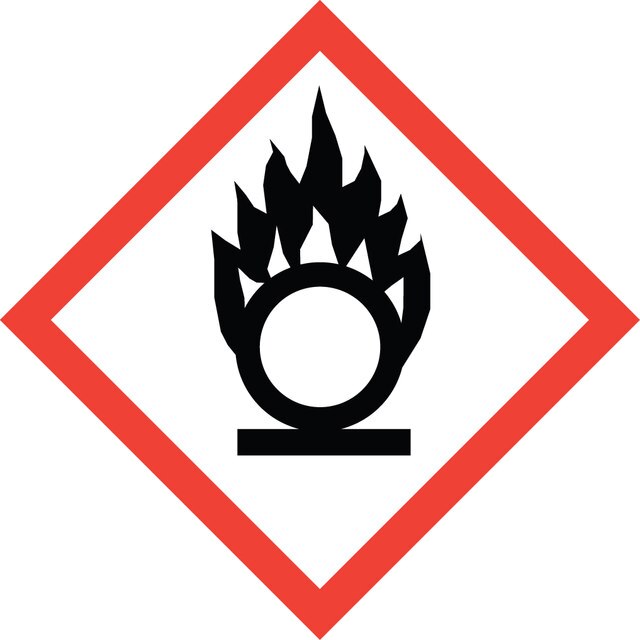
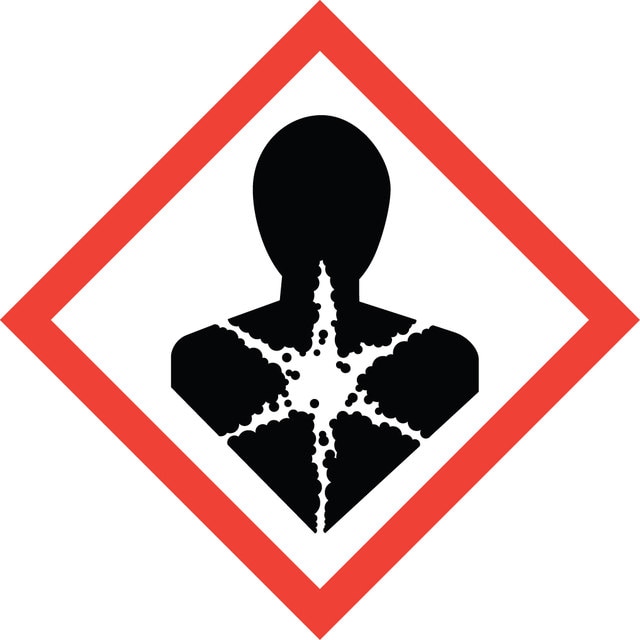

signalword
Danger
Hazard Classifications
Acute Tox. 4 Oral - Ox. Sol. 3 - Resp. Sens. 1 - Skin Irrit. 2 - Skin Sens. 1 - STOT SE 3
target_organs
Respiratory system
Clase de almacenamiento
5.1B - Oxidizing hazardous materials
wgk
WGK 1
flash_point_f
Not applicable
flash_point_c
Not applicable
ppe
Eyeshields, Faceshields, Gloves, type P3 (EN 143) respirator cartridges
Elija entre una de las versiones más recientes:
¿Ya tiene este producto?
Encuentre la documentación para los productos que ha comprado recientemente en la Biblioteca de documentos.
Nuestro equipo de científicos tiene experiencia en todas las áreas de investigación: Ciencias de la vida, Ciencia de los materiales, Síntesis química, Cromatografía, Analítica y muchas otras.
Póngase en contacto con el Servicio técnico