
178810

Tetrahidrofuran
≥99.0%, contains 200-400 ppm BHT as inhibitor, ReagentPlus®
Sinónimos:
Oxolano, Óxido de butileno, Óxido de tetrametileno
para ver los precios por organización y contrato.
Seleccione un Tamaño
Cambiar Vistas
Acerca de este artículo
Fórmula lineal:
(CH2)3CH2O
Número CAS:
Peso molecular:
72.11
UNSPSC Code:
12191501
NACRES:
NA.21
PubChem Substance ID:
EC Number:
203-726-8
Beilstein/REAXYS Number:
102391
MDL number:
Assay:
≥99.0%
Bp:
65-67 °C (lit.)
Vapor pressure:
114 mmHg ( 15 °C), 143 mmHg ( 20 °C)
Servicio técnico
¿Necesita ayuda? Nuestro equipo de científicos experimentados está aquí para ayudarle.
Permítanos ayudarlevapor density
2.5 (vs air)
Quality Segment
vapor pressure
114 mmHg ( 15 °C), 143 mmHg ( 20 °C)
product line
ReagentPlus®
assay
≥99.0%
form
liquid
autoignition temp.
610 °F
contains
200-400 ppm BHT as inhibitor
expl. lim.
1.8-11.8 %
dilution
(for general lab use)
refractive index
n20/D 1.407 (lit.)
pH
~7
bp
65-67 °C (lit.)
mp
−108 °C (lit.)
density
0.889 g/mL at 25 °C (lit.)
SMILES string
C1CCOC1
InChI
1S/C4H8O/c1-2-4-5-3-1/h1-4H2
InChI key
WYURNTSHIVDZCO-UHFFFAOYSA-N
General description
Tetrahydrofuran (THF) is a saturated cyclic ether mainly used as an organic solvent. On long term storage it forms organic peroxides. This process can be suppressed by adding butylated hydroxytoluene (BHT) as a stabilizer. BHT removes the free radicals required for the peroxide formation. THF constitutes the key fragment of various natural products (polyether antibiotics). THF can form a double hydrate with hydrogen sulfide. Crystal structure of this double hydrate has been investigated by three-dimensional single-crystal studies. Butane-1,4-diol is formed as an intermediate during the synthesis of THF. Hot THF is useful for the dissolution of polyvinylidene chloride (PVDV).
Application
Tetrahydrofuran may be used for the dissolution of poly-ε-caprolactone (PCL) and 1,3-diaminopentane, during the preparation of poly-ε-caprolactone (PCL)-hydroxyapatite (HA) scaffolds and acrylate-terminated poly(5-amino-1-pentanol-co-1,4-butanediol diacrylate) (C32)- 1,3-diaminopentane (117) polymer, respectively.
Other Notes
For information on tetrahydrofuran miscibility, please visit the following link:
Tetrahydrofuran Miscibility/Immiscibility Table
Greener alternatives are available for many THF applications, 2-Methyltetrahydrofuran (155810) and Cyclopentyl methyl ether (675989)
Read more about THF alternatives:
2-Methyltetrahydroun (2-MeTHF): A biomass-Derived solvent with Broad Applications in Organic Chemistry
The toxicological assessment of cyclopentyl methyl ether (CPME) as a green solvent
Tetrahydrofuran Miscibility/Immiscibility Table
Greener alternatives are available for many THF applications, 2-Methyltetrahydrofuran (155810) and Cyclopentyl methyl ether (675989)
Read more about THF alternatives:
2-Methyltetrahydroun (2-MeTHF): A biomass-Derived solvent with Broad Applications in Organic Chemistry
The toxicological assessment of cyclopentyl methyl ether (CPME) as a green solvent
Legal Information
ReagentPlus is a registered trademark of Merck KGaA, Darmstadt, Germany
Still not finding the right product?
Explore all of our products under Tetrahidrofuran
signalword
Danger
target_organs
Central nervous system, Respiratory system
supp_hazards
Clase de almacenamiento
3 - Flammable liquids
flash_point_f
-6.2 °F - closed cup
flash_point_c
-21.2 °C - closed cup
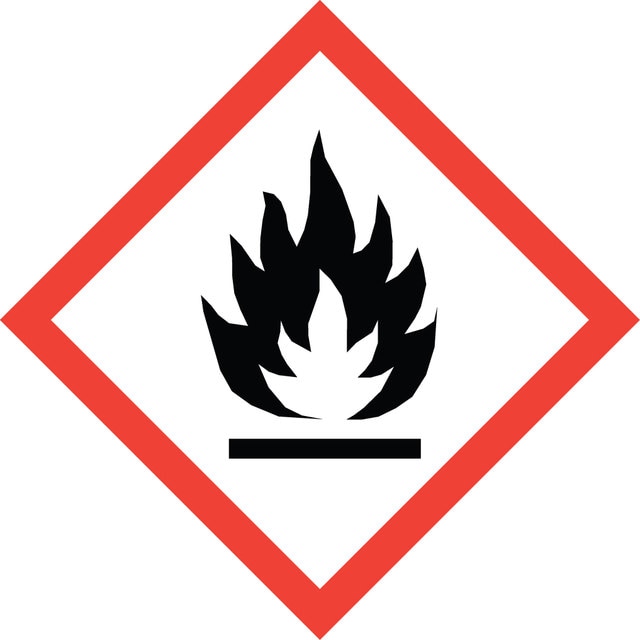



Hazard Classifications
Acute Tox. 4 Oral - Carc. 2 - Eye Dam. 1 - Flam. Liq. 2 - STOT SE 3
Elija entre una de las versiones más recientes:
¿Ya tiene este producto?
Encuentre la documentación para los productos que ha comprado recientemente en la Biblioteca de documentos.