
311413

Ácido perclórico
ACS reagent, 60%
Sinónimos:
PCA
para ver los precios por organización y contrato.
Seleccione un Tamaño
Cambiar Vistas
Acerca de este artículo
Fórmula lineal:
HClO4
Número CAS:
Peso molecular:
100.46
NACRES:
NA.21
PubChem Substance ID:
UNSPSC Code:
12352106
MDL number:
Concentration:
60%
Form:
liquid
Grade:
ACS reagent
Servicio técnico
¿Necesita ayuda? Nuestro equipo de científicos experimentados está aquí para ayudarle.
Permítanos ayudarlegrade
ACS reagent
Quality Segment
vapor pressure
7 mmHg ( 25 °C)
form
liquid
reaction suitability
reagent type: oxidant
concentration
60%
impurities
≤0.001% N compounds, ≤5 ppm Silicate and phosphate (as SIO2)
ign. residue
≤0.003%
color
APHA: ≤10
density
1.535 g/mL at 25 °C
anion traces
chloride (Cl-): ≤0.001%, sulfate (SO42-): ≤0.001%
cation traces
Fe: ≤1 ppm, heavy metals: ≤1 ppm (by ICP)
SMILES string
OCl(=O)(=O)=O
InChI
1S/ClHO4/c2-1(3,4)5/h(H,2,3,4,5)
InChI key
VLTRZXGMWDSKGL-UHFFFAOYSA-N
Application
- How microstructures, oxide layers, and charge transfer reactions influence double layer capacitances. Part 1: impedance spectroscopy and cyclic voltammetry to estimate electrochemically active surface areas (ECSAs).: Perchloric acid was employed for electrode cleaning and preparation, essential in electrochemical studies for accurate measurements and analysis in physical chemistry (Schalenbach et al., 2024).
- Determination of phosphorus in commercially available milk using ion chromatography with perchloric acid deproteinization.: The research highlights the use of perchloric acid for deproteinization in ion chromatography, demonstrating its application in food chemistry and quality control (Yoshikawa et al., 2024).
- Assessment of essential and potentially toxic metals in raw cow milk from Mukaturi town, Oromia Regional State, Ethiopia.: Perchloric acid was utilized for the digestion of milk samples, facilitating the determination of metal content through analytical techniques in environmental chemistry (Tola et al., 2024).
- Fabrication and Characterization of an Electrochemical Platform for Formaldehyde Oxidation, Based on Glassy Carbon Modified with Multi-Walled Carbon Nanotubes and Electrochemically Generated Palladium Nanoparticles.: This study used perchloric acid in the modification of electrodes, crucial for developing advanced electrochemical sensors and analytical methods (Leniart et al., 2024).
Other Notes
ACS specifications same as product 244252, except for concentration
Still not finding the right product?
Explore all of our products under Ácido perclórico
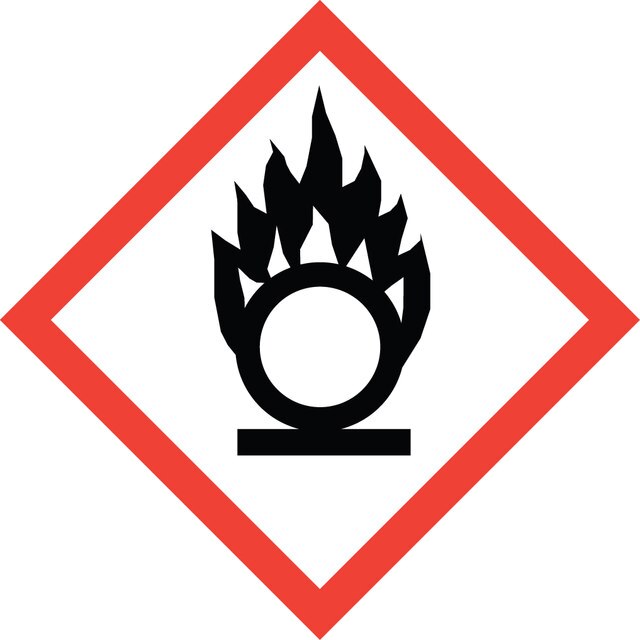



signalword
Danger
hcodes
Hazard Classifications
Acute Tox. 4 Oral - Eye Dam. 1 - Met. Corr. 1 - Ox. Liq. 1 - Skin Corr. 1A - STOT RE 2
target_organs
Thyroid
Clase de almacenamiento
5.1A - Strongly oxidizing hazardous materials
wgk
WGK 1
Elija entre una de las versiones más recientes:
¿Ya tiene este producto?
Encuentre la documentación para los productos que ha comprado recientemente en la Biblioteca de documentos.