
Saltar al contenido
Merck

360481

1,4 Dioxano

ACS reagent, ≥99.0%, contains ≤25 ppm BHT as stabilizer

Sinónimos:

Dioxano, Óxido de dietileno

Iniciar sesión para ver los precios por organización y contrato.

Seleccione un Tamaño


Acerca de este artículo

Fórmula empírica (notación de Hill):
C4H8O2
Número CAS:
Peso molecular:
88.11
UNSPSC Code:
12352005
NACRES:
NA.21
PubChem Substance ID:
EC Number:
204-661-8
Beilstein/REAXYS Number:
102551
MDL number:
Assay:
≥99.0%
Grade:
ACS reagent
Bp:
100-102 °C (lit.)
Vapor pressure:
27 mmHg ( 20 °C), 40 mmHg ( 25 °C)
Servicio técnico
¿Necesita ayuda? Nuestro equipo de científicos experimentados está aquí para ayudarle.
Permítanos ayudarle
Servicio técnico
¿Necesita ayuda? Nuestro equipo de científicos experimentados está aquí para ayudarle.
Permítanos ayudarle

InChI key

RYHBNJHYFVUHQT-UHFFFAOYSA-N

InChI

1S/C4H8O2/c1-2-6-4-3-5-1/h1-4H2

SMILES string

C1COCCO1

grade

ACS reagent

vapor density

3 (vs air)

vapor pressure

27 mmHg ( 20 °C), 40 mmHg ( 25 °C)

assay

≥99.0%

form

liquid

autoignition temp.

356 °F

contains

≤25 ppm BHT as stabilizer

expl. lim.

22 %

dilution

(for analytical testing)

impurities

≤0.0016 meq/g Titr. acid, ≤0.005% Peroxide (as H2O2), ≤0.01% Carbonyl (as HCHO), ≤0.05% water

evapn. residue

≤0.005%

color

APHA: ≤20

refractive index

n20/D 1.422 (lit.)

pH

6.0-8 (20 °C, 500 g/L)

bp

100-102 °C (lit.)

mp

10-12 °C (lit.)

transition temp

freezing point ≥11.0

density

1.034 g/mL at 25 °C (lit.)

Quality Level

¿Está buscando productos similares? Visita Guía de comparación de productos

General description

El 1,4-dioxano es un compuesto orgánico heterocíclico que se utiliza habitualmente como disolvente en varias reacciones químicas. También se utiliza como estabilizador en disolventes clorados.
Our premium ACS solvents are ideal for routine chemical synthesis, drying, purification, and critical labware cleaning. They meet or exceed the rigorous standards of the American Chemical Society (ACS), ensuring high-quality results for your research needs.

Premium ACS Solvents: Our solvents meet or exceed the stringent standards set by the American Chemical Society, ensuring high quality and reliability for your laboratory applications.

Replicable and Publishable Results: Designed for consistency, our solvents deliver results that can be reliably reproduced, making them ideal for research that requires publication.

Versatile Applications: Suitable for routine chemical synthesis, drying, purification, and critical labware cleaning, our solvents cater to a wide range of research needs in the laboratory.

Application

El 1,4-dioxano puede utilizarse como:      
  • Disolvente en la N-metilación de aminas por funcionalización reductiva del CO2 en presencia de NaBH4 como reductor.      
  • Un aditivo para sintetizar 3-hidroxilisoindolin-1-onas a través de aza-ciclación hidroxilhidrativa de 2-alquinilbenzamida.

Se puede utilizar un sistema disolvente de la mezcla de 1,4-dioxano/etanol/ácido fórmico en la despolimerización de la lignina para sintetizar monómeros fenólicos de valor añadido.
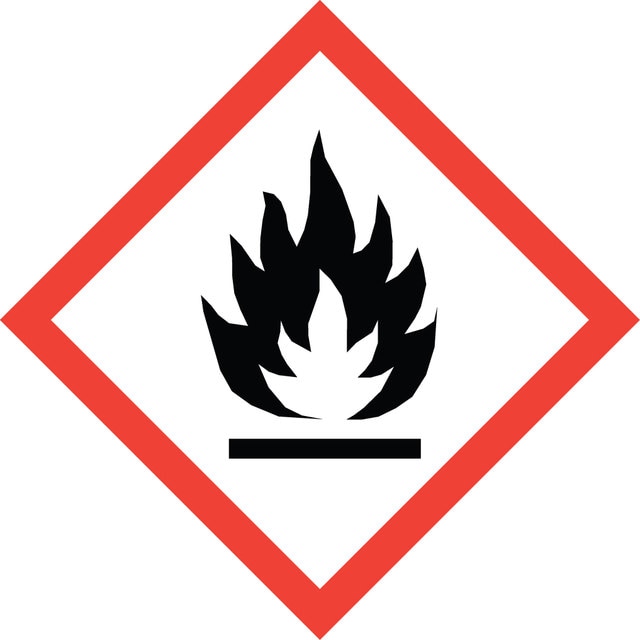

signalword

Danger

Hazard Classifications

Carc. 1B - Eye Irrit. 2 - Flam. Liq. 2 - STOT SE 3

target_organs

Respiratory system

supp_hazards

Clase de almacenamiento

3 - Flammable liquids

wgk

WGK 3

flash_point_f

51.8 °F - closed cup

flash_point_c

11 °C - closed cup


Elija entre una de las versiones más recientes:

Certificados de análisis (COA)

Lot/Batch Number

¿No ve la versión correcta?

Si necesita una versión concreta, puede buscar un certificado específico por el número de lote.

¿Ya tiene este producto?

Encuentre la documentación para los productos que ha comprado recientemente en la Biblioteca de documentos.

Visite la Librería de documentos

Oxidation and biodegradability enhancement of 1,4-dioxane using hydrogen peroxide and ozone.
C D Adams et al.
Environmental science & technology, 28(11), 1812-1818 (1994-10-01)
Self-curable benzoxazine functional polybutadienes synthesized by click chemistry.
Kukut M, et al.
Designed Monomers and Polymers, 12(2), 167-176 (2009)
Xiaohua Liu et al.
Biomaterials, 31(2), 259-269 (2009-09-29)
It remains a challenge to synthesize functional materials that can develop advanced scaffolding architectures for tissue engineering. In this study, a series of biodegradable amphiphilic poly(hydroxyalkyl (meth)acrylate)-graft-poly(l-lactic acid) (PHAA-g-PLLA) copolymers have been synthesized and fabricated into nano-fibrous scaffolds. These copolymers
Joshua J Pacheco et al.
Proceedings of the National Academy of Sciences of the United States of America, 111(23), 8363-8367 (2014-06-10)
Terephthalic acid (PTA), a monomer in the synthesis of polyethylene terephthalate (PET), is obtained by the oxidation of petroleum-derived p-xylene. There is significant interest in the synthesis of renewable, biomass-derived PTA. Here, routes to PTA starting from oxidized products of
Daniel Gerrity et al.
Water research, 46(19), 6257-6272 (2012-10-16)
The performance of ozonation in wastewater depends on water quality and the ability to form hydroxyl radicals (·OH) to meet disinfection or contaminant transformation objectives. Since there are no on-line methods to assess ozone and ·OH exposure in wastewater, many

Nuestro equipo de científicos tiene experiencia en todas las áreas de investigación: Ciencias de la vida, Ciencia de los materiales, Síntesis química, Cromatografía, Analítica y muchas otras.

Póngase en contacto con el Servicio técnico
