
538124

Propianaldehído
reagent grade, 97%
Sinónimos:
Propanal
Iniciar sesión para ver los precios por organización y contrato.
Seleccione un Tamaño
Cambiar Vistas
Acerca de este artículo
Fórmula lineal:
CH3CH2CHO
Número CAS:
Peso molecular:
58.08
UNSPSC Code:
12352114
NACRES:
NA.21
PubChem Substance ID:
EC Number:
204-623-0
Beilstein/REAXYS Number:
506010
MDL number:
Assay:
97%
Grade:
reagent grade
Bp:
46-50 °C (lit.)
Vapor pressure:
18.77 psi ( 55 °C), 4.89 psi ( 20 °C)
Servicio técnico
¿Necesita ayuda? Nuestro equipo de científicos experimentados está aquí para ayudarle.
Permítanos ayudarlegrade
reagent grade
Quality Level
vapor density
2 (vs air)
vapor pressure
18.77 psi ( 55 °C), 4.89 psi ( 20 °C)
assay
97%
autoignition temp.
404 °F
expl. lim.
17 %, 26 °F, 2.6 %, 31 °F
dilution
(for analytical testing)
impurities
≤2.5% (water)
refractive index
n20/D 1.362 (lit.)
bp
46-50 °C (lit.)
mp
−81 °C (lit.)
solubility
organic solvents: soluble
density
0.805 g/mL at 25 °C (lit.)
storage temp.
2-8°C
SMILES string
[H]C(=O)CC
InChI
1S/C3H6O/c1-2-3-4/h3H,2H2,1H3
InChI key
NBBJYMSMWIIQGU-UHFFFAOYSA-N
General description
Propionaldehyde, also known as propanal, is commonly utilized as an intermediate in organic reactions. It can be synthesized by the oxidation of propane in gas-phase. Photodissociation behavior of propionaldehyde has been investigated by the Paneth mirror method. The degradation mechanism of propionaldehyde on Rh(111) surface has been analyzed using temperature programmed desorption (TPD) and high resolution electron energy loss spectroscopy (HREELS). 2-Çhloropropionaldehyde has been synthesized from propionaldehyde, via electrochemical chlorination. The presence of two stable rotamers in propionaldehyde has been reported based on microwave spectral data.
Application
- Unraveling the electrocatalytic reduction mechanism of enols on copper in aqueous media.: Research on the electrocatalytic reduction mechanisms of enols, including implications for propionaldehyde, provides valuable information for chemical synthesis and industrial applications in catalysis (Cui et al., 2022).
Still not finding the right product?
Explore all of our products under Propianaldehído
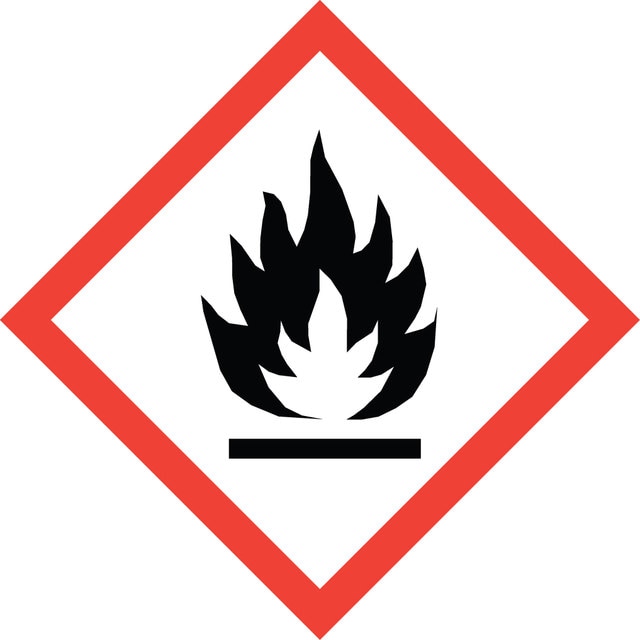
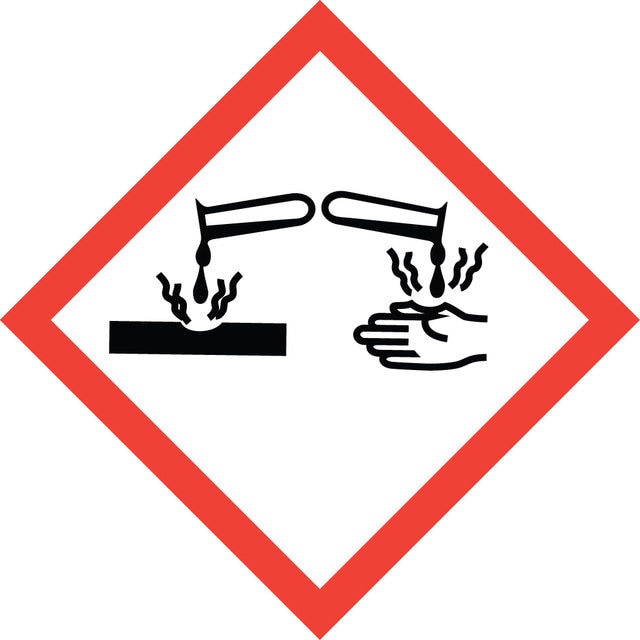

signalword
Danger
Hazard Classifications
Acute Tox. 4 Inhalation - Acute Tox. 4 Oral - Eye Dam. 1 - Flam. Liq. 2 - Skin Irrit. 2 - STOT SE 3
target_organs
Respiratory system
Clase de almacenamiento
3 - Flammable liquids
wgk
WGK 1
flash_point_f
-22.0 °F - closed cup
flash_point_c
-30 °C - closed cup
Elija entre una de las versiones más recientes:
¿Ya tiene este producto?
Encuentre la documentación para los productos que ha comprado recientemente en la Biblioteca de documentos.
Reactions of 1-propanol and propionaldehyde on rhodium (111).
Brown NF and Barteau MA.
Langmuir, 8(3), 862-869 (1992)
Mechanism of the Photolysis of Propionaldehyde.
Garrison WM and Burton M.
J. Chem. Phys., 10(12), 730-739 (1942)
Eagleson M.
Concise Encyclopedia Chemistry, 898-898 (1994)