Saltar al contenido
Merck

S9663

Sodium arsenate dibasic heptahydrate

ACS reagent, ≥98%

Sinónimos:

Disodium hydrogen arsenate heptahydrate, di-Sodium hydrogen arsenate heptahydrate

Iniciar sesión para ver los precios por organización y contrato.

Seleccione un Tamaño


Acerca de este artículo

Fórmula lineal:
Na2HAsO4 · 7H2O
Número CAS:
Peso molecular:
312.01
NACRES:
NB.24
PubChem Substance ID:
UNSPSC Code:
12352302
MDL number:
Assay:
≥98%, 98.0-102.0%
Grade:
ACS reagent
Form:
powder
Servicio técnico
¿Necesita ayuda? Nuestro equipo de científicos experimentados está aquí para ayudarle.
Permítanos ayudarle
Servicio técnico
¿Necesita ayuda? Nuestro equipo de científicos experimentados está aquí para ayudarle.
Permítanos ayudarle

InChI

1S/AsH3O4.2Na.7H2O/c2-1(3,4)5;;;;;;;;;/h(H3,2,3,4,5);;;7*1H2/q;2*+1;;;;;;;/p-2

SMILES string

O.O.O.O.O.O.O.[Na+].[Na+].O[As]([O-])([O-])=O

InChI key

KOLXPEJIBITWIQ-UHFFFAOYSA-L

grade

ACS reagent

assay

≥98%, 98.0-102.0%

form

powder

impurities

≤0.005% Insoluble matter

pH

8.5-9 (25 °C, 50 g/L)

anion traces

arsenite (As2O3): ≤0.01%, chloride (Cl-): ≤0.001%, nitrate (NO3-): ≤0.005%, sulfate (SO42-): ≤0.01%

cation traces

Fe: ≤0.001%, heavy metals (as Pb): ≤0.002%

Quality Level

¿Está buscando productos similares? Visita Guía de comparación de productos

Categorías relacionadas

Application
Sodium arsenate dibasic heptahydrate can be used as an internal standard for the quantification of arsenic species using various spectroscopic methods.

signalword

Danger

Hazard Classifications

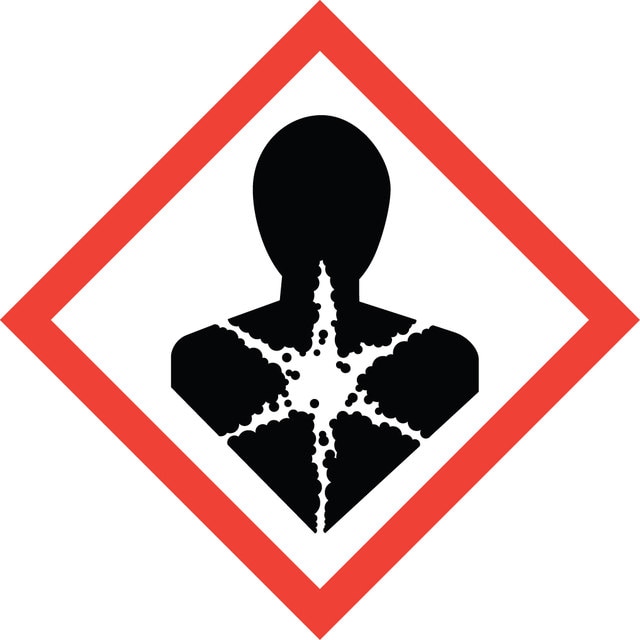
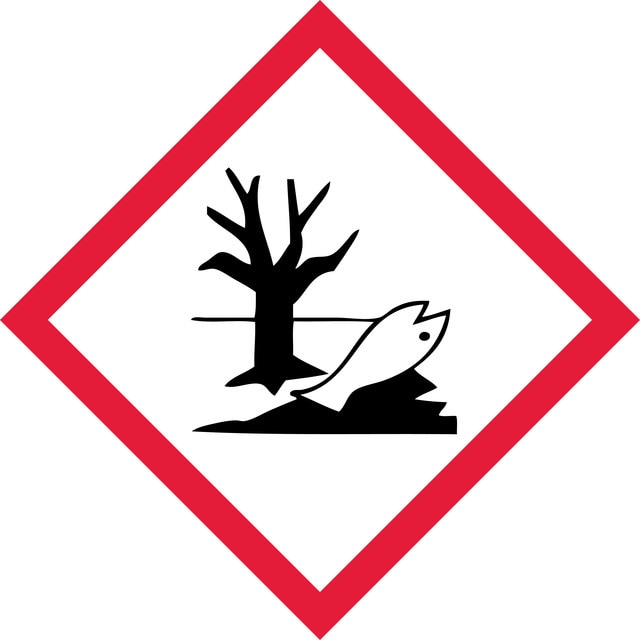
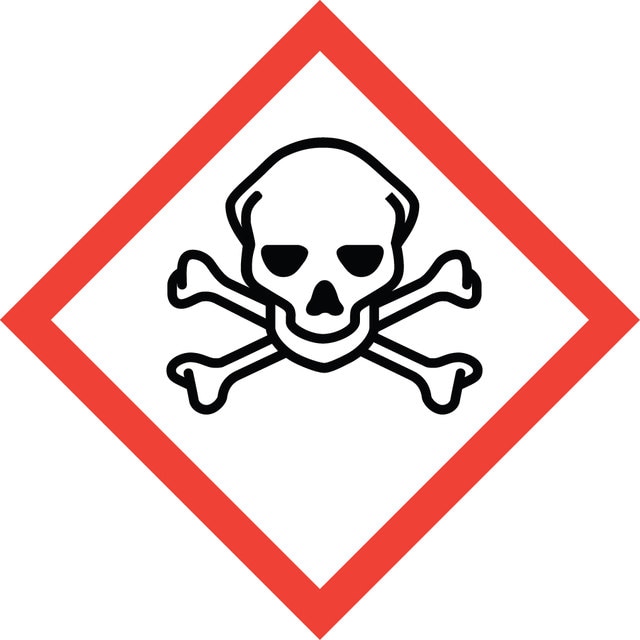
Acute Tox. 3 Inhalation - Acute Tox. 3 Oral - Aquatic Acute 1 - Aquatic Chronic 1 - Carc. 1A

Clase de almacenamiento

6.1A - Combustible acute toxic Cat. 1 and 2 / very toxic hazardous materials

wgk

WGK 3

flash_point_f

Not applicable

flash_point_c

Not applicable


Elija entre una de las versiones más recientes:

Certificados de análisis (COA)

Lot/Batch Number

It looks like we've run into a problem, but you can still download Certificates of Analysis from our Documentos section.

Si necesita más asistencia, póngase en contacto con Atención al cliente

¿Ya tiene este producto?

Encuentre la documentación para los productos que ha comprado recientemente en la Biblioteca de documentos.

Visite la Librería de documentos

William Brattin et al.
Journal of toxicology and environmental health. Part A, 76(7), 449-457 (2013-04-25)
This study describes a method for measuring the relative oral bioavailability (RBA) of arsenic (As) in soil and other soil-like media using young swine as the animal model. Groups of animals are exposed to site soil or sodium arsenate orally
Jaydip Biswas et al.
Asian Pacific journal of cancer prevention : APJCP, 11(1), 239-247 (2010-07-03)
Inorganic arsenic (As) is considered as a human carcinogen because it is associated with cancers of skin, lung, liver and bladder in exposed population. Consumption of As contaminated ground water for long term causes oxidative stress. Generation of reactive oxygen
Samantha L Goggin et al.
Neurotoxicology, 33(5), 1338-1345 (2012-09-11)
Over the past two decades, key advancements have been made in understanding the complex pathology that occurs following not only high levels of arsenic exposure (>1 ppm) but also levels previously considered to be low (<100 ppb). Past studies have
Fariha Qureshi et al.
Journal of Ayub Medical College, Abbottabad : JAMC, 21(4), 63-69 (2010-11-12)
Arsenic is a teratogenic agent present in the environment as oxides and arsenate and humans are exposed to it through contaminated drinking water, food, soil and air. This investigation was undertaken to evaluate protective role of Vitamin C and E
Deniz Yildiz et al.
Biological trace element research, 150(1-3), 451-459 (2012-08-15)
The objective of the present study was to investigate if arsenic exposure results in glutathione efflux from human erythrocytes. Arsenite significantly depleted intracellular nonprotein thiol level in a time- and concentration-dependent manner. The intracellular nonprotein thiol level was decreased to

Nuestro equipo de científicos tiene experiencia en todas las áreas de investigación: Ciencias de la vida, Ciencia de los materiales, Síntesis química, Cromatografía, Analítica y muchas otras.

Póngase en contacto con el Servicio técnico