
44613

Durcupan™ ACM
single component C, accelerator 960 (DY 060)
Iniciar sesión para ver los precios por organización y contrato.
Seleccione un Tamaño
Acerca de este artículo
Servicio técnico
¿Necesita ayuda? Nuestro equipo de científicos experimentados está aquí para ayudarle.
Permítanos ayudarleServicio técnico
¿Necesita ayuda? Nuestro equipo de científicos experimentados está aquí para ayudarle.
Permítanos ayudarleQuality Level
¿Está buscando productos similares? Visita Guía de comparación de productos
General description
Awater-soluble embedding medium for EM based on an aliphatic polyepoxide.
Application
Durcupan™ACM, single component C, accelerator 960 (DY 060) has been used for:
- A method to prepare large resin sections for counting myelinated axons in rodent CNS and PNS structures.: This study presents a technique using Durcupan ACM for preparing large resin sections, enhancing the analysis of myelinated axons in rodent central and peripheral nervous systems.
- Three-dimensional immersive virtual reality for studying cellular compartments in 3D models from EM preparations of neural tissues.: This research utilizes Durcupan ACM in electron microscopy to create 3D models of neural tissues, facilitating studies via immersive virtual reality.
- Long-term effect of prazosin and losartan administration on blood pressure, heart, carotid artery, and acetylcholine induced dilation of cardiovascular system of young Wistar rats and SHR.: Explores the cardiovascular effects in rats using Durcupan ACM embedded samples for detailed tissue analysis.
- Embedding material for electron microscopy on the basis of Araldite®.
Features and Benefits
Mixtures of Durcupan ACM present an interesting alternative to methacrylates for embedding sections for electron microscopy. They present the advantage that they harden uniformly, practically without shrinkage. All fixing agents normally used for electronmicroscopic work are also suitable for the Durcupan ACM embedding process. This process consists of three phases: dehydration of the tissue with acetone or ethyl alcohol, infiltration with the embedding agent, followed by hardening.
Legal Information
Araldite is a registered trademark of Huntsman Advanced Materials Inc.
Durcupan is a trademark of Sigma-Aldrich Chemie GmbH
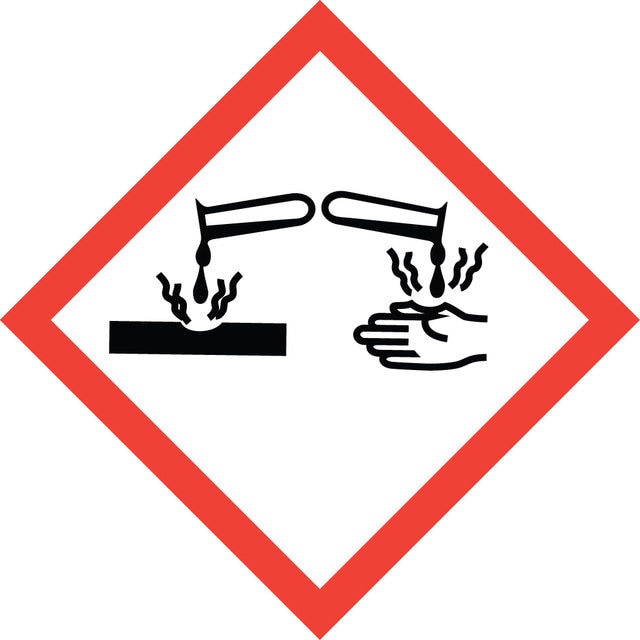

signalword
Danger
hcodes
Hazard Classifications
Acute Tox. 4 Oral - Eye Dam. 1 - Skin Corr. 1B
Clase de almacenamiento
8A - Combustible, corrosive hazardous materials
wgk
WGK 3
flash_point_f
Not applicable
flash_point_c
Not applicable
ppe
dust mask type N95 (US), Eyeshields, Gloves
Elija entre una de las versiones más recientes:
¿Ya tiene este producto?
Encuentre la documentación para los productos que ha comprado recientemente en la Biblioteca de documentos.
Tin Ki Tsang et al.
eLife, 7 (2018-05-12)
Electron microscopy (EM) offers unparalleled power to study cell substructures at the nanoscale. Cryofixation by high-pressure freezing offers optimal morphological preservation, as it captures cellular structures instantaneously in their near-native state. However, the applicability of cryofixation is limited by its
Daniela Boassa et al.
Cell chemical biology, 26(10), 1407-1416 (2019-08-06)
A protein-fragment complementation assay (PCA) for detecting and localizing intracellular protein-protein interactions (PPIs) was built by bisection of miniSOG, a fluorescent flavoprotein derived from the light, oxygen, voltage (LOV)-2 domain of Arabidopsis phototropin. When brought together by interacting proteins, the
Keun-Young Kim et al.
Cell reports, 29(3), 628-644 (2019-10-17)
The form and synaptic fine structure of melanopsin-expressing retinal ganglion cells, also called intrinsically photosensitive retinal ganglion cells (ipRGCs), were determined using a new membrane-targeted version of a genetic probe for correlated light and electron microscopy (CLEM). ipRGCs project to
David E Gordon et al.
Molecular cell, 78(2), 197-209 (2020-02-23)
We have developed a platform for quantitative genetic interaction mapping using viral infectivity as a functional readout and constructed a viral host-dependency epistasis map (vE-MAP) of 356 human genes linked to HIV function, comprising >63,000 pairwise genetic perturbations. The vE-MAP
Nuestro equipo de científicos tiene experiencia en todas las áreas de investigación: Ciencias de la vida, Ciencia de los materiales, Síntesis química, Cromatografía, Analítica y muchas otras.
Póngase en contacto con el Servicio técnico